On a dusty battlefield at dawn, a tracked vehicle rumbles into position, its turret rotating 360 degrees as crews prepare to unleash thunderous 155 mm shells toward distant enemy positions.
This is the M109 howitzer, a self‑propelled artillery system that, for decades, has fused armored mobility with devastating indirect firepower.
From rolling across firing points in Vietnam to modern counter‑battery duels and urban support missions, the M109 has become one of the most common and enduring artillery platforms in the world.
This guide breaks down what the M109 is, its origins, how it works, where it’s seen service, and where it’s headed next.
What the M109 Howitzer Is
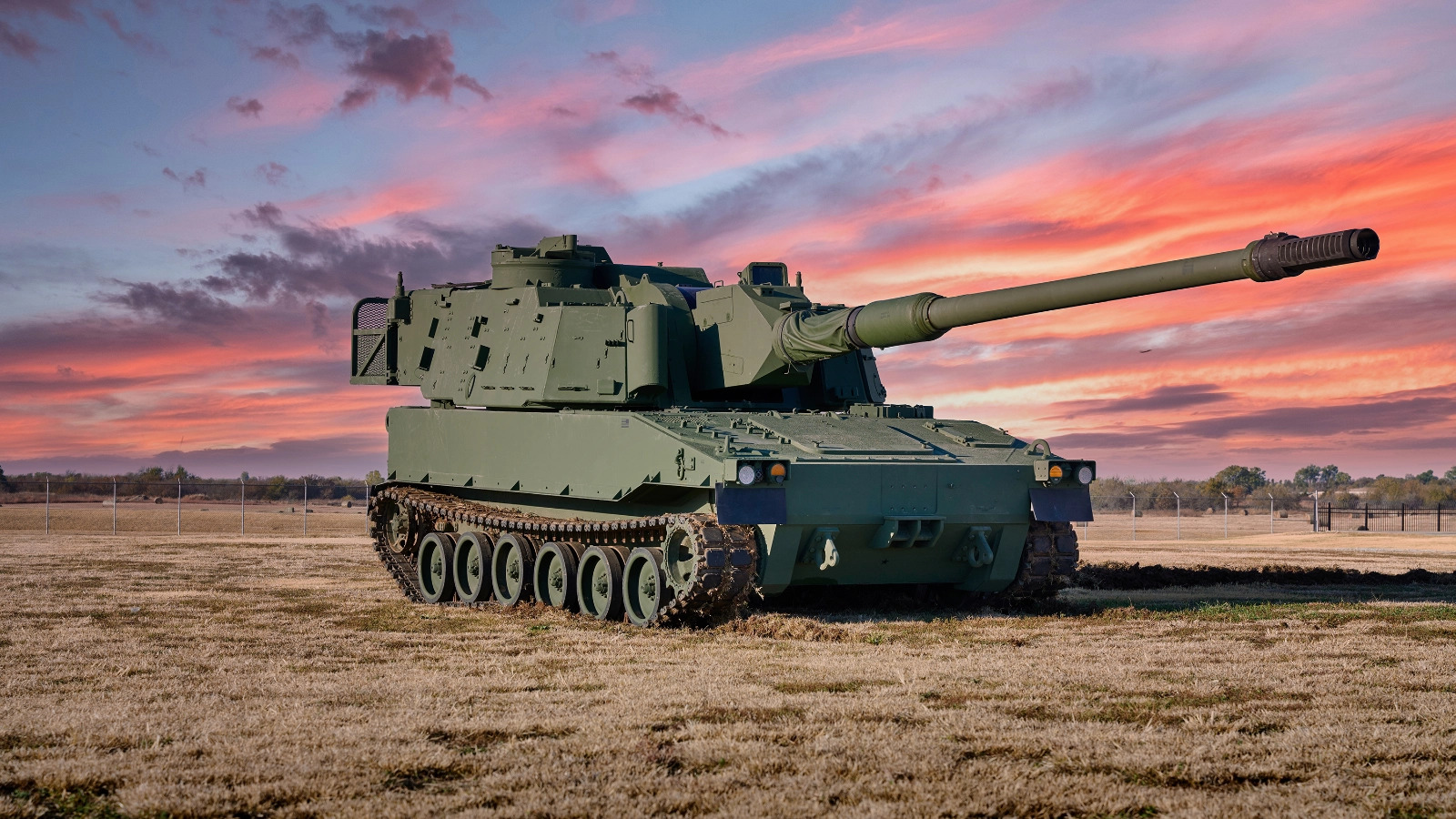
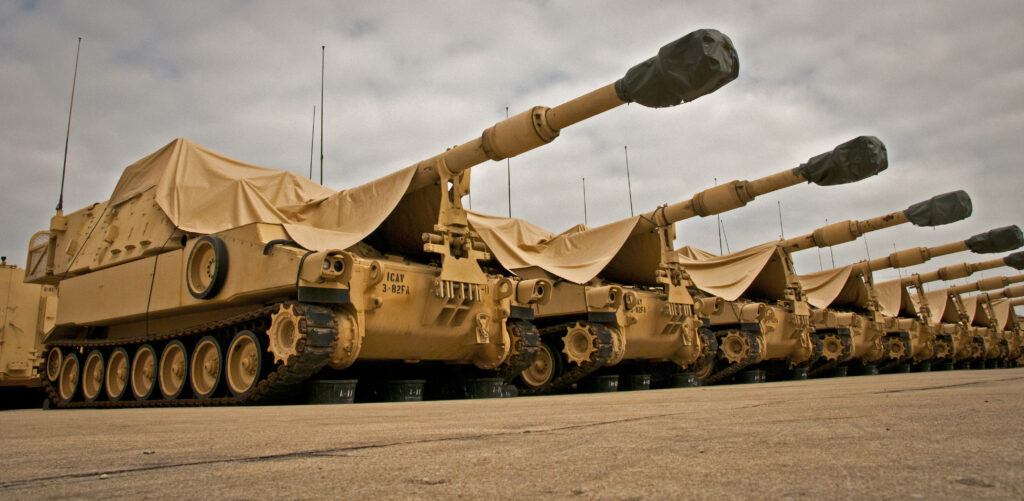
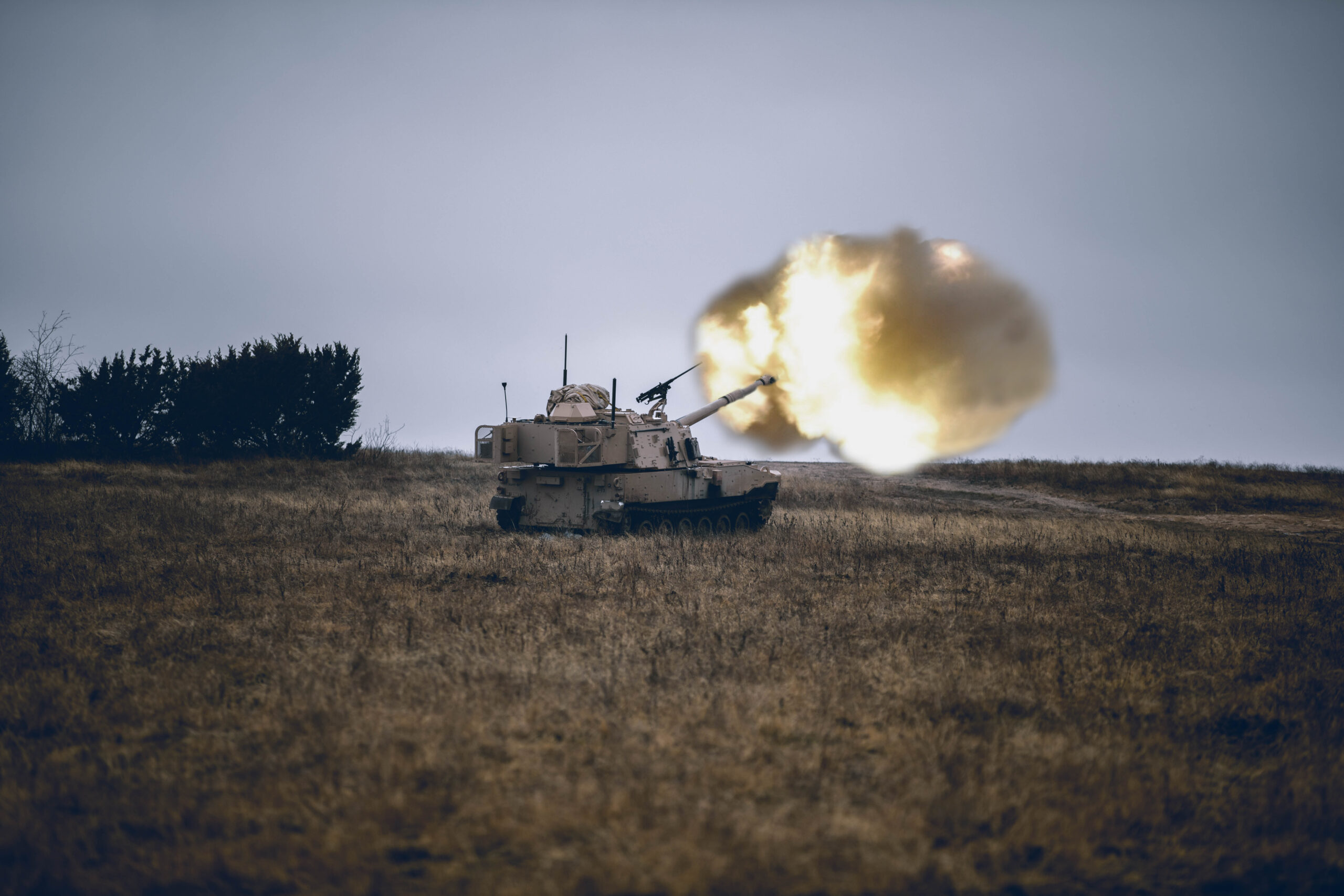
The M109 howitzer is a 155 mm self‑propelled artillery system mounted on a tracked armored chassis with a fully rotating turret.
Unlike towed artillery that must be hauled into position, the M109 can independently move, shoot, and relocate, making it highly effective in the dynamic environments of modern warfare.
Designed to fire large high-explosive shells and specialized rounds, it provides indirect fire support to mechanized and armored units across a wide array of missions.
How the M109 Came to Be
Origins and Development
Development of the M109 began in the late 1950s and early 1960s under the US Army’s Ground System Division of United Defense LP.
The goal was to develop a modern self‑propelled artillery gun that could replace obsolete World War II‑era systems and provide mobility, firepower, and protection for armored formations.
Accepted in November 1962, it entered service and was deployed with US forces in Vietnam, where its 360-degree turret and mobility proved valuable at forward firebases.
BAE Systems currently holds the contract to produce, service, and further develop these units for the army.
Evolution Over Time
Since its introduction, the M109 has been continuously upgraded. Early models (such as the original M109) evolved through A1, A2, A3, A4, and, later, A5, with improved gun systems that significantly increased range.
Modern versions such as the M109A6 Paladin and the M109A7 feature advanced fire control, digital systems, improved survivability, and automotive upgrades, keeping the platform relevant well into the 21st century.
| Variant | Introduction/Service Date | Gun/Maximum Range | Mobility and Armor | Fire Control/Upgrades |
| M109 (Baseline) | 1962 | 155 mm L23 gun; ~14 kilometers (8.7 miles) | Basic tracked chassis; light armor | Manual fire control; limited targeting systems |
| M109A2 / A3 | 1970s | 155 mm L39/L44 gun; ~18 kilometers (11 miles) | Improved suspension; slightly upgraded armor | Manual plus basic ballistic computers; minor mobility upgrades |
| M109A5 | 1980s | 155 mm L39A2 with extended range; ~24 kilometers (15 miles) | Diesel engine upgrade; standard armor | Fire direction system integrated; improved ammunition handling |
| M109A6 | 1992 | 155 mm L44; ~30 kilometers (18.6 miles) with rocket-assisted shells | Heavily upgraded engine; improved torsion bar suspension; armored cab | Fully digital fire control; automated gun-laying; GPS integration |
| M109A7 (PIM) | 2016 | 155 mm L44; ~30 kilometers (18.6 miles) | New chassis with improved automotive components; survivable armor | Paladin Integrated Management (PIM) systems; enhanced networked targeting; easier maintenance |
How the M109 Works
Mobility and Chassis
The M109 rides on a tracked armored chassis with torsion bar suspension, giving it cross‑country mobility alongside tanks and armored vehicles.
Powered by diesel engines (modern variants use up to 600 horsepower), it typically reaches road speeds up to 56 kilometers (35 miles) per hour and has an operational range of roughly 300 to 350 kilometers (186 to 217 miles), allowing it to reposition quickly after firing.
Main Armament and Firepower
At its core is a 155 mm howitzer, capable of firing separate ammunition (projectile + propellant charge) with an elevation range from around −3 to 75 degrees.
Early models had ranges under 15 kilometers (9.3 miles); later guns and rocket‑assisted projectiles extended reach to 30 kilometers (18.6 miles) or more, and guided GPS‑assisted rounds like Excalibur improve accuracy at long range.
Crew and Systems
A typical crew ranges from four to six personnel, depending on the variant.
Modern models employ digital fire‑control systems that speed target engagement, improve accuracy, and enhance survivability by allowing crews to fire and shoot‑and‑scoot more efficiently.
Secondary armament usually includes a .50 cal machine gun for self‑defense.
Strengths
- Mobility and protection: Tracks and armor allow it to operate with mechanized forces under combat conditions.
- Versatile firepower: From high‑explosive to precision rounds, it supports infantry and armored maneuvers.
- Global adoption: Fielded by over 30 nations, it’s one of the most widespread self‑propelled artillery systems in the world.
Limitations
- Range constraints: Even with modern rounds, it can lack the reach of newer 52‑caliber systems now fielded.
- Armor tradeoffs: Light armor offers protection from small arms and shrapnel but not heavy anti‑armor fire.
- Technological aging: Despite upgrades, the platform’s base design is over six decades old, and some operators are shifting to more modern howitzers.
Where and How It’s Been Used
The M109 has seen extensive combat and operational use worldwide. It supported coalition forces in Operation Desert Storm and has been used in conflicts, such as Iraq and Afghanistan.
More recently, M109 Paladins have been supplied to Ukraine, where they provide crucial indirect fire support in ongoing high‑intensity combat. Taiwan has also started preparations for the delivery of 40 units by 2026.
Allied users range from NATO members to Middle Eastern and Asian armies, making it a backbone of modern artillery forces across continents.
Future Outlook
Even as upgrades extend the M109’s relevance, many armies are exploring next‑generation self‑propelled howitzers with longer range, higher rates of fire, and improved digital networking.
In the US service, programs such as the Next Generation Howitzer aim to integrate new gun systems with modern mobility and automation, potentially replacing the M109 in the long term.
With thousands built and decades of operational use behind it, the M109 is likely to remain in service with many partners well into the 2030s, particularly in upgraded A6/A7 forms that bridge legacy design with modern battlefield needs.