The US Air Force has awarded Boeing a contract to upgrade the C-17A Globemaster III flight deck, extending the operational relevance of the strategic airlifter for decades.
The contract covers the design, manufacture, integration, qualification, and military certification of updated avionics and mission-critical systems for the aircraft.
Under the agreement, existing flight deck equipment will be replaced with modern systems based on a Modular Open Systems Architecture (MOSA), enabling plug-and-play enhancements and ensuring the fleet can rapidly and affordably integrate new capabilities.
As part of the effort, Boeing recently selected Curtiss-Wright Corporation to provide mission computers for the aircraft.
“The C‑17A has been the backbone of global air mobility for over three decades,” Vice President of United States Air Force Mobility & Training Services at Boeing, Travis Williams, said.
“With the US Air Force requirement to keep the C-17A viable through 2075, we already have a clear and achievable roadmap to support their needs, and the needs of our international partners around the globe.
By resolving avionics obsolescence and introducing MOSA, we’re preserving a proven, highly dependable, heavy airlifter and keeping it at the forefront of performance and efficiency for decades to come.”
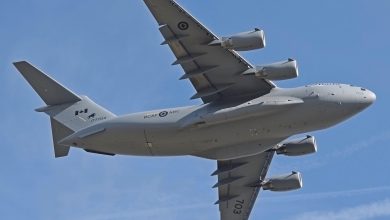
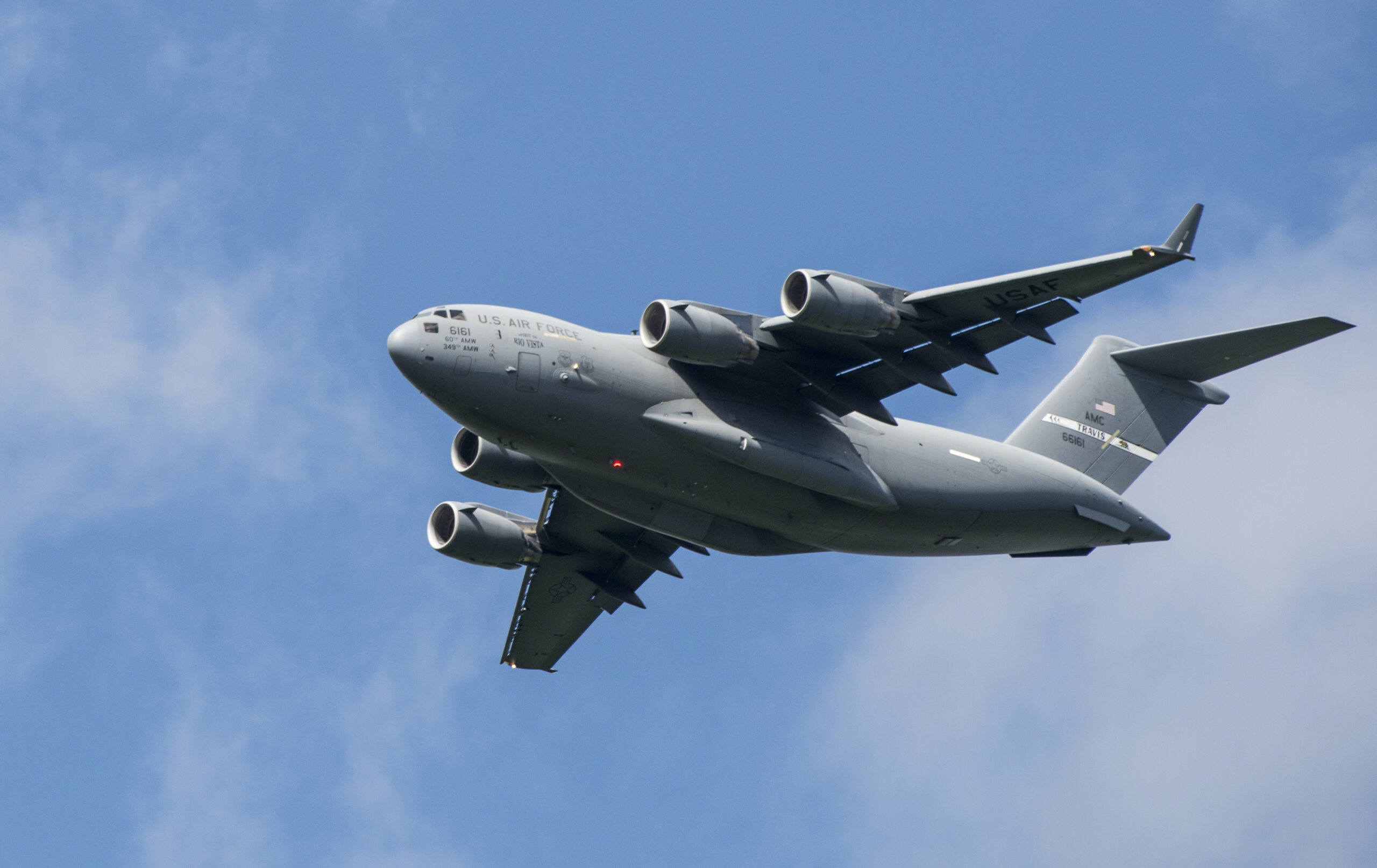
C-17A Globemaster III
Operational since 1995, the Globemaster is capable of tactical airlift and airdrop missions and performing aeromedical evacuations.
Carrying up to 170,900 pounds (77,519 kilograms) of cargo or as many as 100 paratroopers, the aircraft can swiftly transport troops and equipment to main operating bases or directly to forward positions in theater.
The C-17 is operated by a crew of two pilots and a loadmaster and is powered by four Pratt & Whitney PW2000 turbofan engines.
It can reach a top speed of 450 knots (518 miles/833 kilometers per hour), has a range of 2,420 nautical miles (2,785 miles/4,482 kilometers), and a service ceiling of 45,000 feet (13,716 meters).
The US Air Force operates more than 200 Globemaster IIIs across the active-duty force, Air National Guard, and Air Force Reserve.
In November, the air force said it intends to operate the C-17 through 2070 and is evaluating options such as re-engining. A study for its successor, the Next Generation Airlift, is planned for 2027, with production potentially beginning as early as 2038.