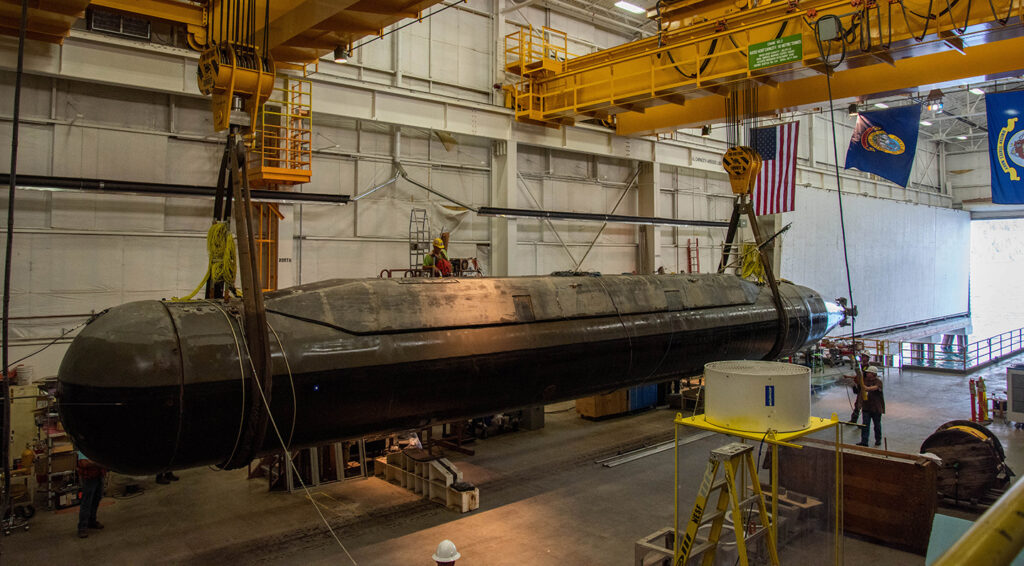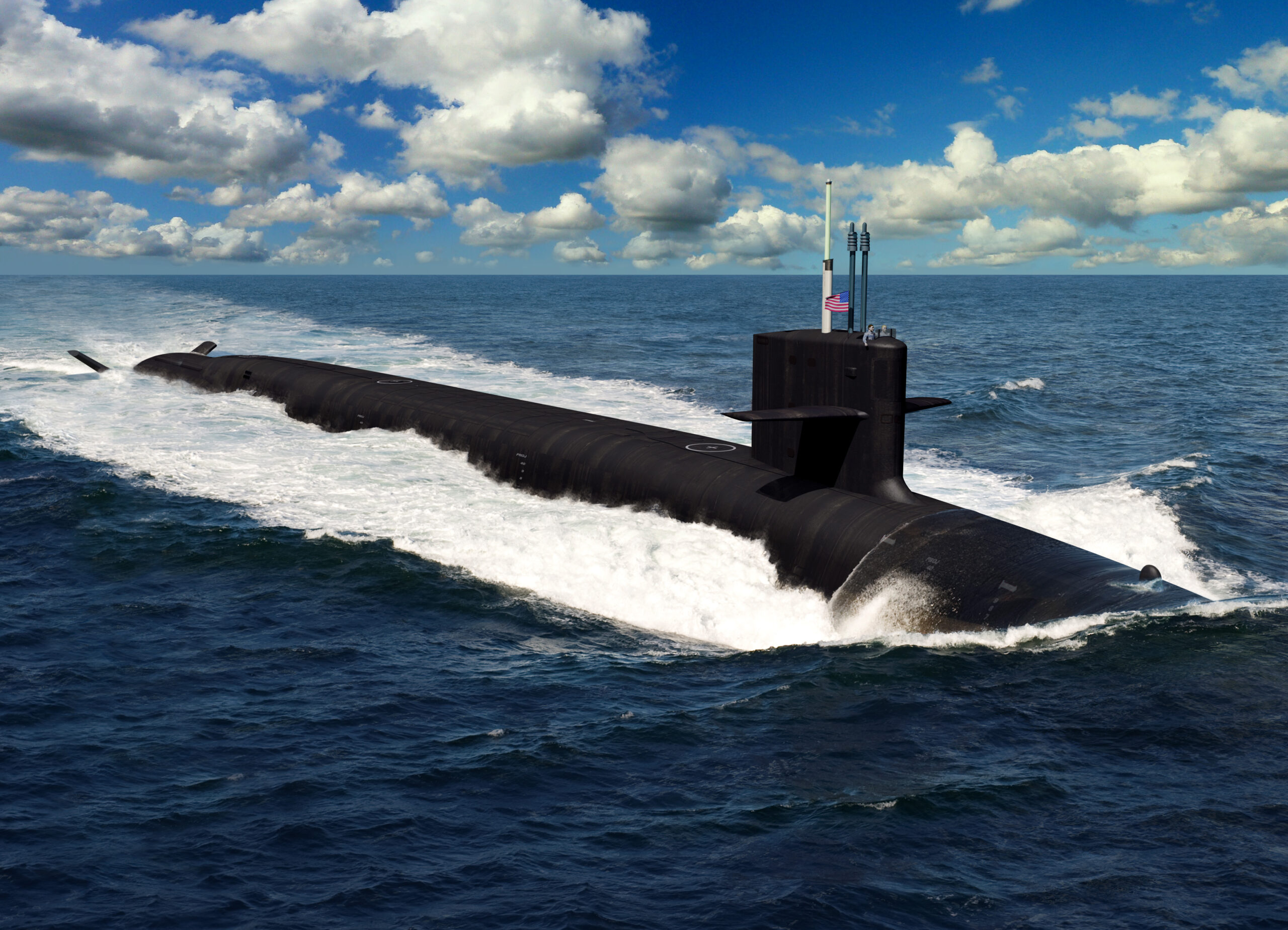
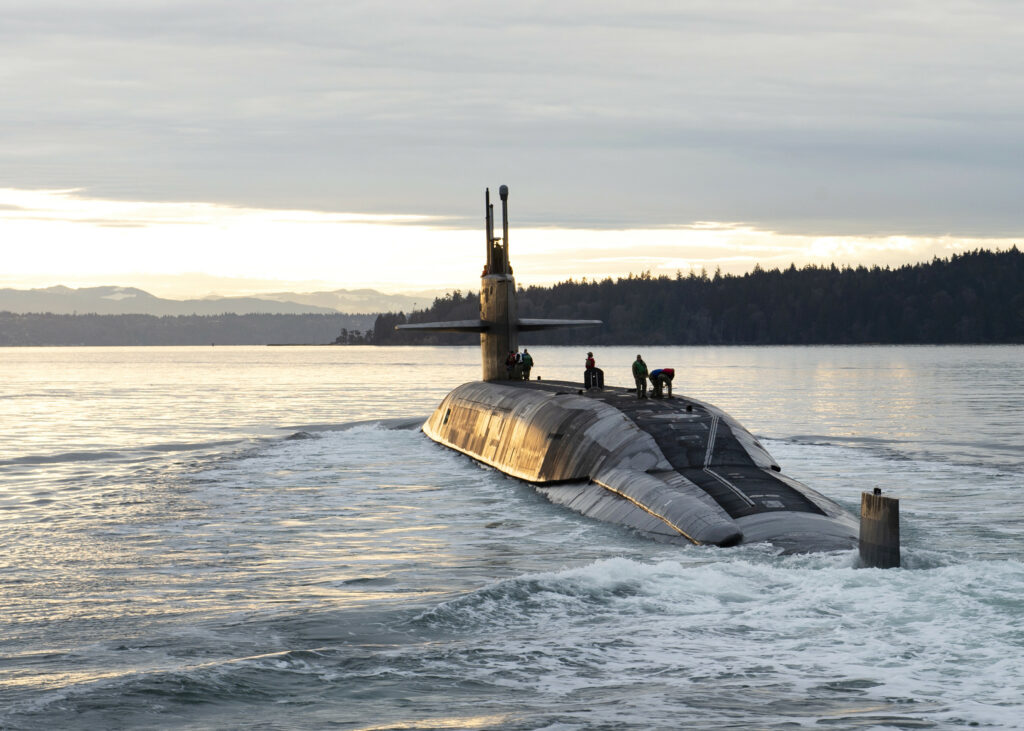
Beneath the waves, far from prying eyes, America’s next-generation deterrent quietly takes shape. The Columbia-class submarine is a fortress designed to replace the Ohio-class fleet and carry the US nuclear triad into the mid-21st century.
Silent, resilient, and loaded with advanced propulsion, sonar, and missile systems, it can patrol the world’s oceans undetected for months, ready to strike and survive when provoked.
Dive into our full guide to uncover what makes this submarine the backbone of America’s nuclear defense.
Building a Nuclear Sentinel
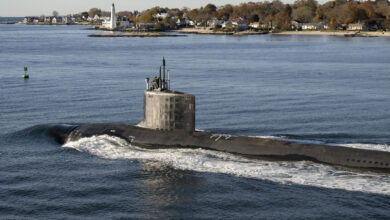
There are three types of submarines in the US Navy: nuclear-powered attack submarines (SSNs), nuclear-powered cruise missile submarines (SSGNs), and nuclear-powered ballistic missile submarines (SSBNs).
While the first two are multi-mission vessels, the SSBNs focus only on strategic nuclear deterrence.
The Columbia-class program, deemed as the navy’s top priority, aims to build 12 new ballistic missile submarines to replace the aging Ohio-class SSBNs, which are scheduled to retire in the 2030s.
Budget, Timeline, and Challenges
The Columbia-class program represents one of the largest and most complex naval acquisition efforts in US history, with a total procurement cost of $126.4 billion and a total acquisition cost of $139.7 billion.
Construction of the lead submarine, USS Columbia (SSBN-826), began in 2021, with delivery expected in the early 2030s.
Subsequent boats will follow on a roughly two-year production cadence to ensure the US Navy maintains continuous at-sea deterrence as the Ohio-class fleet is retired.
Despite its strategic importance, the program faces a host of challenges, including complex welding and integration processes, advanced stealth requirements, and the need to manage costs within a tightly constrained defense budget.
How the Columbia-Class Submarine Works
The Columbia-class is designed to combine stealth, survivability, and strategic firepower.
Hull shaping, acoustic coatings, and internal machinery isolation all reduce noise and vibration. Critical components are mounted on sound-dampening platforms, while advanced propulsors minimize acoustic signatures that modern sensors might detect.
Rather than relying on speed or maneuverability, the Columbia-class uses an electric-drive architecture that allows it to blend into the ocean’s background noise and reduces mechanical complexity.
One of the most significant innovations is the life-of-ship reactor, which eliminates the need for mid-life refueling, enhancing operational availability and reducing maintenance costs over the submarine’s planned 42-year service life.
The submarine also uses secure, low-probability-of-intercept communications to receive authenticated orders while submerged, including extremely low-frequency signals, ensuring it can execute its mission even in a degraded or contested communications environment.
In terms of strike capacity, the Columbia-class carries Trident II D5 ballistic missiles, ready for launch upon order. The launch system is designed for reliability under extreme conditions, reinforcing the submarine’s role as a credible second-strike platform rather than a first-use weapon.
Here is the summary of the submarine’s main design features:
| Category | Details |
| Type | Ballistic missile submarine (SSBN) |
| Contractor | General Dynamics Electric Boat Division; supported by Huntington Ingalls Industries Newport News Shipbuilding |
| Displacement | 20,810 long tons (submerged) |
| Length | 560 feet (171 meters) |
| Beam | 43 feet (13 meters) |
| Speed | 20+ knots (23 miles/37 kilometers per hour) |
| Diving Depth | 800+ feet (244 meters) |
| Installed Power | Nuclear reactor |
| Propulsion | Turbo-electric drive, pump-jet |
| Range | Unlimited |
| Complement | 155 (accommodation) |
| Armament | 16 × Trident D5 |
| Sensors and Processing Systems | Enlarged version of the Virginia-class LAB sonar |
Future Outlook
The Columbia-class is poised to define undersea strategic capabilities for decades, with its integration of advanced propulsion, stealth technologies, and modular construction setting a new standard for SSBN design.
Analysts emphasize that the continuous at-sea deterrence provided by the Columbia-class is a cornerstone of US nuclear strategy, sending a clear signal to potential adversaries that the US can retaliate under any circumstances.