The Israel Defense Forces (IDF) has begun advancing a new five-year force-building plan to guide the military from 2026 through 2030, according to IDF officials.
The plan, known as “Hoshen” and reported by The Jerusalem Post, will be led by Maj. Gen. Hidai Zilberman. It is expected to formally enter implementation on April 1, with several planning teams already working on its components.
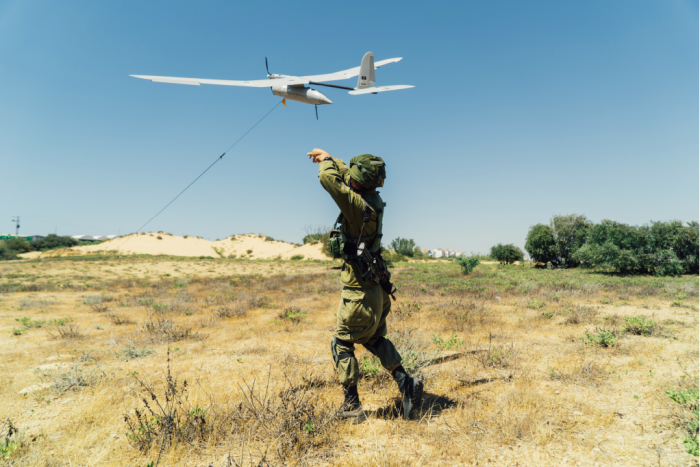
The framework emphasizes the expanded use of advanced technologies, including artificial intelligence, robotics, autonomous systems, and space-related capabilities, while also addressing gaps in readiness exposed during more than two years of sustained conflict.
The IDF said the plan also revisits traditional doctrines and seeks tighter coordination between air, land, and naval forces.
‘Beeper’-Based System
Among the concepts under consideration is a possible defensive “beeper”-based system, referencing a September 2024 operation in which thousands of Hezbollah operatives were wounded after their pagers exploded.
Military officials described the new concept as defensive in nature but did not specify whether such systems would be deployed inside Israel, along its borders, or elsewhere.
This marked the first public indication that the IDF is examining a defensive adaptation of the tactic.
Robotics, AI
The Hoshen plan also calls for broader deployment of robots and autonomous platforms across air, sea, and ground forces.
These systems may operate independently in some missions or in coordination with human soldiers in others.
Artificial intelligence is expected to be integrated more deeply into operational planning, command-and-control, and administrative functions, supported by expanded military data infrastructure.
Space, Air and Missile Defense
Space is identified as an increasingly contested domain. The IDF said it plans to invest in new space-related capabilities as more states expand their satellite programs.
Iranian satellite launches, some conducted with Russian assistance, have raised concerns in Israel about narrowing advantages in space-based intelligence and surveillance.
Air and missile defense remains a central focus. The IDF intends to continue strengthening its multi-layered air defense architecture, particularly against evolving drone threats, and to further develop the Iron Beam laser-based air defense system.
The Israel Air Force is also expected to assume a larger role in supporting ground forces to counter potential cross-border ground incursions.
Readiness
Beyond technology and hardware, the plan prioritizes restoring readiness and resilience among reservists, conscripts, and career personnel following prolonged combat operations.
Lessons from investigations into the October 7, 2023 Hamas attack, along with assessments from later phases of the war and projections of future threats, are expected to shape implementation.
Funding, Strategic Uncertainty
Funding remains a key uncertainty.
Prime Minister Benjamin Netanyahu has announced plans to allocate roughly 350 billion Israeli New Shekels ($111.4 billion) to defense over a 10-year period, but potential reductions in US military assistance, early elections, or renewed conflict could affect execution.
Negotiations with Washington over a successor to the current $38-billion military aid agreement, which runs through 2028, are also expected to influence Israel’s long-term defense planning.