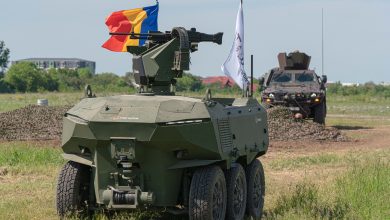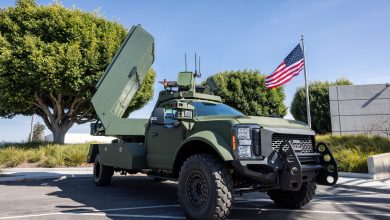
Denmark has acquired eight unmanned ground vehicles (UGVs) to evaluate their role in future military operations.
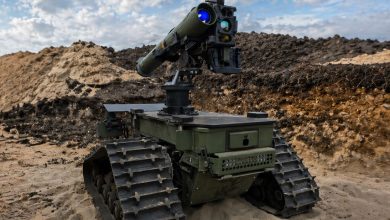
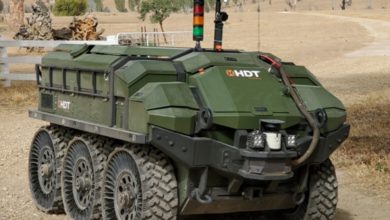
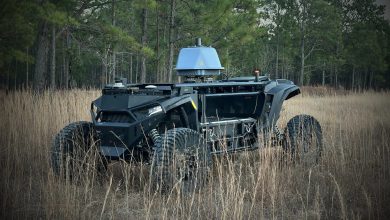
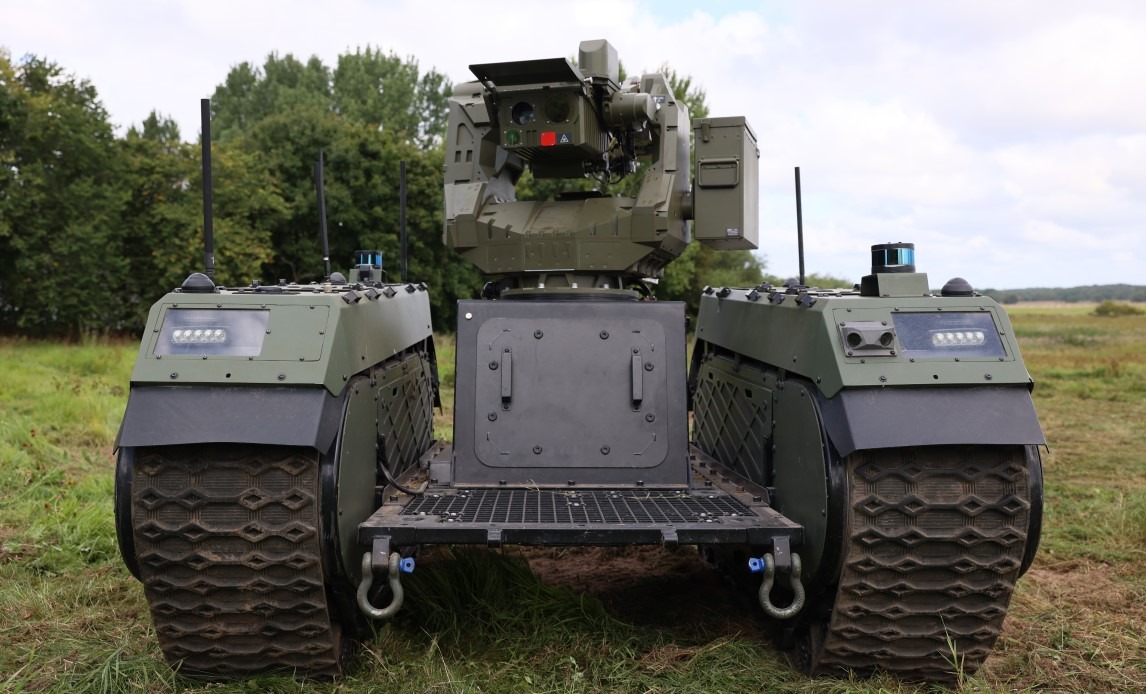
The systems were supplied by Estonia-based Milrem Robotics, which is delivering four THeMIS vehicles, and by UK company XRC Robotics, which is delivering four MFP-1 platforms.
The UGVs will be assigned to the Danish Army’s Combat Service Branch in Slagelse, in the country’s west.
A dedicated testing program is scheduled to start this month and will assess the vehicles’ technical performance, operational reliability, potential tactical uses, and limitations.
Copenhagen emphasized that the trials draw in part on lessons learned from the war in Ukraine.
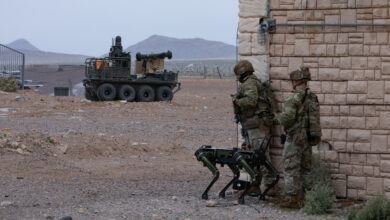
UGVs are intended to reduce personnel risks by performing tasks in contested environments.
These include transporting ammunition, food, and medical supplies to forward positions, conducting remote reconnaissance using onboard cameras and sensors, and supporting combat operations.
Some platforms can also be used for casualty evacuation from areas under fire, or for deploying explosive charges in high-risk scenarios.
Testing Program
A key focus of the trials will be hands-on evaluation by soldiers, who will test how unmanned ground vehicles can be integrated into everyday field operations, from logistics and surveillance to direct combat support.
The larger THeMIS platform weighs about 1,600 kilograms (3,530 pounds) and can carry payloads of up to 1,200 kilograms (2,645 pounds).
It uses a diesel-electric hybrid drive, has a range of up to 200 kilometers (124 miles), and is equipped with rubber tracks for off-road mobility.
Denmark has acquired the vehicles in a basic configuration, but the open architecture allows for future integration of mission modules, including remotely operated weapon stations.
During the testing phase, at least one THeMIS is expected to be fitted with a light 7.62 mm machine gun.
The MFP-1 is a compact UGV weighing just 25 kilograms (55 pounds), light enough to be carried by a single soldier.
Despite its size, it can transport up to 35 kilograms (77 pounds) of payload and reach speeds of up to 60 kilometers (37 miles) per hour.
Powered by an electric motor, it has an operational range of around 30 kilometers (19 miles) and is designed for rapid deployment and close-range reconnaissance missions.