Taiwan Eyes Robot Dogs for Urban, Frontline Ops

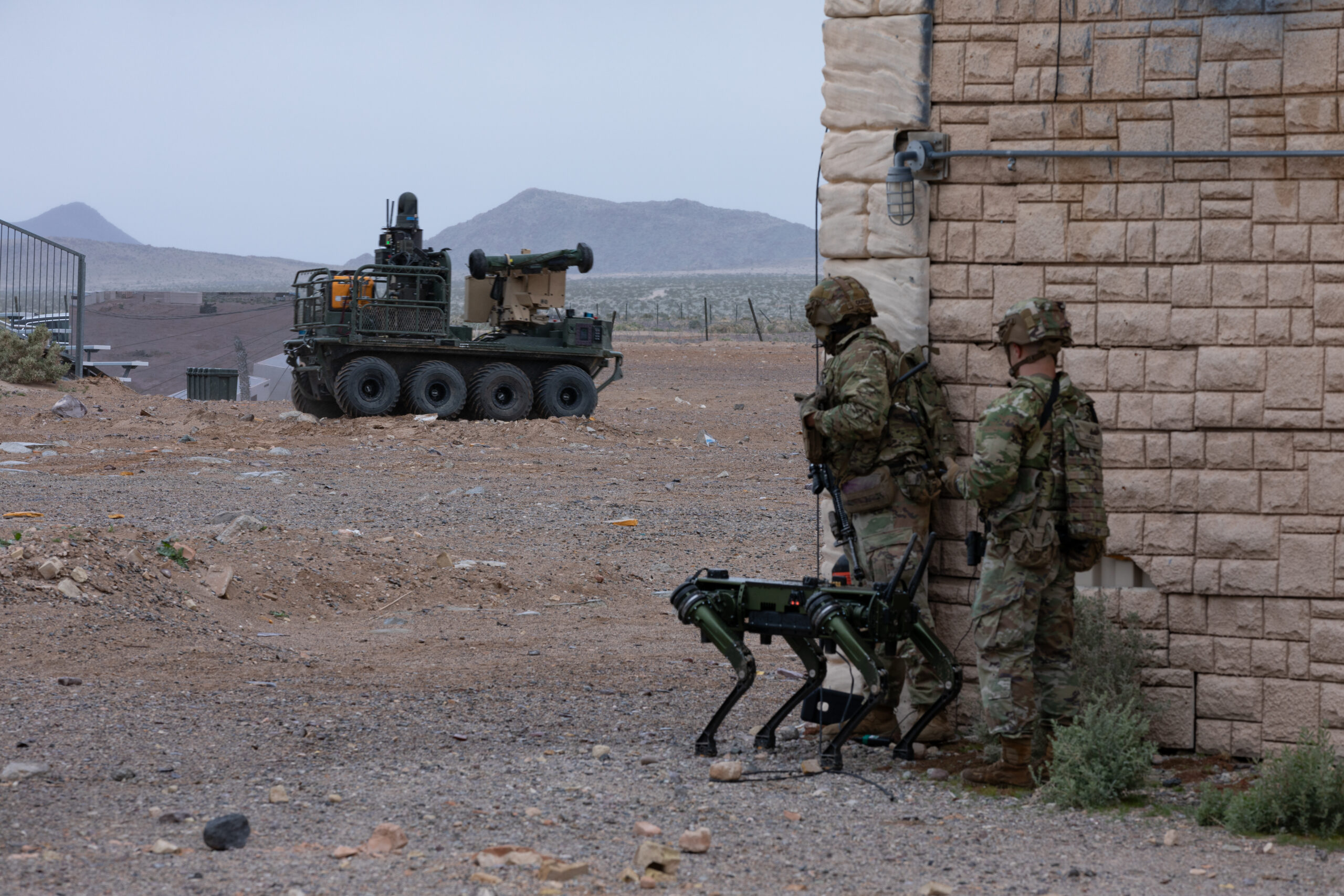
Taiwan plans to deploy robotic dogs for combat, scouting, and resupply tasks as part of a broader push to integrate unmanned systems into modern warfare.
In a proposal to the Legislative Yuan in late April, the ministry said it intends to adopt quadruped robots to support “deep and urban” operations, where officials say their enhanced mobility offers advantages over traditional platforms.
The robots can navigate stairs, slopes, and confined spaces, making them also suitable for installation security and battlefield surveillance, as well as other missions considered risky for personnel.
Some units may also function as mobile communication relays in denied environments.
The initiative reflects a shift toward asymmetric warfare built on “large-scale, low-cost, and highly efficient” technologies, according to local media.
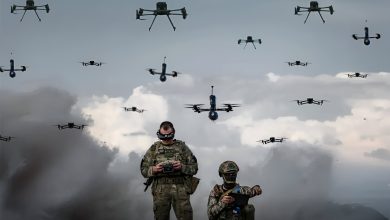
The military has already earmarked 1.24 trillion new Taiwan dollars ($39.6 billion) to acquire more than 210,000 drones of various types, such as surveillance and attack systems, in addition to ground-based platforms, including robotic dogs and transport vehicles.
Supply Chain Now Ready
Sources said that state-backed developer National Chung-Shan Institute of Science and Technology is leading integration efforts for the robotic dogs, including AI-enabled thermal imaging to improve battlefield awareness.
Other domestic firms are positioning to support the effort, including China Steel Corporation, which is supplying ultra-thin electrical steel for motors, and HIWIN for precision motion components.
Allied Power has also entered the sector with its MD-X inspection robot dog and is scaling production, while partnering with US-based AI firm Ainos to develop “smell-sensing” robots for detection tasks.
Additional companies, including Yulon, are producing key parts such as reducers and precision components, aiming to secure a role in the growing robotics supply chain.
Sources said that the military may procure foreign-built robot platforms but will integrate domestically developed sensors and subsystems, reducing reliance on external suppliers while accelerating deployment of the planned capability across operational scenarios.