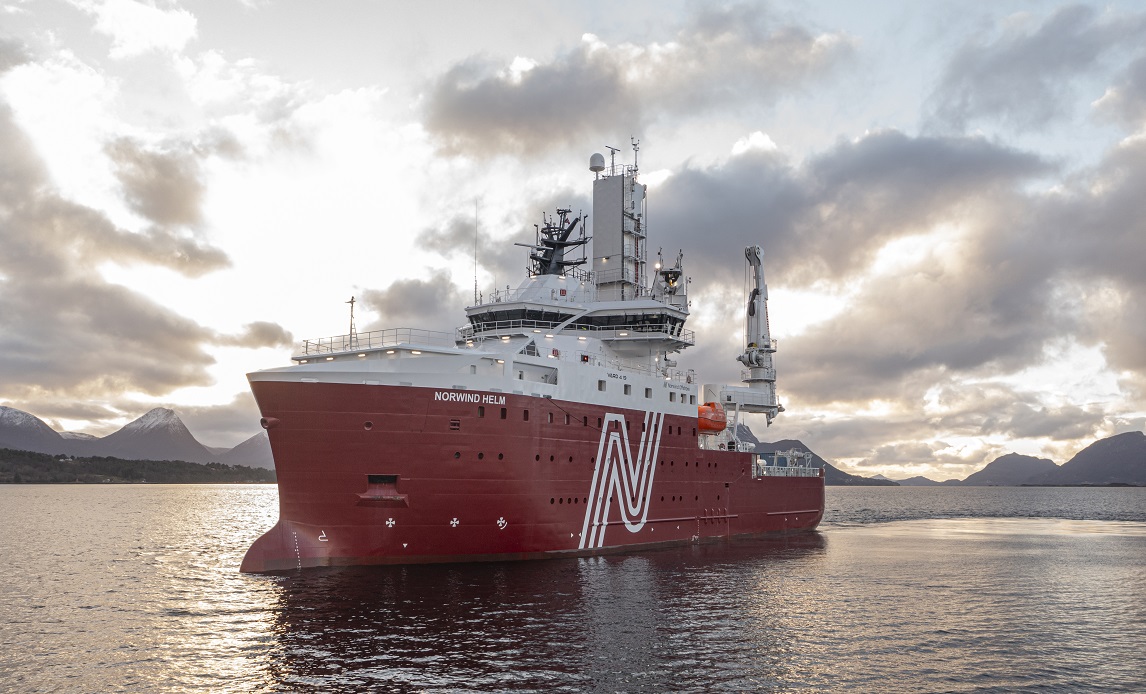
Denmark has signed a contract with local firm Navigare Capital Partners for the delivery of a vessel to monitor critical underwater infrastructure.
The selected platform is Norwind Offshore’s Norwind Helm commissioning service operation vessel (CSOV), which is being procured as a civilian ship previously used to service offshore wind farms.
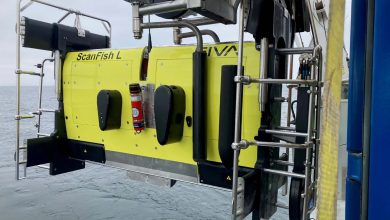
Minor modifications will be made to enable the vessel to deploy underwater drones and sensors and support military operations.
The ship is expected to be delivered in 2026, when adaptation work and personnel training will begin.
Financed through the current defense settlement and the Acceleration Fund, the acquisition stems from a partial political agreement under the 2024–2033 defense pact aimed at strengthening Denmark’s ability to protect critical underwater infrastructure, including energy facilities, cables, and pipelines.
“I am very pleased to be able to sign the purchase of this ship. The security situation remains serious, and it is therefore important that Denmark strengthens its maritime surveillance capabilities,” Head of the Fleet Program at the Danish defense procurement agency, Claus Lundholm Andersen, said.
“With this ship, the Navy will have a modern platform with development potential, which will be an important tool for increased surveillance and handling of incidents below the sea surface.”
Commissioning Service Operation Vessel
A CSOV is a specialized offshore support ship that serves as a floating base for technicians and equipment used in the construction, commissioning, and maintenance of offshore energy projects, particularly wind farms.
The hull of Norwind Helm was built at the Vard Braila shipyard in Romania, with final outfitting completed at Vard Brattvaag in Norway.
The 85-meter (280-foot) vessel has a beam of 19.5 meters (64 feet), a draught of 5.5 meters (18 feet), a depth of 7.3 meters (24 feet), and can accommodate up to 87 personnel.
Norwind Helm is powered by Caterpillar engines with a total installed output of 4,338 kilowatts (5,817 horsepower), enabling a service speed of 10 knots (18.5 kilometers/11.5 miles per hour) and a maximum endurance of up to 30 days.