In modern warfare, information dominance often depends on seeing what others can’t. Inverse Synthetic Aperture Radar (ISAR) is one of the technologies that make this possible, turning the target’s motion itself into a source of visual clarity.
Used on ships, aircraft, and satellites, ISAR delivers detailed radar images that help operators identify and track moving objects even in total darkness, clouds, or fog.
What Is Inverse Synthetic Aperture Radar?
ISAR is a specialized radar imaging technique that creates high-resolution images of targets — much like a camera — but unlike a camera, it doesn’t rely on light. Instead, it sends radar pulses and measures the reflections to map out a target’s shape and structure.
While Synthetic Aperture Radar (SAR) systems generate images by moving the radar itself, such as an aircraft sweeping over terrain, ISAR inverts the process.
The radar remains relatively stationary while the target moves, and that motion provides the changing perspectives the system needs to build a detailed image.
This makes ISAR especially useful for imaging ships at sea, aircraft in flight, or even vehicles moving on land — scenarios where the target’s motion can be harnessed to improve image resolution.
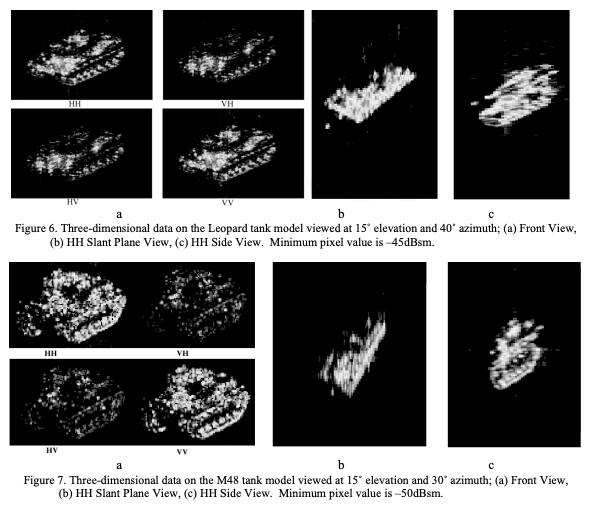
The result is a radar “picture” sharp enough to distinguish vessel types, detect rotating components like propellers, and identify structural details hidden from other sensors.
How ISAR Works
ISAR works by measuring the Doppler shifts — the tiny frequency changes — that occur when radar waves bounce off different parts of a moving target.
Because parts of the target move at slightly different speeds relative to the radar (for example, a ship’s bow pitching up and down), those frequency variations can be used to reconstruct a two-dimensional image.
Here’s the process simplified:
- Radar transmission: The ISAR system sends out radio pulses toward a target.
- Signal return: The radar receives the reflections, each carrying information about distance and motion.
- Motion exploitation: Instead of relying on the radar platform’s motion (as SAR does), ISAR uses the target’s own movement to synthesize an “aperture” — effectively a large, virtual antenna that sharpens the image.
- Image formation: Advanced signal processing transforms the motion-induced Doppler data into a detailed radar image, revealing the target’s structure and even helping estimate its orientation or type.
Modern ISAR systems use digital processors and adaptive algorithms to correct for unpredictable target motion, producing clear, stable imagery even when movement is erratic — a major improvement over early-generation radars.
Applications in Defense and Surveillance
ISAR plays a critical role in maritime domain awareness, airborne reconnaissance, and target classification.
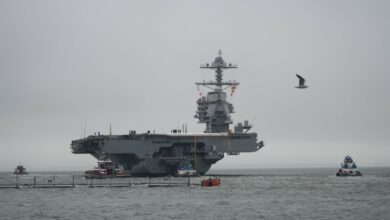
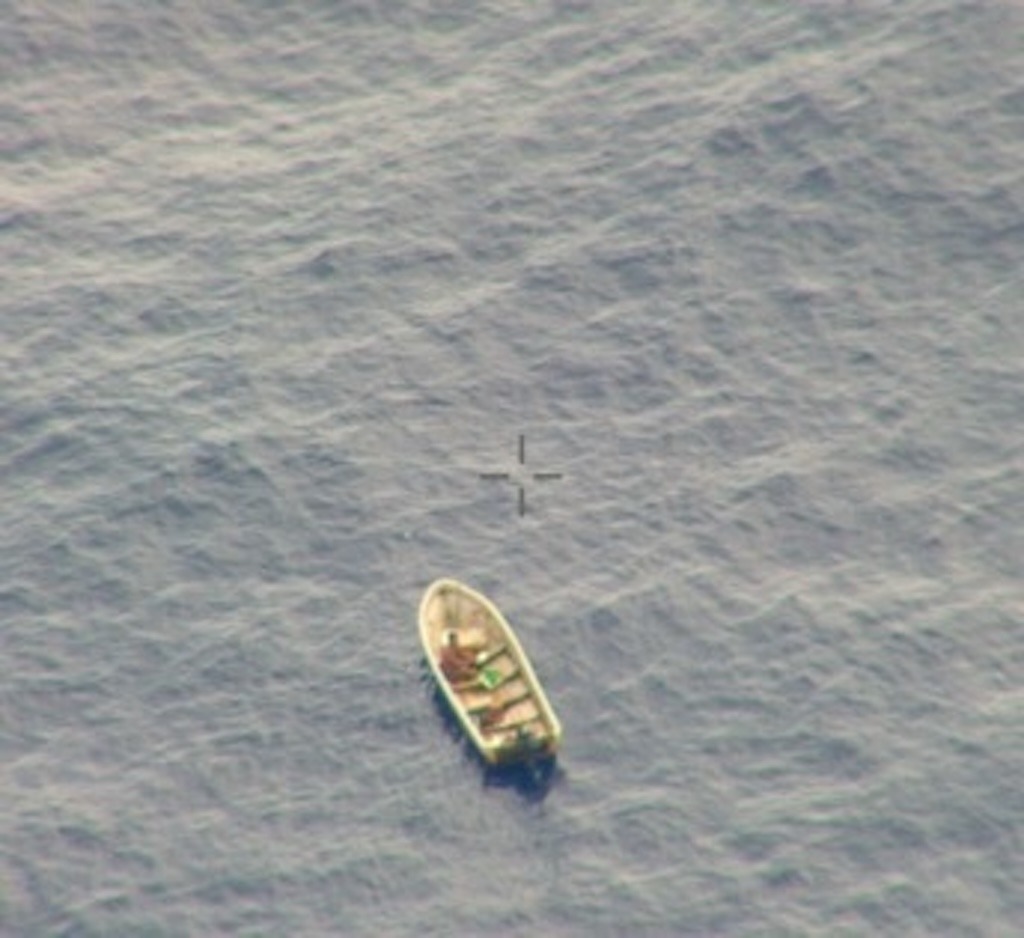
- Naval operations: Warships and patrol aircraft use ISAR to identify unknown vessels at extended ranges. The system can recognize ship silhouettes and rotating structures, providing critical identification without having to close in distance.
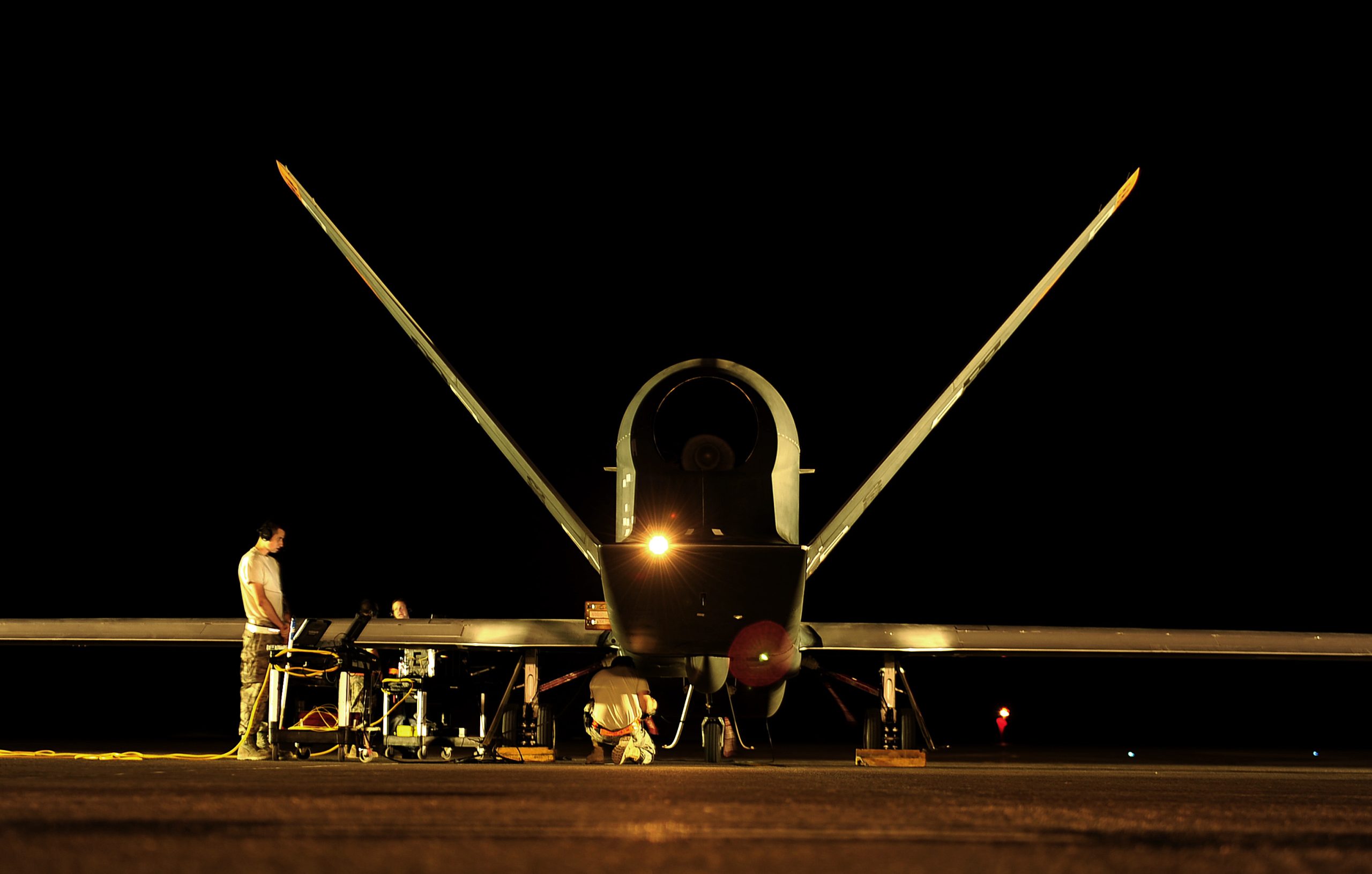
- Airborne and spaceborne surveillance: Airborne early warning and reconnaissance platforms — such as the E-3 Sentry and certain satellite payloads — employ ISAR to track moving ground- and sea-based targets.
- Motion-based signature extraction: ISAR leverages the target’s motion to create distinct Doppler patterns, distinguishing ships or aircraft types.
Because radar is unaffected by light or weather, ISAR can produce reliable images day or night, in heavy rain, or through clouds.
Civilian uses also exist, such as monitoring maritime traffic, oil spills, or even ice drift in polar regions, though its most advanced implementations remain military.
Strategic Impact and Future Direction
ISAR’s ability to “see through motion” gives commanders a decisive edge in environments where visibility is limited or identification speed is critical.
In an era where gray-zone tactics and long-range engagements are the norm, distinguishing a fishing trawler from a naval vessel at a distance can prevent escalation or ensure a timely strike.
Future ISAR systems are expected to leverage machine learning and multi-sensor fusion, combining data from electro-optical, infrared, and electronic intelligence sources to automate target recognition and improve decision timelines.
Advancements in onboard processing will also enable real-time image generation, allowing operators to see radar images as clearly as optical photos.
Ultimately, ISAR transforms motion into information — turning what once blurred the picture into the very thing that brings it into focus.