In the tense decades of the Cold War, Soviet bombers and cruise missiles loomed as a lethal threat to US carriers and NATO fleets.
To survive, warships needed a quick-reaction missile that could swat down aircraft and sea-skimming weapons before they struck home.
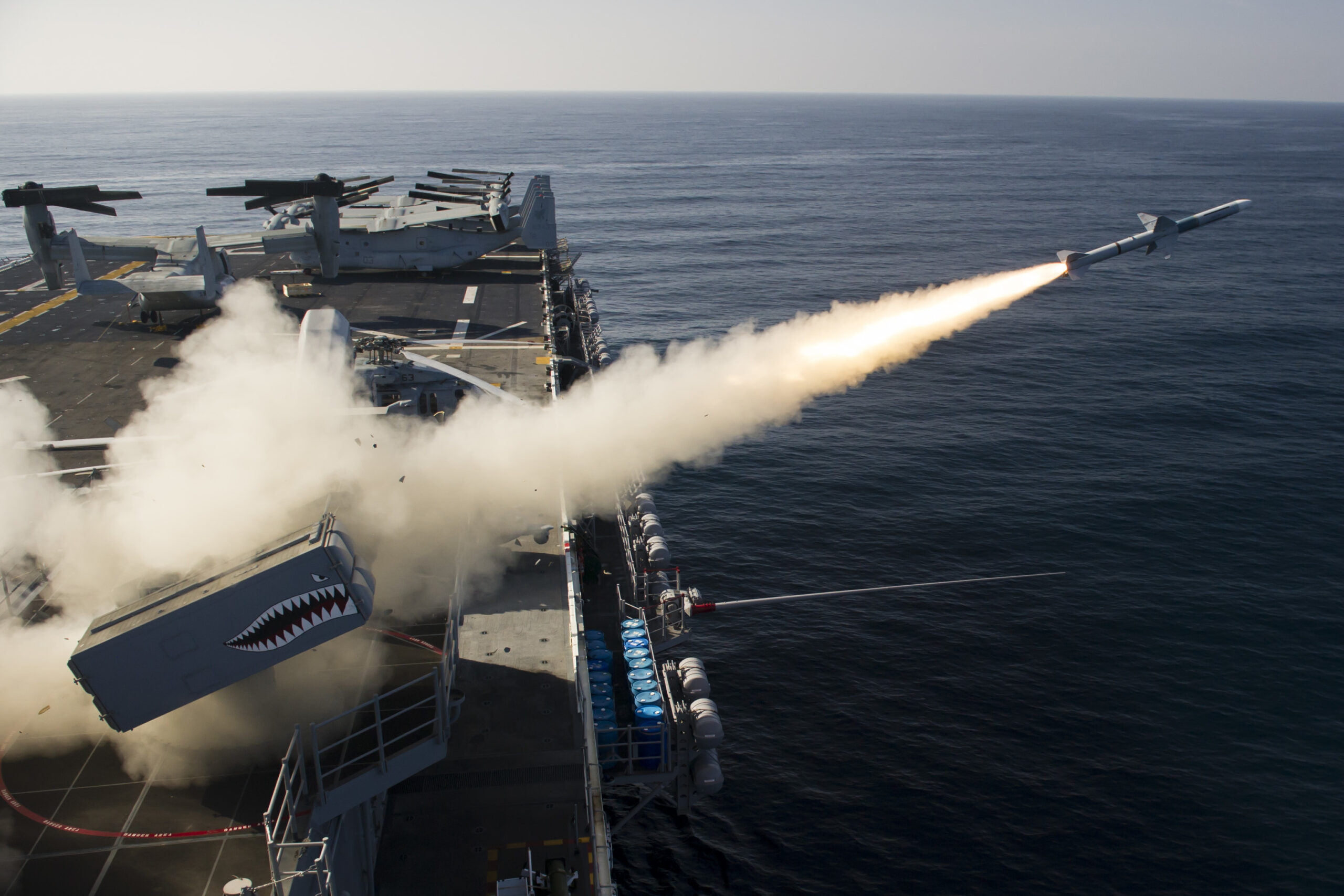
The answer was the RIM-7 Sea Sparrow, a navalized version of the AIM-7 air-to-air missile that became the last-ditch shield for countless ships and set the stage for modern naval air defenses.
From Air-to-Air to Sea Defense
By the late 1960s, the US Navy urgently needed protection against fast, low-flying missiles that could slip past long-range interceptors. Rather than start from scratch, engineers adapted the radar-guided AIM-7 Sparrow for shipboard use, producing the RIM-7 Sea Sparrow.
It entered service in the early 1970s as part of the NATO Sea Sparrow Missile System (NSSMS), a cooperative program that established a common defense standard for allied fleets.
Carriers, cruisers, and destroyers worldwide soon carried the missile, strengthening NATO’s ability to counter the Soviet missile threat.
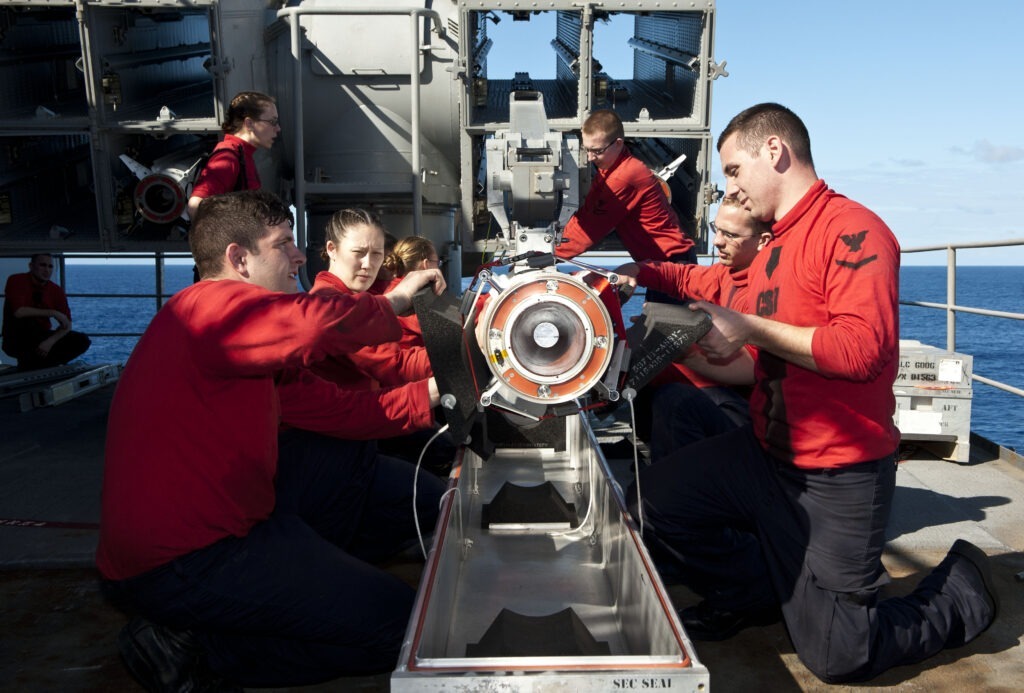
The Role of the RIM-7 Sea Sparrow
The Sea Sparrow was designed for point defense, engaging hostile aircraft and missiles at short to medium ranges.
With an effective range of 10 to 20 nautical miles (11.5 to 23 miles/18.5 to 37 kilometers), it bridged the gap between long-range weapons like the Standard Missile and close-in systems such as the Phalanx CIWS.
Armed with a blast-fragmentation warhead, it could disable or destroy targets with a near-miss, detonating incoming missiles before they could hit a ship.
Since it’s compact and versatile, the RIM-7 could be launched from trainable launchers like the Mk-29 or, later, from vertical launch systems, fitting seamlessly into new warship designs.
How Sea Sparrow Hunts Targets
At its core, the RIM-7 relies on semi-active radar homing. Shipboard radar covers the target with energy, while the missile homes in on the reflection.
Once in proximity, its fuze detonates the warhead to shred the target with fragments.
This method provides ships with a means to counter sea-skimming missiles flying just above the water, a challenge for gun-based defenses.
The tradeoff, however, is that the ship’s radar has to track the target continuously until impact.
Evolving Through NATO and Beyond
Early models of the RIM-7 Sea Sparrow were direct, repurposed versions of the AIM-7E/F.
As the system matured, the NSSMS standardization allowed NATO members to field interoperable defensive systems that strengthened collective maritime security, simplified logistics and training, and harmonized capabilities across allied fleets.
The Sea Sparrow became compatible with vertical launch systems in later iterations, which expanded its operational flexibility. Ships could now fire the missile from beneath the deck, enhancing overall survivability and responsiveness in high-threat environments.
One such iteration is the RIM-162 Evolved SeaSparrow Missile (ESSM), an advanced evolution of the RIM-7 Sea Sparrow developed to provide modern naval vessels with robust defense against incoming aircraft and missiles.
The ESSM offers significantly improved range, agility, and active radar homing, addressing the limitations of its predecessor to defeat high-speed, maneuvering anti-ship threats.
Finland purchased 112 upgraded missiles for $735 million in 2018 to boost its Hamina-class ships, Multirole Corvette ships, and Coastal Batteries. Raytheon has also signed a $34.3-million deal with the US Department of Defense to provide technical support for US warships’ Sea Sparrow missile systems, including those purchased by Chile and Japan.
Where the RIM-7 Sea Sparrow Falls Short
The RIM-7 Sea Sparrow has faced several limitations that have become increasingly apparent as modern threats have evolved.
Its relatively short engagement range restricts it to close-in defense, leaving ships with limited reaction time against fast-approaching targets.
The missile also relies on continuous radar illumination, a requirement that not only ties up valuable radar resources but also reduces the number of simultaneous targets a ship could effectively engage.
These constraints make the system particularly vulnerable during massed or saturation attacks, where multiple incoming missiles could overwhelm its engagement capacity.
Holding the Line at Sea
The Sea Sparrow has given US and NATO navies a reliable last line of defense. During the Cold War, it helped carriers survive the threat of Soviet bomber and missile attacks, reinforcing layered fleet defenses.
It has also been employed in active combat operations. During the 1991 Gulf War, Sea Sparrow-equipped ships formed part of the coalition’s naval defenses against potential Iraqi air and missile threats.
In NATO’s later Mediterranean patrols, the system provided a persistent umbrella against intrusions. Though not always battle-tested in dramatic engagements, its constant presence reassured commanders that their ships had a dependable shield.
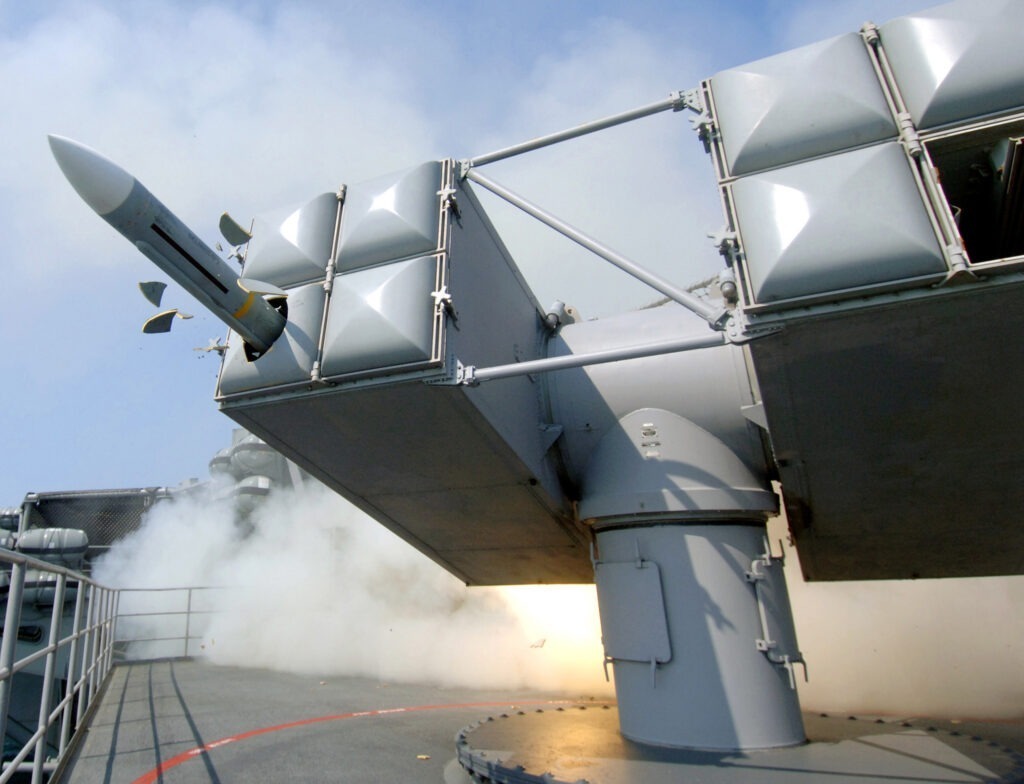
The RIM-7’s influence endures, as it proved that an adaptable, cooperative missile system could keep pace with evolving threats and strengthen allied cohesion.
The ESSM, now in widespread service, owes its existence to the RIM-7’s foundation.