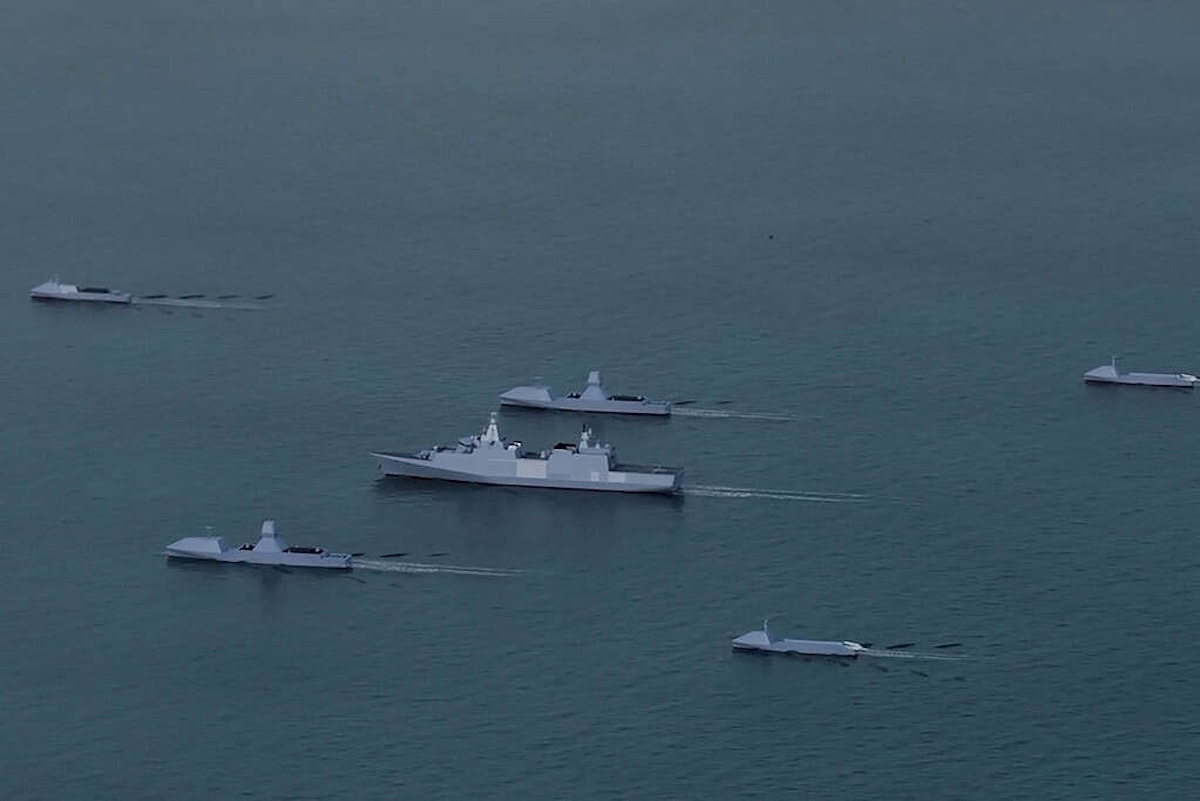
Babcock has unveiled its ARMOR Force concept, designed to integrate crewed and uncrewed maritime systems to support Royal Navy initiatives to develop a hybrid fleet.
ARMOR Force, which stands for Autonomous and Remote, Maritime Operational Response – Force, is a planned architecture of separate platforms and systems that can independently operate but are digitally connected to share information and work together as one force.
The British defense company is partnering with US shipbuilder Huntington Ingalls Industries (HII) and UK defense technology firm Arondite to deliver key elements of the concept.
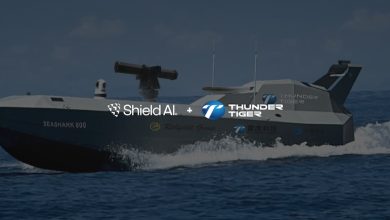
HII is constructing the ROMULUS line of artificial intelligence-enabled uncrewed surface vessels (USVs), while Arondite’s Cobalt operating system will provide the autonomy and mission coordination layer.
ARMOR Force
Built on open commercial and NATO standards to ensure allied interoperability, the concept focuses on Babcock’s creation of a Type 31 Common Command Vessel capability, which acts like a control hub directing a fleet of autonomous vessels and systems.
ARMOR Force also involves autonomous or remotely-controlled large USVs, as well as modular, containerized Persistent Operational Deployment Systems.
Moreover, it includes an autonomous mission system expected to be deployable by the end of 2026.
Hybrid Naval Fleet
“ARMOR Force is our response to the First Sea Lord’s call for a re-imagined Hybrid Navy,” said Sir Nick Hine, Chief Executive of Babcock’s Marine sector.
In September, First Sea Lord General Sir Gwyn Jenkins outlined plans to deploy crewed and uncrewed platforms on the Queen Elizabeth-class aircraft carriers and launch the first jet-powered drone from a carrier by 2026.
Babcock aligned its ARMOR Force architecture with Royal Navy operations to counter increased Russian activity in the North Atlantic.
One of these, Atlantic Bastion — formally launched on Monday as part of the UK’s Strategic Defence Review 2025 — focuses on linking autonomous vessels, ships, submarines, and aircraft through AI-powered acoustic detection and a digital targeting network that enables faster battlefield decision-making.