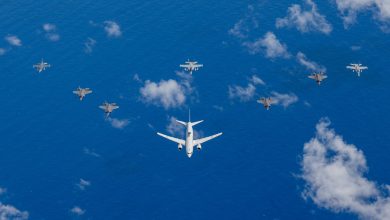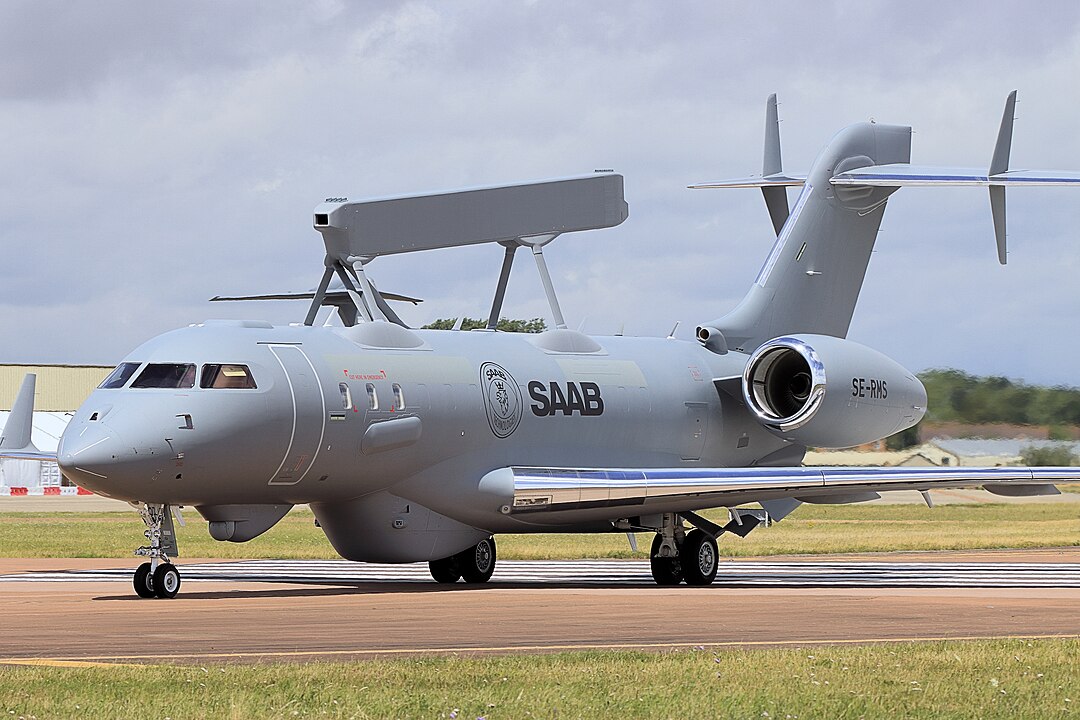
In an era where contested skies define modern warfare, militaries need to see farther and react faster. That’s where Saab’s GlobalEye steps in.
This multi-role airborne early warning and control (AEW&C) platform integrates long-range radar, command and control, and multi-domain tracking into a single aircraft.
Operators can now simultaneously monitor air, sea, and land threats — an increasingly vital edge in today’s defense landscape.
What Is GlobalEye?
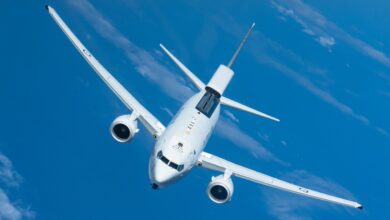
GlobalEye is Saab’s airborne surveillance and control aircraft, built on the Bombardier Global 6000/6500 business jet.
Its job is to spot and track threats in the air, at sea, and on land, giving commanders a single, real-time picture of the battlefield.
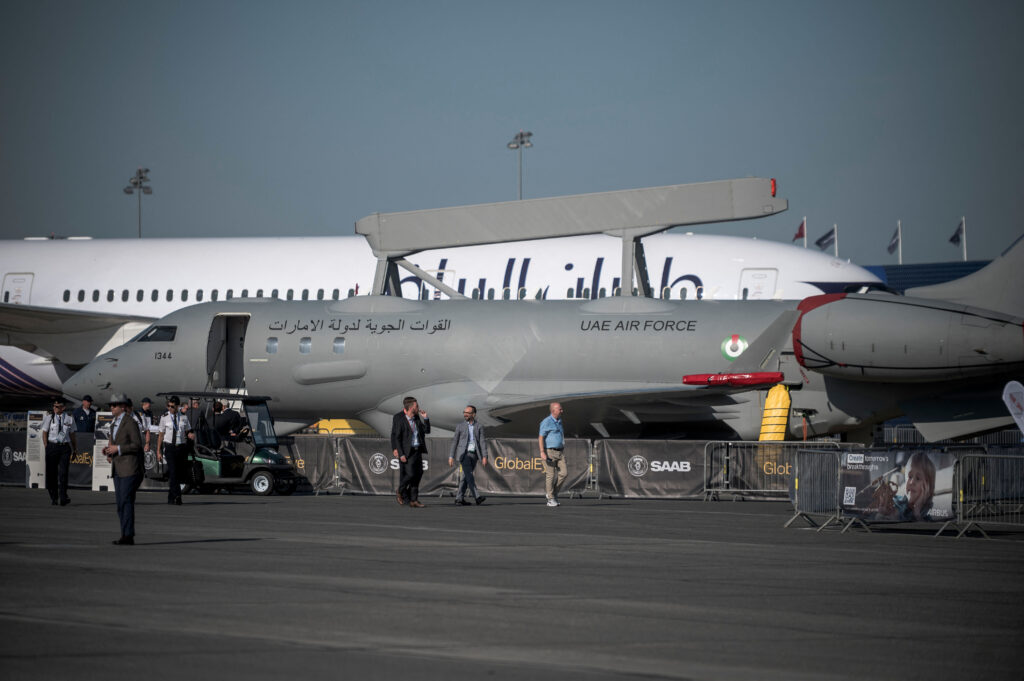
The aircraft carries advanced radars and sensors that can watch wide areas for hours at a time. First developed for the United Arab Emirates under a 2015 contract, GlobalEye is now in service and has gained interest from NATO.
Air Surveillance
GlobalEye relies on the powerful Erieye Extended Range (ER) radar, which detects and tracks targets, such as smaller aircraft and future low-signature threats, at far greater distances than earlier systems.
The radar is designed to perform even in cluttered environments where terrain or civilian traffic might mask targets and under jamming attempts by adversaries. It can also focus its energy on specific areas or targets of interest, improving accuracy and resilience.
Land Surveillance
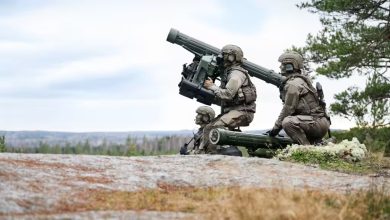
Equipped with Ground Moving Target Indication, the AEW&C enables operators to detect troop convoys, armored vehicles, and other mobile threats in real-time.
Additionally, the aircraft is equipped with a dedicated ground radar that produces high-resolution terrain and fixed-target imagery, even in adverse weather or low-light conditions.
Sea Surveillance
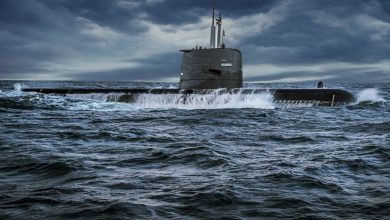
GlobalEye sensors are sensitive enough to pick up even small craft like jet-skis at long distances, and the combined power of the Erieye ER radar with a dedicated maritime radar enables the detection of objects as small as a submarine periscope.
To help identify these contacts, GlobalEye integrates several tools: an automatic identification system for reading vessel transponders, an electro-optical system for visual confirmation, and an inverse synthetic aperture radar that builds radar images of ships.
How GlobalEye Works
GlobalEye works by fusing data from its suite of advanced sensors into a single, integrated mission system.
The Erieye ER radar scans the skies with electro-optical cameras and electronic intelligence systems, adding detail and context, while dedicated maritime and ground radars watch the seas and terrain.
These inputs are processed on board and displayed in real-time. Secure data links then allow GlobalEye to share this information with allied forces, making it not just a sensor platform but a command-and-control hub that strengthens joint operations.
Key Limitations
Despite its advanced design, GlobalEye faces notable constraints. Its smaller business jet airframe supports fewer crew and systems than larger AEW&Cs, limiting onboard capacity.
Payload is more limited than on heavier platforms, though advanced sensors help offset some of this limitation.
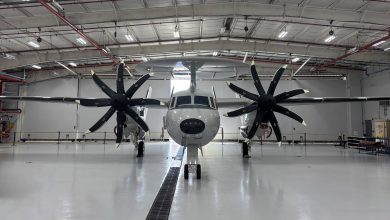
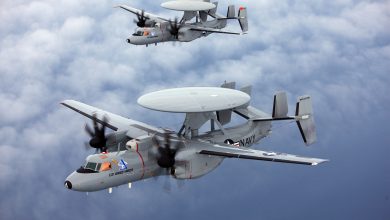
In NATO and allied markets, GlobalEye also competes with more established platforms, such as the E-7 Wedgetail and E-2D Hawkeye.
GlobalEye demonstrates how modern AEW&C aircraft are evolving, giving both major powers and mid-sized air forces a crucial edge in today’s contested airspaces.