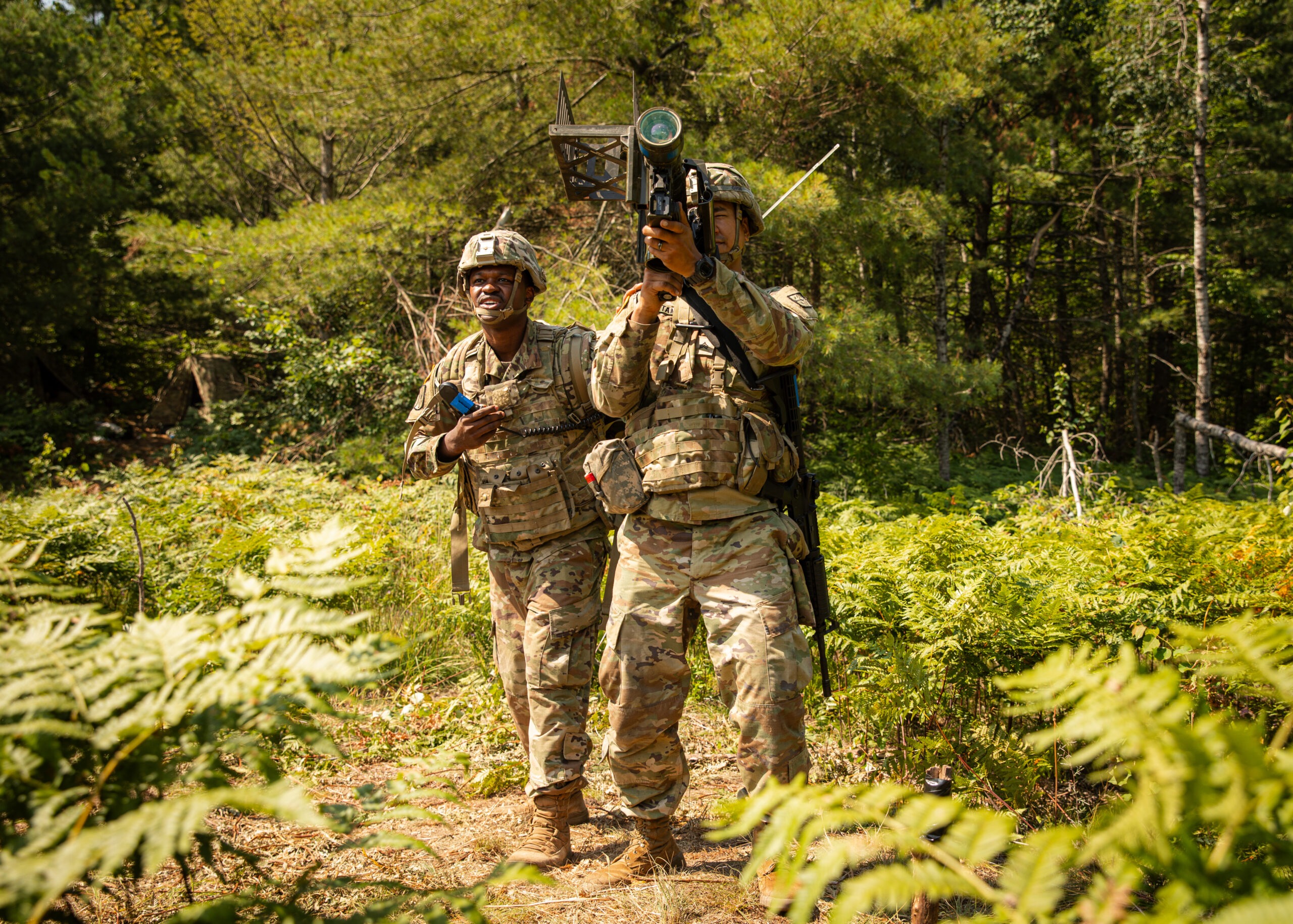
In the mountains of Afghanistan during the 1980s, a shoulder-fired missile tilted the balance against the Soviet Union: the FIM-92 Stinger.
Lightweight, portable, and capable of downing low-flying aircraft, the American-made missile defense system is one of the most recognizable weapons in modern warfare.
This quick explainer unpacks the technology, history, and strategic significance of the missile in today’s military and defense landscape.
What Is the FIM-92 Stinger?
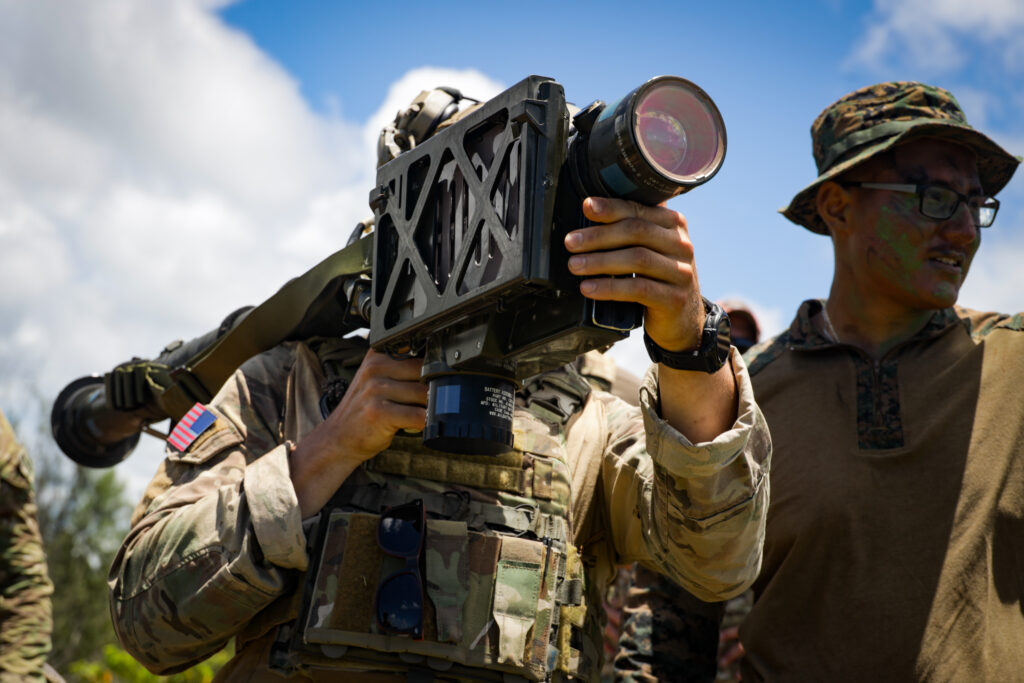
The Stinger is a man-portable air-defense system (MANPADS) developed in the 1970s by General Dynamics and later produced by Raytheon.
Entering US service in 1981, it was designed to provide ground forces with an effective way to counter enemy aircraft without relying on larger, vehicle-mounted air defense systems.
Weighing about 15 kilograms (33 pounds) and fired from the shoulder by a single operator, the Stinger quickly became one of the world’s most widely used MANPADS. It has been exported to dozens of US allies and remains a cornerstone of short-range air defense.
How the FIM-92 Stinger Works
The Stinger uses an infrared homing seeker that locks onto the heat signature of an aircraft’s engine.
Before firing, the operator inserts a battery-cooling unit into the gripstock, which injects high-pressure argon to cool the seeker’s detectors cryogenically, thereby improving sensitivity.
It is also a “fire-and-forget” weapon, meaning that once launched, the Stinger requires no further guidance from the operator, as the missile steers itself toward the target.
Its range is roughly four to five kilometers (2.4 to 3.1 miles), with an effective altitude of up to 3,800 meters (12,500 feet). This makes it suitable for targeting helicopters, low-flying jets, and increasingly, drones.
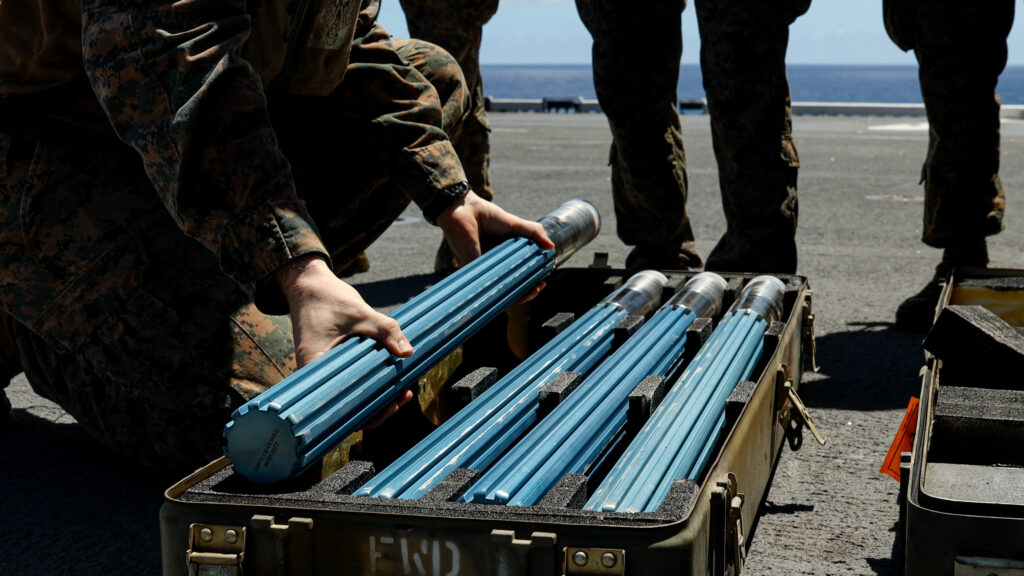
Variations, Limitations, and Developments
| Variant | Key Features & Developments | Limitations |
| FIM-92A | First production model; infrared homing seeker | Limited resistance to flares and countermeasures |
| FIM-92B (Stinger-POST) | Added Passive Optical Seeker tech; improved flare rejection with dual detectors | Still vulnerable to advanced decoys and cluttered environments |
| FIM-92C (Stinger-RMP) | Introduced reprogrammable microprocessor; software updates extended life | More complex electronics increased sustainment costs |
| FIM-92E (Stinger-RMP Block I) | Enhanced IR/UV seeker; better range and target acquisition in clutter | Limited effectiveness against the newest stealthier or low-IR targets |
| FIM-92J | Life-extension program; upgraded software, batteries, and components | Mainly sustainment-focused, little leap in capability |
| ATAS (Air-to-Air Stinger) | Adapted for helicopters (Apache, Kiowa, others); expanded versatility | Range and seeker optimized for rotary-wing combat, not long-range engagements |
Impact and Usage
The FIM-92 Stinger has earned its reputation as a battlefield equalizer. It became famous during the Soviet–Afghan War in the 1980s, where it inflicted heavy losses on Soviet aircraft, undermining Moscow’s ability to control the battlefield.
Since then, the Stinger has been used in multiple conflicts, most recently in the Russian-Ukrainian war. The United States and NATO allies supplied Ukraine with over 2,000 Stinger missiles to counter Russian helicopters, low-flying aircraft, and unmanned aerial systems in 2022.
However, this has also revealed apparent constraints that have led others to seek an upgrade. A few limitations of the FMI-92 Stinger are:
- Range and altitude: It cannot engage high-flying aircraft.
- Countermeasures: Modern jets use flares and electronic warfare systems to spoof infrared seekers.
- Shelf life: Many Stinger stocks are aging, and specific components are low in stock, creating logistical challenges for the US and allies as they replenish inventories.
Because of these limits, Stingers are usually part of layered air defense systems, complementing radar-guided missiles and heavier platforms.
Despite being over 40 years old, the FIM-92 Stinger remains widely deployed. The US Army and Marine Corps continue to field it, while NATO members and partners across Europe, Asia, and the Middle East rely on it.
The system’s relevance has been reinforced by conflicts in which low-cost drones and helicopters play a major role, underscoring the need for portable, point-defense solutions.
Looking ahead, the Stinger’s eventual successor is under discussion in the US, but until then, it remains a symbol of accessible, mobile air defense with a long battlefield record.