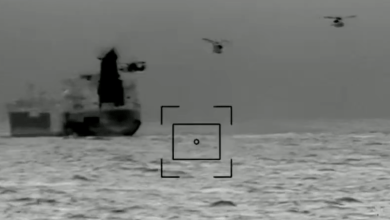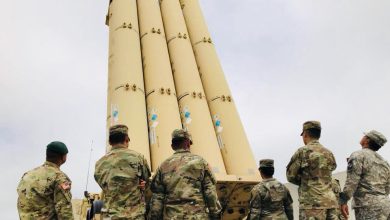
The Lithuanian Army has tested Swedish-made missiles against high-speed unmanned aerial systems (UAS) near Belarus, part of growing military efforts to adopt efficient solutions to counter airborne threats.
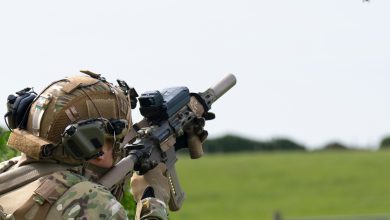
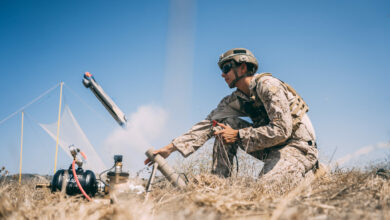
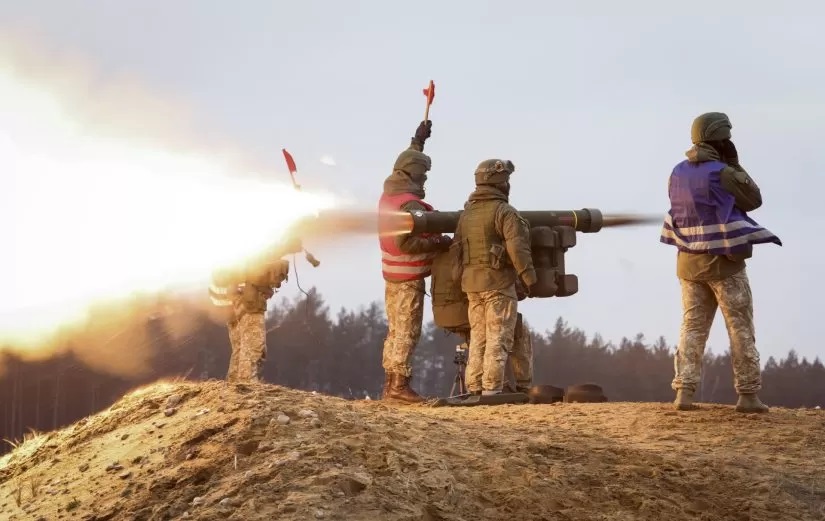
A video released this week by the Lithuanian Armed Forces showed that air defense troops utilized Saab’s Robotsystem (RBS) 70 NG surface-to-air missiles at target drones.
The live-fire demonstrations took place at the General Silvestras Žukauskas range in the eastern city of Pabradė, less than 10 kilometers (6.2 miles) from the Belarus border, and also involved armored vehicles fitted with machine guns.
The RBS 70 NG uses a laser beam-riding guidance system, making it highly resistant to electronic or radar jamming.
It can operate both day and night in all weather conditions, and can neutralize targets at up to 9 kilometers (5.5 miles) or at altitudes reaching 5,000 meters (16,404 feet).
The system can be deployed and ready to fire in about 45 seconds and reloaded in under five seconds under a man-portable or vehicle-mounted configuration.
“Testing of weapon systems against drones at the General Silvestras Žukauskas training ground — some work the first time, some don’t. But that’s why we test and weapon crews train to attack this type of target,” the Lithuanian Armed Forces said in a social media post.
Response After Incursions
The drills followed an amendment allowing the Lithuanian military to shoot down unidentified or hostile drones for faster airspace response. This proposed rule would also let troops engage targets in restricted zones with the defense minister’s approval.
The move comes after two Russian-made Gerbera kamikaze drones, one carrying explosives, crossed from Belarus. The NATO member has since closed part of its border airspace.
Expanding Training, Utility
To boost its own UAS capabilities, Vilnius revealed earlier this year that it will open training centers to teach over 22,000 people, including 7,000 students, to build and fly tactical drones.
The first three will open next month in Jonava, Tauragė, and Kėdainiai, expanding to nine by 2028.
Backed by almost $4 million in funding, the program will train adults through the Lithuanian Riflemen’s Union and students via the Non-Formal Education Agency, with lessons encompassing basic piloting, programming, and 3D UAS airframe design.
Simultaneously, the Baltic state is acquiring a Ukrainian acoustic detection system for early warning against enemy drones. Testing starts this year, with full integration next year alongside US-made systems.
Its military is also expanding drone use, with the framework ordering the distribution of a reconnaissance UAS to each infantry squad as well as field intelligence and strike UAS to higher units.