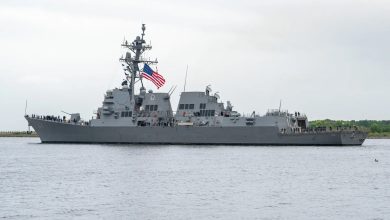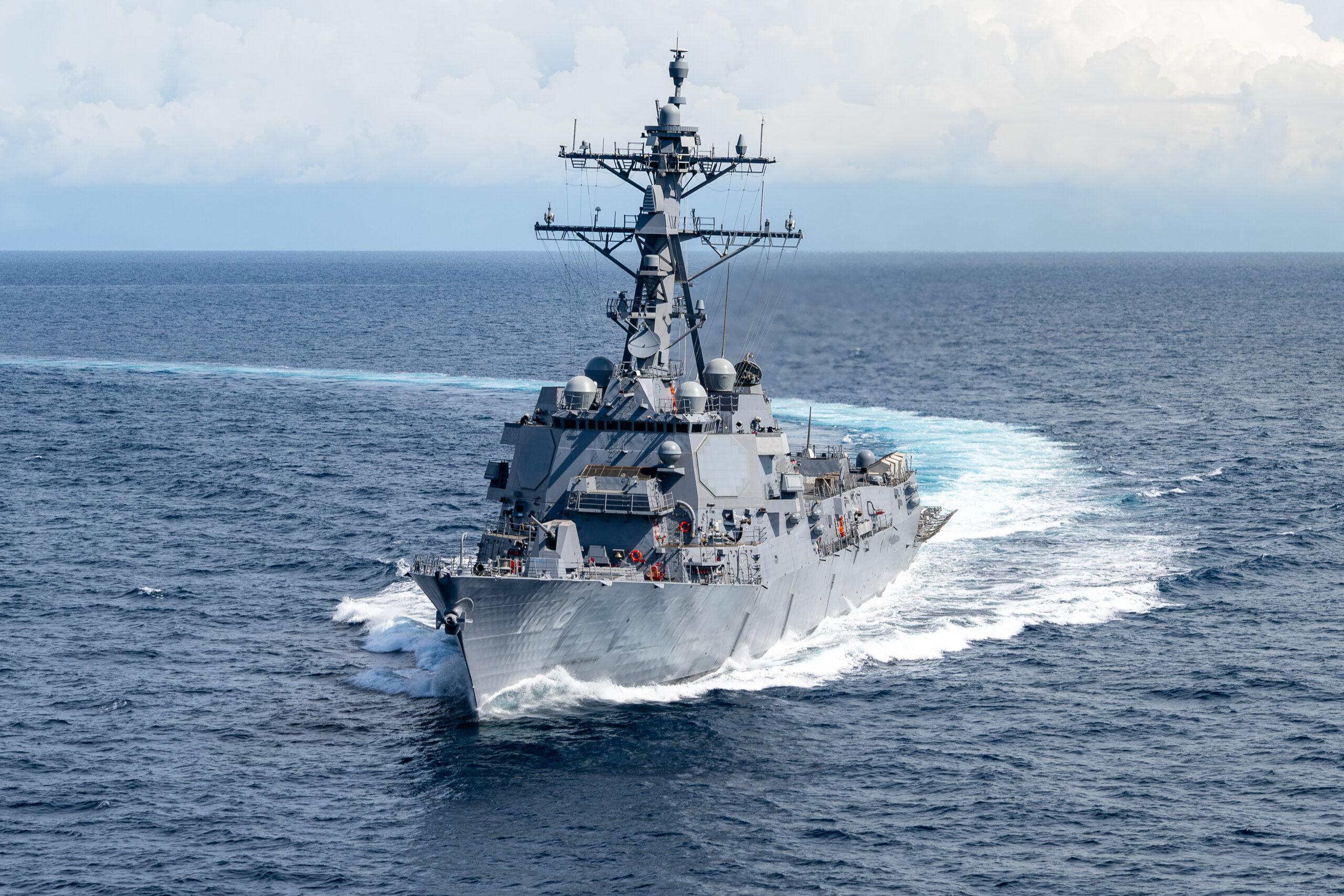
HII has finalized the second round of sea trials for the US Navy’s 78th Arleigh Burke-class guided-missile destroyer USS Ted Stevens (DDG 128), completing a key step toward the ship’s delivery.
The evaluations took place in the Gulf of Mexico, which followed the first set of trials in late September.
During the multi-day assessment, HII and military crews evaluated the vessel’s engines, navigation, and weapons systems to ensure full readiness for upcoming acceptance trials under the navy and commissioning into service.
Engineers also tested major components such as the new AN/SPY-6 radar and the Aegis Baseline 10 combat system, both designed to improve how the ship detects and responds to threats at sea as part of the Arleigh Burke fleet’s Flight III configuration.
“The Ingalls and Navy team demonstrated tremendous teamwork during this trial and are fully committed to delivering DDG 128 to the fleet,” said Ben Barnett, Arleigh Burke program manager at HII Ingalls Shipbuilding.
“Our focus remains on ensuring every system is thoroughly tested and fully operational before delivery.”
Major Upgrades
The Ted Stevens is the third of the US Navy’s new Flight III Arleigh Burke destroyers, an upgraded version of the long-running design that includes advanced sensors, more firepower, and improved combat capabilities.
HII has delivered 35 Arleigh Burke-class destroyers to date, including the first Flight III vessel, USS Jack H. Lucas (DDG 125).
Including vessels produced by program partner General Dynamics Bath Iron Works, the warships now total over 90, with 74 operational as of late 2024.
Five more are currently being built at the company’s Pascagoula shipyard, including the Ted Stevens (DDG 128), Jeremiah Denton (DDG 129), George M. Neal (DDG 131), Sam Nunn (DDG 133), and Thad Cochran (DDG 135), the keel of which was authenticated in late October.
The US Navy’s Arleigh Burke System
The Arleigh Burke destroyer, also known as the DDG 51-class, was first adopted in the 1980s to expand the US military’s lethality at sea.
Ships in the fleet range from 505 to 510 feet (154 to 155 meters) in length, depending on configuration.
The vessel uses three Allison T56 generators, each with an output of 3,400 to 5,400 horsepower, and four General Electric LM2500 gas turbines, each with an output of 26,200 horsepower.
During operations, the ship can reach a maximum speed of 30 knots (35 miles/56 kilometers per hour) and cover a range of 4,400 nautical miles (5,063 miles/8,149 kilometers).
The vessel is equipped with various missiles, rockets, naval artillery, decoy countermeasures, and electronic warfare capabilities, making it effective against surface, underwater, airborne, and land-based targets.
An Arleigh Burke can contain up to 300 personnel and features dedicated spaces for maritime helicopters and small rigid-hull inflatable boats.