US defense firm Vatn Systems has launched its own inertial navigation system (INS) to boost underwater and surface navigation in GPS-denied environments.
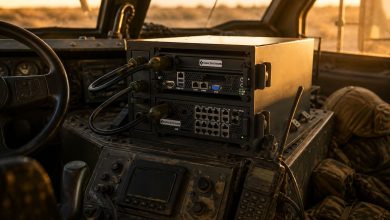
The company said its new product INStinct combines precision with affordability, allowing both military and commercial users to achieve reliable underwater and surface navigation at a fraction of the cost of traditional systems.
The new INS is powered by Silicon Photonics Optical Gyroscope technology from California-based ANELLO Photonics, whose X3 inertial measurement unit is built to withstand shock, vibration, and the extreme conditions of underwater operations.
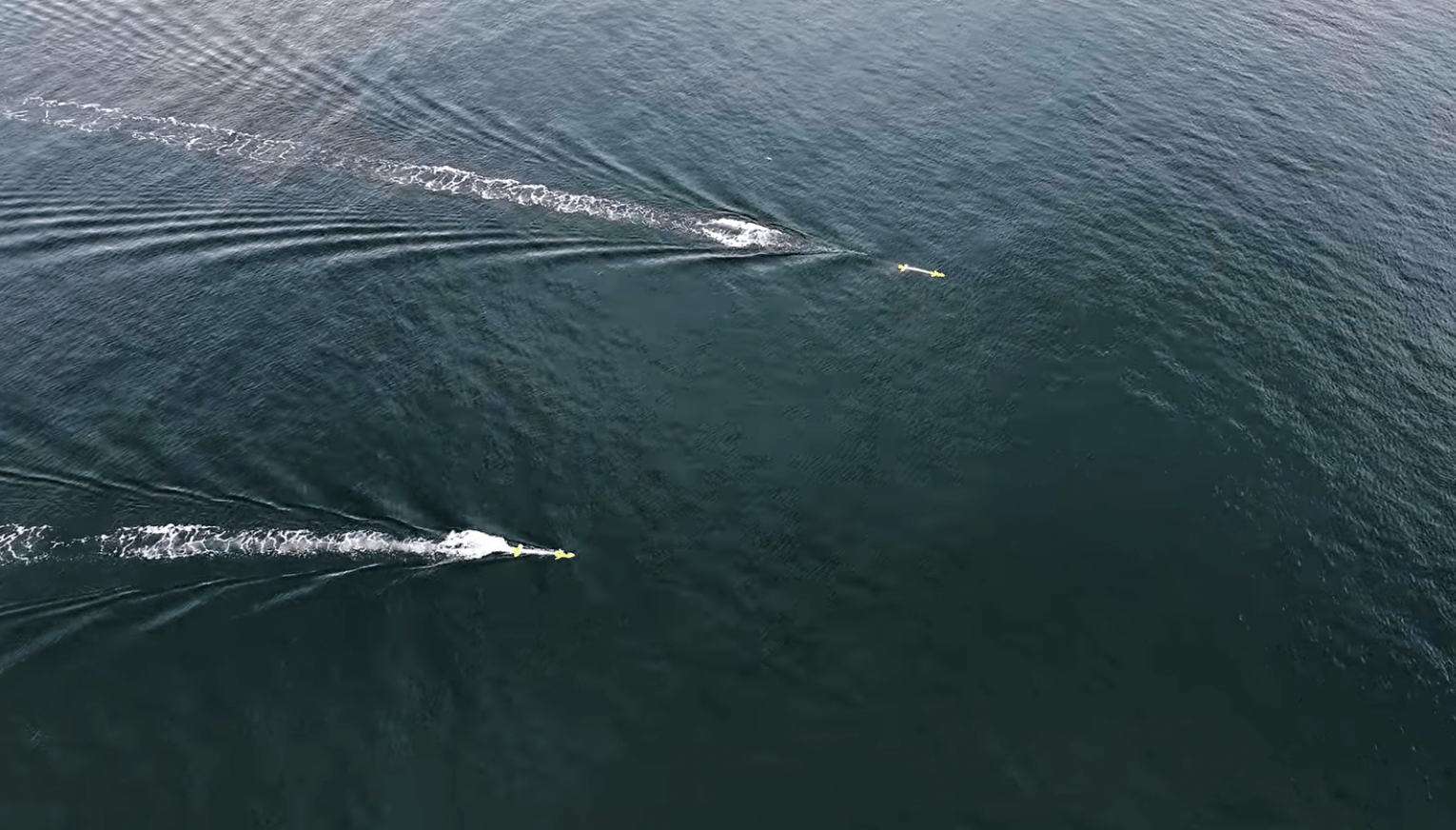
INStinct can be tailored for a wide range of missions, including low-cost configurations for commercial vessels and high-performance setups for autonomous underwater vehicles used by the US military and its allies.
The system is modular and compatible with Doppler velocity log integrations and maritime-optimized algorithms, allowing it to fit various platforms and mission types.
Vatn Systems CEO and Co-Founder Nelson Mills said that the development of INStinct is in line with how inertial navigation “is the cornerstone of autonomy at sea.”
“With INStinct, we’ve created a navigation solution that meets the needs of both our own vehicles and third-party platforms, offering reliability, accuracy, and adaptability,” he said.
Why Modernizing Maritime Navigation Matters
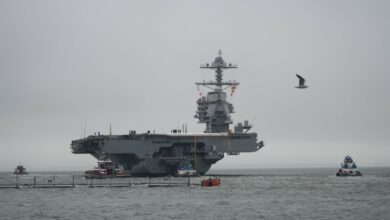
Efforts to modernize maritime navigation have become a central focus for the US Navy and defense industry as global forces face increasingly contested electromagnetic environments.
The navy has been funding multiple projects aimed at reducing dependence on GPS, which can be jammed or spoofed in conflict zones. Among them is the Spatial, Temporal, and Orientation Information in Contested Environments (STOIC) program, which seeks to develop chip-scale atomic clocks and quantum-based inertial sensors for precise navigation without satellites.
The Naval Research Laboratory has also been testing compact photonic gyroscopes that use light rather than mechanical parts to track movement, improving accuracy for submarines and unmanned vehicles.
In addition, BAE Systems and Northrop Grumman are developing advanced inertial navigation units for naval platforms, while Lockheed Martin has explored integrating artificial intelligence to help vessels correct navigation drift during long-duration missions.