The US Army has officially closed the Training and Doctrine Command (TRADOC) at Fort Eustis, Virginia, ending 52 years of overseeing how soldiers are trained, led, and prepared for service.
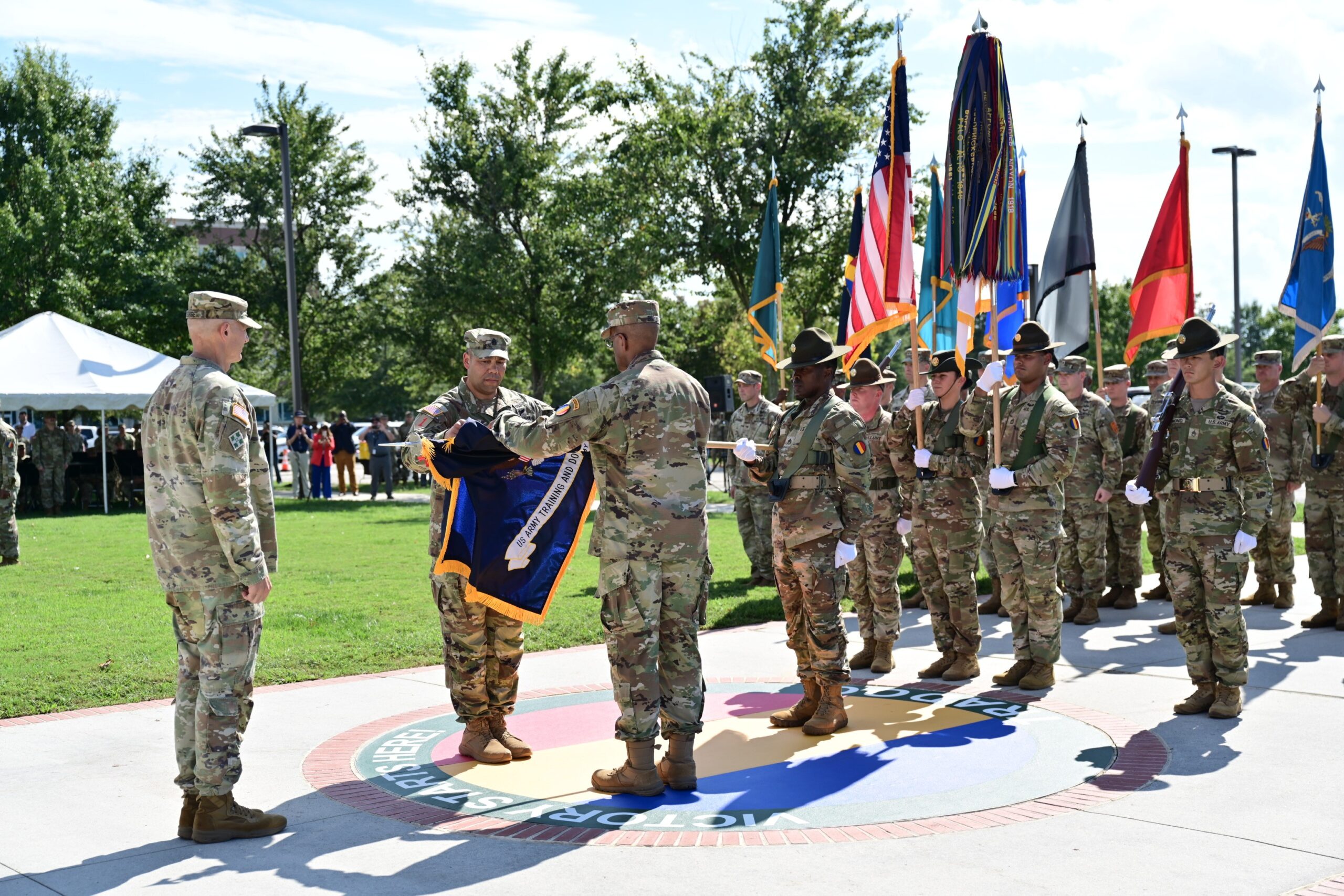
The inactivation ceremony featured a display of flags from TRADOC’s subordinate units and the casing of the command’s colors, a military tradition marking the end of a unit.
Army Chief of Staff Gen. Randy George led the ceremony, while Gen. Gary Brito, TRADOC commanding general, and Command Sgt. Maj. Raymond Harris performed the flag retirement.
“Every Soldier in our formation has passed through TRADOC and has been trained, developed and impacted by people in this command,” George said.
“They learn what right looks like at TRADOC and carry those habits and lessons with them to their formations.”
TRADOC’s Legacy
TRADOC was created in 1973 to improve the US Army’s preparation and associated curriculum after changes in military structure following the Vietnam War.
Over its history, the command guided the force through the Cold War, Desert Storm, counterinsurgency missions, the Global War on Terror, and the adoption of new technologies such as cyber operations, robotics, and artificial intelligence, according to Stars and Stripes.
Transition Into T2COM
TRADOC’s work will continue under the Army Transformation and Training Command (T2COM), which merges TRADOC with Army Futures Command.
The Pentagon announced the merger in May to reduce the number of generals and eliminate overlapping roles, creating a new body to oversee training, develop doctrine, and plan for the service’s future operations.
T2COM will officially begin operations in October at its new headquarters in Austin, Texas, with Lt. Gen. David Hodne in command. Futures Command will formally inactivate the same day at the University of Texas at Austin.
“Our Army is merging two already great formations to create one, another great formation that will be streamlined and can meet and adapt to the challenges in the operational environment, and yet anticipate those of the future,” Stars and Stripes quoted Brito as saying.