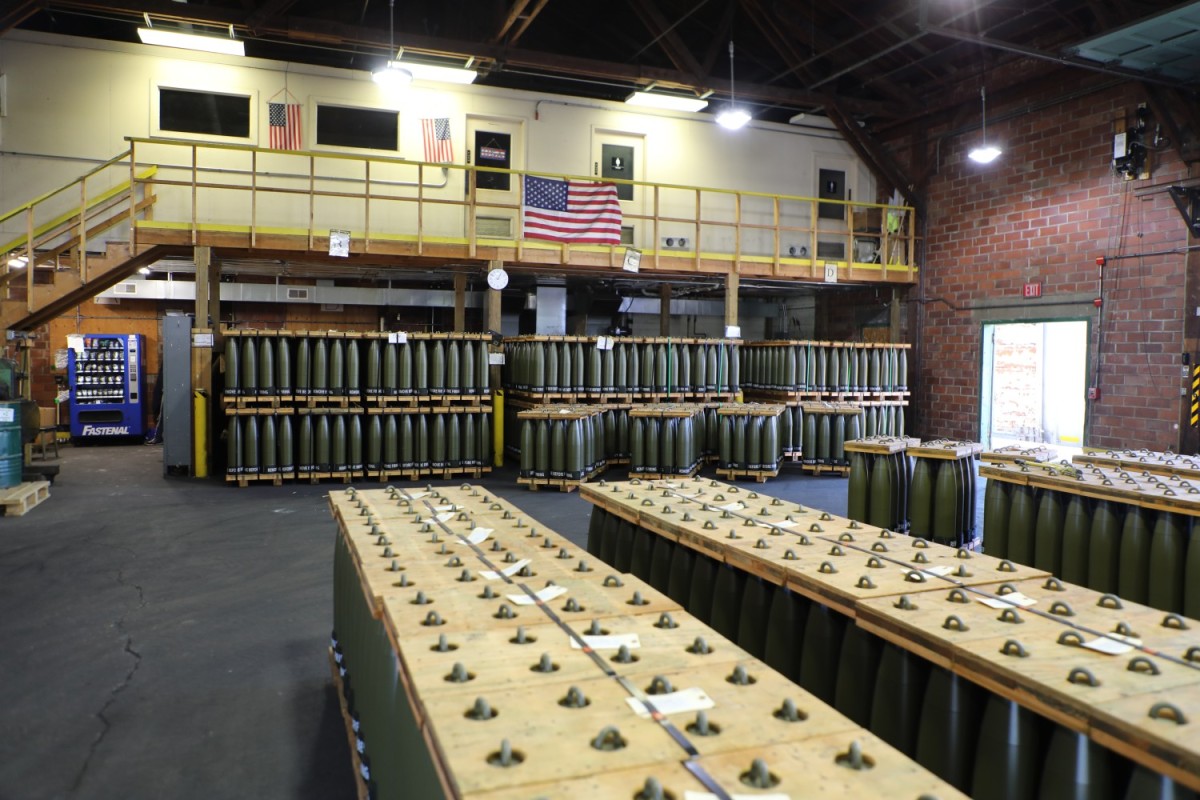
The US Army has contracted MSM North America, a subsidiary of Czechoslovak Group, to build an advanced large-caliber ammunition loading facility in the US.
The $632-million Future Artillery Complex (FAC) is scheduled to be completed at the Iowa Army Ammunition Plant within 40 months, with commissioning and full-scale production beginning in September 2029.
The facility will utilize 21st-century manufacturing technologies to deliver a scalable, flexible, and cost-effective capability for assembling and packing explosive loads for the US Army.
With a capacity of 36,000 155mm artillery rounds per month, the facility will strengthen US and allied war readiness against the backdrop of rising geopolitical tensions.
“Leveraging lean manufacturing principles and fully integrated system control and data acquisition systems, the FAC will blend robotics and automation with state-of-the-art systems to ensure operator safety and consistent product quality for current and future 155mm artillery production,” the US Army explained.
“This cutting-edge technology will give the FAC the flexibility to transition seamlessly between products with minimal downtime, and to operate economically at either peak capacity or reduced Minimum Sustaining Rate.”
Leap in Ammo Production
In addition to bolstering the US Army’s ammunition stockpile, the plant is part of the Pentagon’s broader effort to modernize an aging industrial base, much of which dates back to World War II and continues to operate much as it did 80 years ago.
In the wake of the Ukraine war, the need to scale up ammunition production, particularly 155mm shells, was acutely felt across the Western bloc.
The US Army produced 40,000 155mm rounds in June — almost triple the 14,500 per month made before Russia’s 2022 invasion — but is unlikely to meet its target of 100,000 rounds monthly by October 2025.
To support the expansion, the US Department of Defense has allocated an estimated $5 billion toward upgrading legacy plants and setting up additional facilities.
“Modernizing the industrial base and replacing critical munition stockpiles are high priorities for the Defense Department, projects like the FAC are geared to improve the Army’s ability to scale production between surge and down times while also providing flexible capacity to produce future go-to-war rounds,” Joint Program Executive Officer Armaments & Ammunition and Commanding General at Picatinny Arsenal Maj. Gen. John T. Reim said.
“When the Army realized the need to modernize our production capabilities, Congress allocated $5 billion to add capacity and bring the defense industrial base into the 21st century.
The FAC represents much-needed new technology investments to modernize the Arsenal of Democracy in order to meet the evolving demands of the warfighter in 2025 and beyond.”