MDA Space to Supply Shipborne Drones for Canadian Navy Halifax Frigates

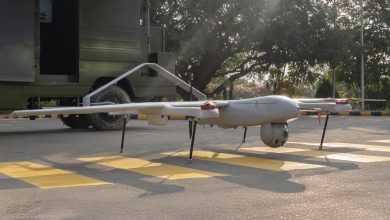
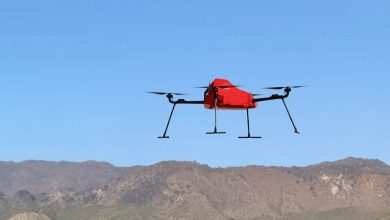
Ontario-based defense contractor MDA Space has received 66 million Canadian dollars ($48 million) in contracts to provide unmanned aerial systems (UAS) for the Royal Canadian Navy’s Halifax-class guided missile frigates.
A deal amounting to 39 million Canadian dollars ($28.3 million) covers the procurement of two drones, with an option to order up to four more platforms.
Another contract, valued at 27 million Canadian dollars ($19.6 million), will fund in-service support and maintenance operations, with work potentially extending for up to 20 years.
The acquisition is part of an initiative to boost situational awareness and reduce operational risk for Halifax warships by integrating them with intelligence, surveillance, target acquisition, and reconnaissance (ISTAR) drones.
The ISTAR UAS effort requires a shipborne, vertical takeoff and landing system capable of operating alongside maritime helicopters, launching and recovering in all weather conditions, and flying at least 50 nautical miles (58 miles/93 kilometers) from the ship.
It should carry a modular maritime sensor suite made up of an electro-optical/infrared solution, radar, an Automatic Identification System, and an Identification Friend or Foe transponder.
“As a long-time trusted mission partner to Canada, MDA Space is honoured to deliver these advanced uncrewed aircraft systems to the Royal Canadian Navy and to provide our sailors with the modern systems they need to meet their operational missions,” said Mike Greenley, CEO of MDA Space.
“The ISTAR UAS project is a clear example of the advanced innovation required to support the modern operational demands of the Canadian Armed Forces, and of deep domestic Canadian industrial capabilities available to help them achieve that mission.”
The Halifax Surface Combatants
The Royal Canadian Navy’s Halifax-class frigates were introduced in the 1980s to replace aging destroyer escorts and serve as the navy’s primary surface combatants.
Designed for anti-submarine and anti-air warfare, they feature a hangar and flight deck for rotary-wing aircraft, advanced sonar and radar, and vertical launch missile systems.
Each vessel is equipped with Harpoon missiles, torpedoes, a 57-millimeter naval gun, and close-in weapon systems.
The frigates are each powered by twin General Electric LM2500 gas turbines generating a combined 47,500 horsepower for speeds of up to 30 knots (35 miles/56 kilometers per hour) and a range of approximately 9,500 nautical miles (10,932 miles/17,594 kilometers).
The class includes 12 frigates, all currently in active service and undergoing modernization to extend their operational life into the 2040s.