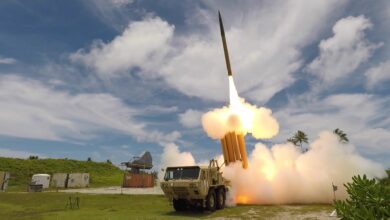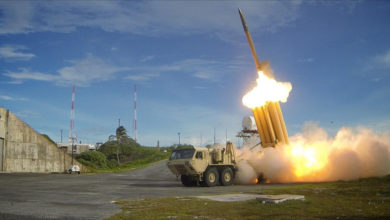
The night of January 17, 2022, witnessed a pivotal moment in the history of missile defense, a dramatic validation of a technology often likened to “hitting a bullet with another bullet.”
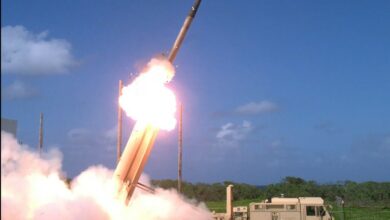
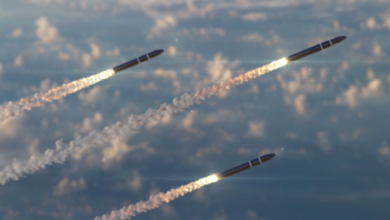
As Houthi ballistic missiles streaked across the Arabian sky, targeting an oil facility near Al-Dhafra Air Base in the United Arab Emirates, a US-operated Terminal High Altitude Area Defense (THAAD) battery sprang into action.
In its first operational intercept in a combat environment, the THAAD system successfully engaged and destroyed the incoming threats. This wasn’t merely a successful test; it was a real-world demonstration of an audacious engineering feat: neutralizing a speeding projectile with another projectile, relying solely on kinetic energy.
This high-stakes engagement underscored THAAD’s critical role in safeguarding strategic assets and lives, transforming a theoretical concept into a proven combat asset and profoundly influencing global perceptions of ballistic missile defense capabilities.
THAAD: Genesis of a Kinetic Guardian
The THAAD system is a mobile anti-ballistic missile defense system designed to intercept and destroy ballistic missile threats.
Its primary mission is to counter short-range (up to 1,000 kilometers/621 miles), medium-range (1,000–3,000 kilometers/621-1,864 miles), and limited intermediate-range (3,000–5,000 kilometers/1,864-3,107 miles) ballistic missiles during their final, or “terminal,” phase of flight.
A distinctive capability of THAAD is its ability to operate both inside (endo-atmospheric) and outside (exo-atmospheric) the Earth’s atmosphere.
Within the broader US Ballistic Missile Defense System (BMDS), THAAD occupies a crucial “middle tier,” serving as a vital complement to other defensive layers.
It integrates seamlessly with the lower-tier Patriot Air and Missile Defense System and the upper-tier Navy’s Aegis Ballistic Missile Defense (BMD) System, as well as the Ground-based Midcourse Defense (GMD) System.
This inherent design as part of a multi-layered defense architecture signifies a strategic understanding that no single system can provide absolute protection against the full spectrum of ballistic missile threats.
THAAD’s position in the middle tier effectively bridges the altitude and range gaps between lower-tier systems designed for closer-in defense and upper-tier systems targeting longer-range threats in space.
This layered approach provides redundancy and multiple engagement opportunities, enhancing overall resilience against complex and potentially massed attacks.
The interoperability between these systems, allowing for shared sensor data and coordinated engagements, is paramount, ensuring that the collective strength of interconnected defenses surpasses the sum of their individual components.
A Brief History: From Early Challenges to Operational Success
The journey of THAAD from concept to combat-proven system was marked by significant engineering challenges and persistent development.
The program began in 1992, with Lockheed Martin contracted by the US Army to develop this advanced defense system.
However, the initial testing phase, spanning from December 1995 to 1999, proved arduous.
The first intercept test and five subsequent test flights all failed, attributed to various issues such as software errors, mechanical problems, targeting system malfunctions, electrical contamination, and short circuits. These repeated setbacks led to a reduction in congressional funding for the project.
This period vividly illustrates that the development of cutting-edge defense technologies is an inherently complex and iterative process. Early failures, rather than being terminal flaws, often serve as critical learning opportunities within a rigorous research and development cycle.
The initial “haste” in prototype production, as acknowledged by Lockheed, compromised quality control and led to faulty designs. However, the Army’s commitment to redesigning THAAD, including relaxing requirements for intercepting targets at lower altitudes, paved the way for remarkable improvements.
Between 2006 and 2019, the system demonstrated a significantly higher success rate, with 14 out of 18 intercept tests proving successful, and the remaining four cancellations due to target malfunctions.
Post-2005, some reports even claim a 95 percent success rate over 17 consecutive tests and a 100 percent mission success rate in certain test series.
The first operational THAAD battery was fielded in 2008 at Fort Bliss, Texas.
This trajectory underscores that continuous refinement, adaptation, and persistent investment are crucial for transforming theoretical capabilities into reliable operational systems capable of meeting evolving threats.
The ‘Hit-to-Kill’ Philosophy: How Kinetic Energy Intercepts Redefine Missile Defense
A defining characteristic that sets THAAD apart is its reliance on “hit-to-kill” (also known as kinetic kill) technology.
Unlike conventional interceptors that use explosive warheads, THAAD missiles destroy incoming threats solely through the immense kinetic energy generated by a direct, high-speed collision.
This non-explosive approach carries significant strategic implications, particularly when confronting threats carrying weapons of mass destruction (WMDs).
By intercepting threat missiles at high altitudes — either within or outside the Earth’s atmosphere — the system aims to mitigate the effects of such weapons before they can reach the ground.
This high-altitude kinetic intercept is a deliberate and sophisticated design choice that offers advantages beyond simple destruction. It drastically reduces the risk of collateral damage or unintended consequences on the defended area, even if the incoming missile carries a conventional warhead.
More critically, against WMDs, this method aims to prevent the payload from detonating or dispersing harmful materials on the ground, thereby providing a higher degree of assurance for homeland defense and force protection.
This represents a fundamental shift in defensive strategy, moving from merely deflecting a threat to neutralizing it in a manner that minimizes its potential impact and the subsequent risk to population centers or critical infrastructure.
Anatomy of an Interceptor: Inside the THAAD System
The effectiveness of the THAAD system stems from the sophisticated integration of its four primary components: the interceptor missile, the AN/TPY-2 radar, the Fire Control and Communications unit, and the mobile launcher vehicle.
The THAAD Interceptor Missile
The THAAD interceptor missile is a marvel of kinetic engineering. It measures 6.17 meters (20 ft 3 in) in length and has a launch weight of 900 kilograms (2,000 pounds).
The booster section has a diameter of 34 centimeters (13 inches), while the kill vehicle itself is 37 centimeters (15 inches) in diameter. This interceptor is designed for extreme velocity, capable of reaching a maximum speed of 2,800 meters per second (Mach 8.2 or 6,300 miles per hour) and accelerating from 0 to 5,600 miles (9,012 kilometers) per hour in a mere 6 seconds.
Its operational range for destroying targets spans between 150 and 200 kilometers (120 and 125 miles), with an impressive flight ceiling of up to 150 kilometers (93 miles). This altitude capability is notably higher than many other missile defense systems.
The interceptor’s robust airframe is constructed from carbon-composite materials, allowing it to withstand extreme temperatures ranging from -65°F to 3,000°F during atmospheric re-entry. It also features a tungsten-reinforced nose cone, providing structural integrity during hypervelocity impacts.
Propulsion for the THAAD missile is provided by a single-stage solid-fuel rocket motor, supplied by Pratt & Whitney Rocketdyne or Aerojet Rocketdyne, which incorporates thrust vectoring for precise in-flight maneuverability.
After the booster expends its fuel, it separates, and the kill vehicle (KV) continues its trajectory towards the interception point.
For highly precise maneuvering in the vacuum of space (exo-atmospheric flight), the KV is equipped with a Boeing-developed liquid Divert and Attitude Control System (DACS). L3Harris supplies this DACS, which provides two distinct types of propulsion: one for attitude control (managing roll, pitch, and yaw) and another for kill-vehicle maneuvering, ensuring the interceptor can precisely position itself for a direct hit.
In the terminal intercept phase, the KV is guided by an Indium-antimonide imaging infrared seeker head, whose window is protected during the initial flight by a clamshell shroud.
This advanced guidance system, combined with micron-level adjustments from divert thrusters, enables the kill vehicle to achieve a “zero-foot miss distance” through direct impact.
The AN/TPY-2 Radar
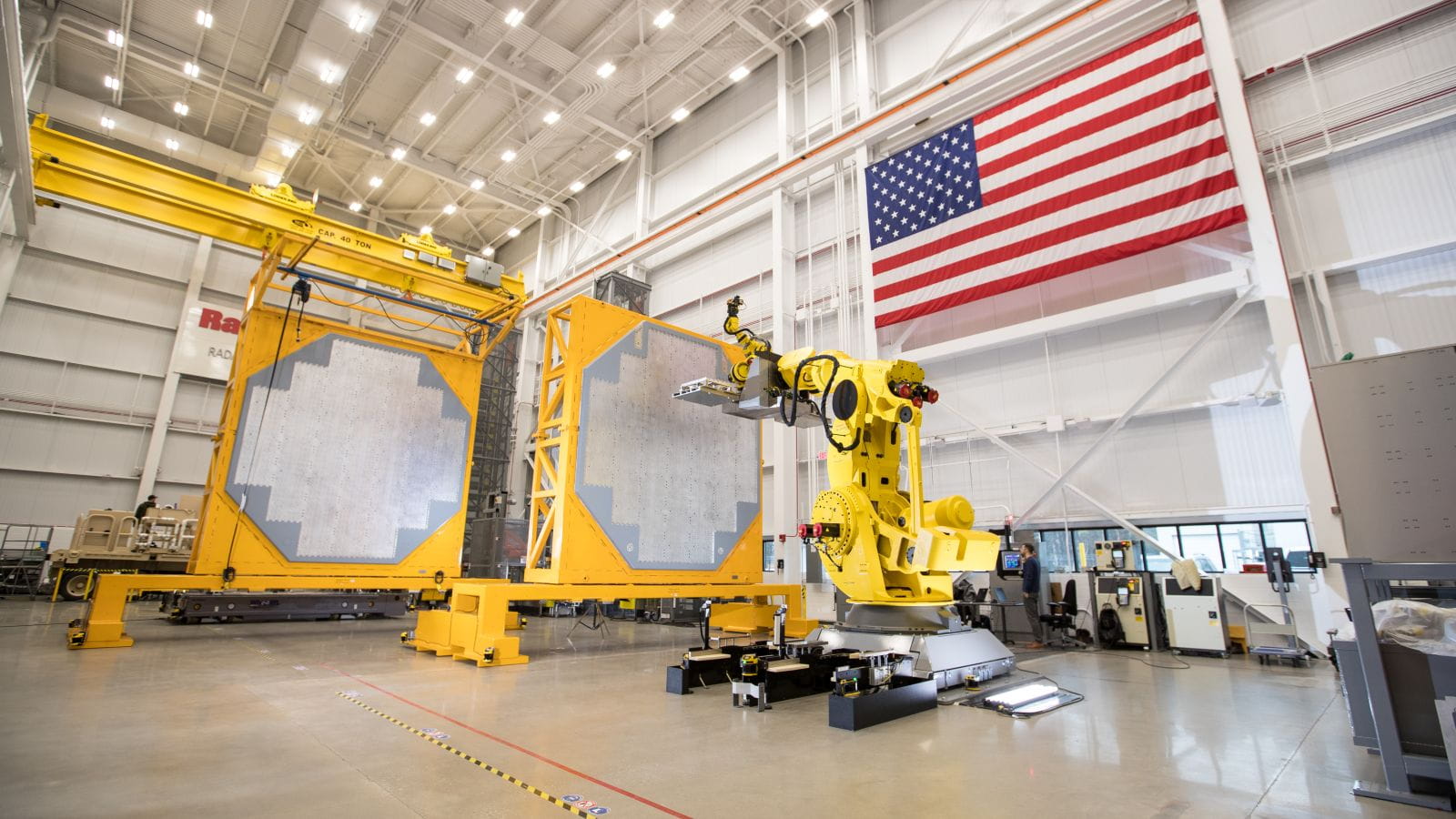
The AN/TPY-2 radar is often described as the “eyes” of the THAAD system, providing critical surveillance, tracking, and discrimination capabilities.
Developed and built by Raytheon, this X-band radar is recognized as the world’s largest ground/air-transportable X-band radar. It features a 9.2 square meters (99 square feet) aperture full field of view antenna phased array, containing 25,344 solid-state microwave transmit and receive modules.
The AN/TPY-2 operates at I and J bands (X-band) and can acquire missile threats at ranges up to 1,000 kilometers (600 miles), with some reports indicating detection ranges up to 2,300 kilometers (1,429 miles) for early warning.
A key capability of the AN/TPY-2 is its ability to distinguish between a true warhead and decoys, providing precise tracking data to guide the interceptor and fire control systems. This discrimination ability is crucial against sophisticated threats that employ countermeasures.
Recent upgrades to the AN/TPY-2 radar incorporate Gallium Nitride semiconductors, which significantly extend its range and provide greater sensitivity, enabling earlier detection and tracking of smaller, harder-to-see targets like hypersonic missiles. This enhanced range allows for earlier command and control decisions on which interceptor (THAAD, SM series, or Patriot) to use.
The radar can also operate as a standalone, mobile unit, contributing to broader missile defense architectures.
The Fire Control and Communications (TFCC) Component
The THAAD Fire Control and Communications component serves as the central nervous system of the battery, overseeing all operations and ensuring seamless data exchange within the broader Ballistic Missile Defense System.
Each TFCC system is known as a Tactical Station Group (TSG) and comprises several critical elements:
- Tactical Operations Station: This includes two operating stations where soldiers manage engagements.
- Launch Control Station: This unit incorporates wireless datalinks, networking equipment, and fiber optic cable interfaces, enabling communication and control of the launchers.
- Station Support Group: Consisting of HMMWV-based antenna and cable support vehicles, this group provides necessary infrastructure for communications.
The TFCC is responsible for planning and controlling all engagements, ensuring operational flexibility, and maintaining robust communication capabilities.
It can provide or accept target tracking and discrimination data from other BMDS elements, such as Aegis BMD ships or other sensors, via the Command and Control, Battle Management, and Communications (C2BMC) system.
This high level of interoperability is critical for a layered defense, allowing different systems to share information and coordinate their responses to complex threats.
The Launcher Vehicle
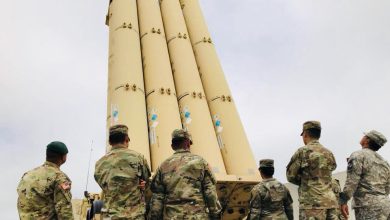
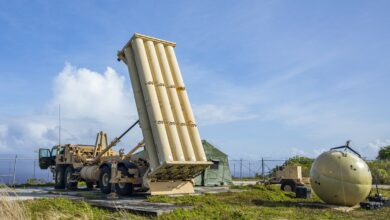
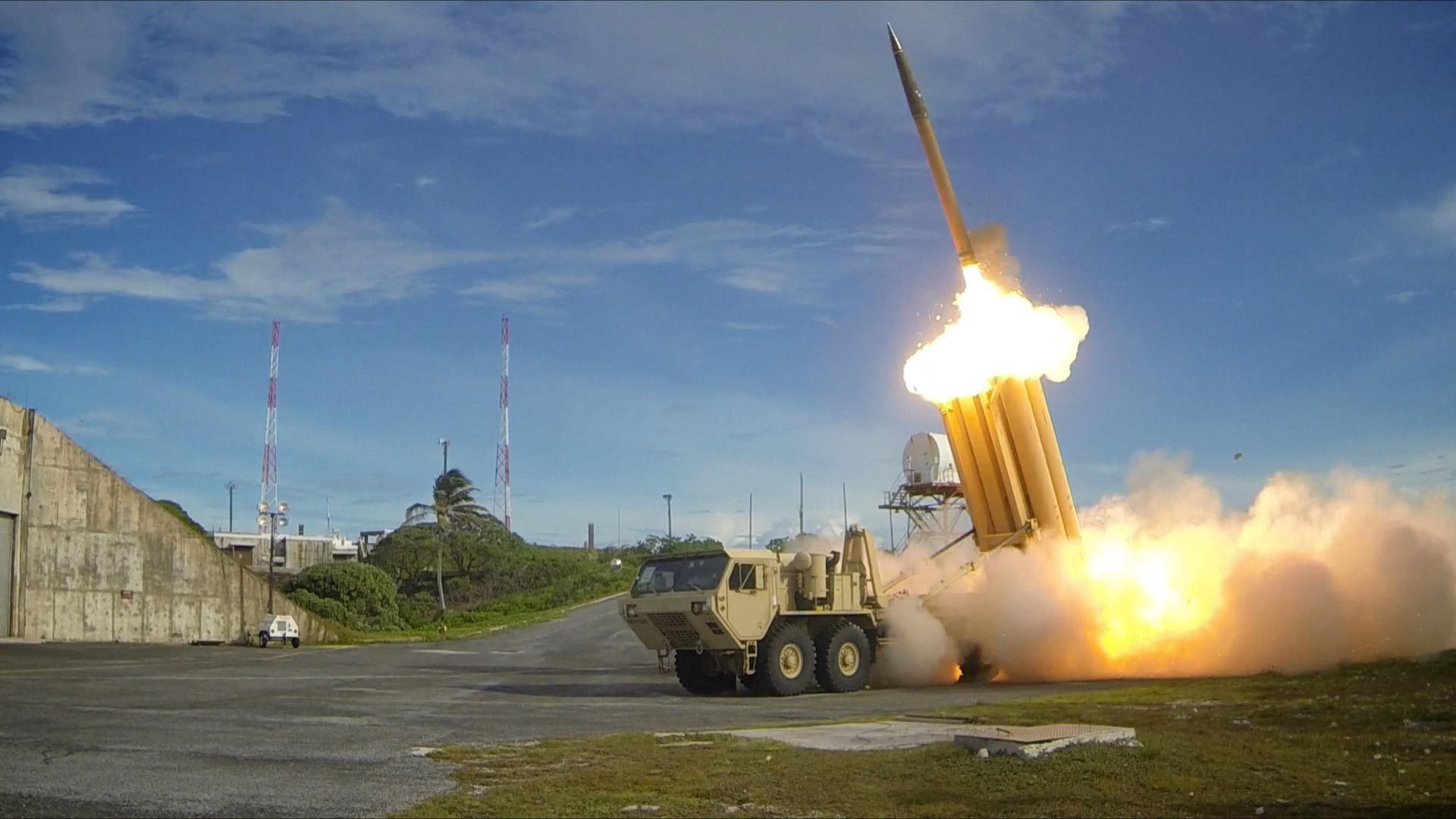
The THAAD interceptor missiles are fired from a highly mobile launcher unit. This vehicle is a modified Oshkosh Truck Corporation Heavy Expanded Mobility Tactical Truck with Load Handling System (HEMTT-LHS).
Measuring 12 meters long by 3.25 meters wide (39 by 10.6 feet), each launcher is designed to carry eight missile launch containers.
While on the launcher, primary power is supplied by lead-acid batteries, which are recharged by a low-noise generator.
This mobility allows for rapid deployment and repositioning, making the system less vulnerable to pre-emptive strikes and more responsive to evolving threats.
THAAD Battery Composition
A complete THAAD battery is a self-contained unit designed for rapid deployment and sustained operations. It typically consists of 95 soldiers and four main components:
- Up to 9 mobile launcher vehicles, each loaded with eight interceptors, totaling up to 72 missiles per battery (though the US Army typically fields 6 launchers with 48 interceptors).
- One AN/TPY-2 surveillance X-band radar.
- A Tactical Fire Control/Communications component, which includes one or two Tactical Station Groups
- Peculiar support equipment.
The integration of these highly specialized components, from the Gallium Nitride-enhanced radar to the kinetic kill vehicle and advanced guidance systems, enables THAAD to address complex and evolving threats, including the challenging domain of hypersonic missiles.
This continuous technological sophistication highlights the perpetual innovation necessary to maintain a credible defense posture against increasingly advanced offensive capabilities.
Use Cases and Global Deployments
THAAD’s primary mission is to provide a rapidly deployable defense against short-, medium-, and limited intermediate-range ballistic missile threats.
Its operational scenarios typically involve defending deployed forces, allied nations, civilian population centers, and critical infrastructure from missile attacks.
The system’s mobility allows it to be transported by air, rail, ship, or road, enabling deployment anywhere in the world within hours.
Notable Deployments and Geopolitical Context
THAAD has been strategically deployed in various regions globally, often in response to escalating ballistic missile threats:
- Hawaii (2009): The US Army made its first deployment of a THAAD unit to Hawaii in June 2009, providing defense against potential North Korean ballistic missile attacks.
- Guam (2013): In April 2013, a THAAD battery was deployed to Guam on an emergency basis in response to potential North Korean missile launch activity. This temporary deployment later became an enduring requirement, validating the need for continued defense of the homeland against existing and emerging threats in the region.
- South Korea (2016): One of the most controversial and high-profile deployments occurred in July 2016, when the US and South Korean governments decided to deploy a THAAD battery to US Forces Korea as a defensive measure against North Korea’s use of WMDs and conventional ballistic missile threats. The battery is stationed in Seongju, about 130 miles south of Seoul. This deployment, however, sparked mass protests in South Korea and drew strong antagonism from China. Beijing viewed the AN/TPY-2 radar’s 3,000 kilometer range and 120-degree field of view as a capability that could monitor much of Chinese territory, undermining China’s strategic operability. This situation highlights the complex interplay between military necessity, regional power balances, and domestic political sensitivity. Despite Seoul’s reassurances that the deployment was purely defensive, China harshly criticized the decision, viewing it as the first step toward an extensive US-led Ballistic Missile Defense system in the region. The controversy even influenced South Korean domestic politics, with a new administration pledging to halt deployments after public protests.
- Middle East (Saudi Arabia, UAE, Israel): THAAD has also been deployed outside the Indo-Pacific. In October 2019, the US Army deployed THAAD systems to Saudi Arabia in response to drone attacks on oil facilities and Yemeni ballistic missile strikes. As noted earlier, a UAE-operated THAAD battery achieved the system’s first operational intercept in combat in January 2022, successfully destroying Houthi ballistic missiles targeting an oil facility. More recently, in October 2023, a THAAD battery was deployed to the Middle East to increase force protection for US forces and bolster regional deterrence. Following Iran’s attacks on Israel in April and October 2024, a THAAD battery was deployed to Israel to augment its air defenses. These deployments reflect evolving threat perceptions and the US’ commitment to its allies, but they also highlight the potential for deeper entanglement in regional conflicts, raising questions about the proportionality of resource commitment and the risk of further escalation.
- Romania: THAAD has also provided protection to Romania.
Interoperability in Action
THAAD is designed to operate as part of an integrated defense network. It can share data with other systems like Aegis Ashore, the Army’s Integrated Battle Command System, and even airborne nodes like an F-35 operating as a sensor, and US Navy ship-based Aegis Radar Systems. For instance, in 2020, the Missile Defense Agency conducted developmental flight tests demonstrating Patriot’s ability to engage a short-range ballistic missile target using remote track and discrimination data from THAAD. This interoperability enhances overall defense capabilities by allowing for earlier intercepts and a more coordinated response to complex missile raids.
Cost and Value Proposition
The Terminal High Altitude Area Defense system represents a substantial investment in national and allied security, with significant costs associated with its procurement, operation, and maintenance.
System and Interceptor Costs
The unit cost of a THAAD interceptor missile is approximately $12.9 million as of the latest available data, though this figure can fluctuate based on production quantities and specific configurations. Earlier reports from FY2017 cited a unit cost of $12.6 million per missile.
When considering the full deployment of a THAAD battery, which typically includes six launchers (each carrying eight interceptors), the AN/TPY-2 radar, and command and control systems, the total cost can easily exceed $1 billion per battery. The AN/TPY-2 radar, a critical component, is estimated to cost around $174 million per unit.
Operational and Maintenance Costs
The operational and maintenance budget for the THAAD program is managed by the Missile Defense Agency and the US Army. For FY 2025, the THAAD Program’s Operation and Maintenance budget is projected to be $91.7 million.
This budget includes:
An increase of $615,000 is allocated for the sustainment of the new eighth THAAD Battery, which is scheduled for delivery in FY2025.
This increase is partially offset by several decreases: $1.725 million from reduced SM-3 costs at other government agencies and for Provisioning Item Order Spares; $1.222 million due to the transition of Aegis Ashore Poland operations to the US Navy’s funding responsibility; $296,000 from cost savings achieved by virtualizing software; and $141,000 from reductions in software maintenance and updates.
The US Army is responsible for the operations and sustainment of common THAAD items, while the Missile Defense Agency handles the sustainment of THAAD missile defense unique and developmental items.
This funding ensures that THAAD assets are properly maintained and crews are trained to meet Combatant Commanders’ needs.
The high cost per interceptor and the overall system cost are subjects of ongoing debate among defense strategists and economists, raising questions about the scalability and sustainability of such defense architectures, especially when considering the potential for large-scale ballistic missile attacks.
This ongoing discussion highlights the inherent tension between the substantial financial investment required for advanced missile defense capabilities and the imperative of national security.
Policymakers must continually balance the economic burden with the strategic necessity of protecting critical assets and personnel from evolving threats.
Comparative Analysis: THAAD in the Global Defense Landscape
THAAD operates as a critical component within a layered defense strategy, designed to complement rather than replace other missile defense systems. Understanding its unique position requires comparing it to other prominent air and missile defense systems.
| Feature | THAAD | Patriot PAC-3 | Aegis BMD | S-400 Triumf | Iron Dome |
| Primary Role | Middle-tier ballistic missile defense (SRBM, MRBM, limited IRBM) in terminal phase | Lower-tier air and missile defense (aircraft, cruise missiles, ballistic missiles) | Upper-tier/Midcourse ballistic missile defense (SRBM, MRBM, IRBM, LRBM, ICBM tracking) | Long-range surface-to-air missile system (aircraft, drones, cruise missiles, ballistic missiles) | Short-range, multi-mission air defense (rockets, artillery, mortars, UAVs, cruise missiles, SHORAD ballistic missiles) |
| Engagement Phase | Terminal (endo- and exo-atmospheric) | Terminal (endo-atmospheric) | Midcourse (exo-atmospheric), limited terminal | All phases (depending on missile type) | Terminal (endo-atmospheric) |
| Interceptor Type | Kinetic “Hit-to-Kill” | PAC-2: Blast Fragmentation; PAC-3: Kinetic “Hit-to-Kill” | SM-3: Kinetic “Hit-to-Kill”; SM-2/6: Blast Fragmentation | Blast Fragmentation | Explosive Warhead (TAMIR) |
| Max Intercept Range | 150-200 km (120-125 miles) | PAC-3 MSE: 75 miles (120 km) for cruise, 44 miles (70 km) for ballistic; PAC-2: 99 miles (160 km) | SM-3: Hundreds to thousands of km (midcourse); SM-2/6: 160 km+ (terminal) | 40N6E: 400 km | 70 km |
| Max Intercept Altitude | 150 km (93 miles) | PAC-2: 24 km | SM-3: Exo-atmospheric (above 100 km) | 30-35 km | Undisclosed, but short-range |
| Radar | AN/TPY-2 (X-band, up to 1,000 km detection, hypersonic tracking) | AN/MPQ-53/65 (C/G/H-band, up to 180 km detection, 120° coverage) | SPY-1 (S-band), SPY-6 (S-band, for Flight III DDGs) | 91N6E Panoramic Radar (L-band, 340-600 km detection); 92N6E Multi-functional Radar (X-band, 340 km detection) | Multi-mission radar |
| Mobility | High (truck-mounted, rapidly deployable) | Moderate (trailer-mounted, mobile) | High (sea-based, land-based Aegis Ashore) | High (truck-mounted, rapid redeployment) | High (mobile I-DOME variant) |
| Combat Proven | Yes (UAE 2022, Israel 2024-2025) | Yes (Gulf War, Iraq War, Yemen, Ukraine) | Yes (Satellite intercept 2008, numerous BMD tests) | Yes (Syrian Civil War, Russo-Ukrainian War, though effectiveness debated) | Yes (Israel since 2011) |
| Typical Battery Cost (approx.) | $1 billion+ | Undisclosed (multiple configurations) | Undisclosed (part of ship cost) | $1-1.25 billion (export); $200 million (battalion) | Undisclosed |
THAAD vs. Patriot System
The Patriot Air Defense System, particularly its PAC-3 variant, shares the “hit-to-kill” philosophy with THAAD. However, Patriot primarily operates in the lower-tier, engaging threats within the atmosphere (endo-atmospheric).
While Patriot can counter aircraft, cruise missiles, and ballistic missiles, THAAD is specialized for ballistic missile defense at higher altitudes and longer ranges.
Patriot PAC-3 MSE interceptors have a maximum engagement altitude of 24 kilometers (15 miles) and a ballistic missile intercept range of around 70 kilometers (44 miles).
In contrast, THAAD’s intercept altitude reaches 150 kilometers (93 miles) and its range is 150 to 200 kilometers (93 to 124 miles). This difference illustrates their complementary roles: Patriot provides point defense and lower-altitude coverage, while THAAD extends the defensive umbrella higher and further out.
THAAD vs. Aegis BMD System
The Aegis Ballistic Missile Defense (BMD) system, predominantly sea-based, operates in the upper-tier and midcourse phases of a ballistic missile’s flight.
Aegis-equipped vessels can detect and track ballistic missiles of all ranges, including intercontinental ballistic missiles, and can engage short- to intermediate-range threats in the midcourse using SM-3 interceptors.
While Aegis BMD can also provide a limited terminal-phase capability, its primary strength lies in midcourse intercepts, distinguishing it from THAAD’s terminal-phase focus.
The land-based Aegis Ashore system works similarly, providing a continental defense envelope. THAAD and Aegis are designed to be interoperable, sharing tracking data to create a more robust, layered defense.
THAAD vs. S-400 Triumf (Russia)
The S-400 Triumf is a highly advanced, long-range surface-to-air missile system developed by Russia, designed to counter a wide spectrum of aerial threats, including aircraft, drones, cruise missiles, and ballistic missiles.
Unlike THAAD’s kinetic intercept, the S-400 primarily uses explosive fragmentation warheads.
The S-400 boasts a maximum engagement range of up to 400 kilometers (249 miles) and an altitude coverage of 30 to 35 kilometers (18.6 to 21.7 miles).
Its radar systems can detect targets up to 600 kilometers (373 miles) away and track up to 300 targets simultaneously, engaging up to 36 targets at once.
While the S-400 offers a broader air defense capability, THAAD is specifically optimized for high-altitude ballistic missile intercepts. The acquisition of the S-400 by other countries, such as Turkey and India, has often led to significant geopolitical friction and diplomatic pressure from the United States.
THAAD vs. Iron Dome (Israel)
Israel’s Iron Dome is a combat-proven, short-range, multi-mission air defense system primarily designed to intercept and neutralize rockets, artillery, and mortars (C-RAM threats), as well as unmanned aerial systems and short-range ballistic missiles.
It operates at much lower altitudes and shorter ranges than THAAD, with a maximum engagement range of approximately 70 kilometers (43 miles).
A key feature of Iron Dome is its “selective defense,” which differentiates between threats heading toward defended areas and those that will fall into open fields, thus conserving interceptors and reducing costs.
While Iron Dome is highly effective against its specific threat profile, THAAD is designed for the higher-altitude, longer-range ballistic missile threat, making them complementary systems within a multi-tiered defense architecture, rather than direct competitors.
The comparative analysis underscores that these systems are not in direct competition but rather serve complementary roles within a comprehensive, layered defense architecture.
Each system is optimized for specific threat profiles, engagement envelopes, and operational environments. This multi-system approach highlights the complexity of modern air and missile defense, where diverse capabilities are integrated to provide robust protection against a wide array of aerial threats.
Limitations and Future Outlook
Despite its advanced capabilities and proven combat record, the THAAD system, like any complex defense technology, has inherent limitations and faces ongoing challenges.
Limitations and Challenges
- Intercontinental Ballistic Missiles (ICBMs): THAAD is primarily designed to intercept short-, medium-, and intermediate-range ballistic missiles. It is not designed to counter ICBMs, which typically operate at much higher altitudes and longer ranges, requiring systems like the Ground-based Midcourse Defense (GMD) system.
- Maneuvering Targets and Decoys: While THAAD’s AN/TPY-2 radar is highly advanced in discriminating targets, challenges remain in efficiently intercepting missiles with irregular and unstable trajectories (for example, some North Korean Rodong missiles). The ability to differentiate between real warheads and sophisticated decoys, especially when the radar bases its data on exterior properties, can also be challenging. A THAAD missile could potentially hit a decoy, allowing a real warhead to continue to its target.
- Coverage Gaps: A single THAAD battery’s AN/TPY-2 radar has a 120-degree field of view. This means that a threat could theoretically be launched from outside this field of view or from a direction not covered by a single battery’s placement, potentially requiring more batteries for complete coverage.
- Recent Combat Performance: While THAAD has demonstrated significant success, a notable incident occurred on May 4, 2025, when a Houthi ballistic missile reportedly struck near Israel’s Ben Gurion International Airport, evading interception by both the US THAAD system and Israel’s Arrow defense system. Israeli defense forces cited a possible technical malfunction, and while the IDF maintains a high overall interception rate, this event underscores that no defense system is infallible, and adversaries continuously evolve their tactics and capabilities. This serves as a stark reminder that despite the most advanced technological capabilities, the offense-defense race is a dynamic and perpetual one.
- Operational Tempo and Stress: With over half of the US Army’s seven THAAD batteries deployed on operations as of late 2024, there are concerns regarding the operational tempo and stress on Army air defense soldiers.
- Cost-Effectiveness: The high cost per interceptor and the overall system cost continue to be a subject of debate, particularly concerning the scalability and sustainability of such defense architectures against potential large-scale ballistic missile attacks.
Future Developments
To address evolving threats and enhance capabilities, several key developments are underway for the THAAD system:
- Hypersonic Missile Tracking: Raytheon has delivered the first upgraded AN/TPY-2 radar capable of tracking hypersonic missiles. This new version incorporates Gallium Nitride semiconductors, enabling a longer range and more precise target discrimination and electronic attack protection. This upgrade allows for earlier detection and engagement of these highly maneuverable and low-radar-cross-section targets.
- Interoperability Enhancements: Efforts are focused on ensuring THAAD is well-networked with other sensors and radar systems. This includes configuring THAAD to share data with Aegis Ashore systems and integrating it as a key node within the Army’s Integrated Battle Command System (IBCS). IBCS can incorporate airborne nodes like an F-35 acting as a sensor and US Navy ship-based Aegis Radar Systems, creating a multi-domain network of missile defense nodes.
- THAAD-ER (Extended Range) Variant: A proposed THAAD-ER variant aims to significantly extend its operational altitude, potentially tripling it, while maintaining kinetic precision. Modified boosters could propel interceptors beyond 180 miles (290 kilometers) into the upper atmosphere, which would be critical for engaging intermediate-range ballistic threats during their earlier flight phases.
- New Battery Production: As of January 2024, the eighth THAAD battery was still in production, with fielding planned by 2025. This expansion of the fleet will provide additional capacity for contingency operations or rotational replacements for currently deployed batteries.
The persistent evolution of threats, such as the development of hypersonic glide vehicles and more sophisticated decoys, necessitates continuous investment in research, development, and upgrades for missile defense systems to maintain their relevance and effectiveness.
This ongoing commitment to technological advancement and integration underscores the perpetual arms race between offensive and defensive capabilities in modern warfare.
The THAAD system stands as a critical, proven component of the United States’ and its allies’ ballistic missile defense architecture.
Its “hit-to-kill” technology, demonstrated in real combat scenarios, represents a significant leap in neutralizing incoming ballistic missiles, particularly those carrying weapons of mass destruction, by destroying them kinetically at high altitudes. This capability minimizes collateral damage and mitigates the effects of hostile payloads on the ground.
From its challenging early development phases to its current status as a globally deployed asset, THAAD has evolved into a highly sophisticated system. Its core components — the advanced AN/TPY-2 radar with its enhanced discrimination capabilities, the precise kinetic interceptor, and the integrated fire control system — work in concert to provide a robust defense against short-, medium-, and limited intermediate-range ballistic missile threats.
While the system’s high cost per battery and interceptor presents an ongoing economic consideration, its strategic value in defending critical assets, deployed forces, and allied nations is undeniable.
THAAD’s role as a middle-tier element within a layered defense strategy, complementing systems like Patriot and Aegis, underscores a comprehensive approach to missile defense that prioritizes redundancy and interoperability.
However, the dynamic nature of modern warfare means that no defense system is absolute. Challenges such as countering increasingly complex maneuvering targets, sophisticated decoys, and emerging hypersonic threats necessitate continuous innovation and investment.
The ongoing development of upgraded radar capabilities, extended-range interceptors, and enhanced interoperability with broader defense networks demonstrates a commitment to maintaining THAAD’s relevance in an ever-evolving threat landscape.
In a world where ballistic missile proliferation remains a significant concern, THAAD continues to be an indispensable shield, adapting and evolving to safeguard security in an increasingly volatile global environment.