For more than two decades, the United States has relied on a limited and aging missile defense architecture to protect the homeland from intercontinental ballistic missile (ICBM) threats.
Today, the threat environment has changed. Adversaries are fielding longer-range missiles, maneuverable warheads, countermeasures, and more complex attack profiles.
To meet that challenge, the US Missile Defense Agency (MDA) is developing the Next Generation Interceptor (NGI), a fundamentally new interceptor intended to replace existing interceptors and restore confidence in homeland missile defense.
Defining the NGI
This tip-to-tail interceptor hopes to be a new class of ground-launched missile interceptors designed to defeat long-range ballistic missile threats during the midcourse phase of flight (when a missile travels through space after burnout but before reentry).
The NGI is a completely redesigned missile defense system, built from the ground up with the latest in propulsion, sensors, guidance, and kill vehicle technology. It is faster, smarter, and more maneuverable.
Once fielded, the Next Generation Interceptor will form the backbone of US homeland missile defense, operating from ground-based midcourse defense sites in Alaska and California.
Why the US Needs a New Interceptor
The current Ground-Based Interceptor (GBI), rushed into service in the early 2000s, was optimized for limited threats from rogue states.
While incremental upgrades have improved reliability, the system was never designed to handle advanced countermeasures, multiple warheads, or sophisticated decoys.
The NGI is intended to close those gaps. It is being built to:
- Defeat more complex ICBM threats: It will intercept and destroy advanced intercontinental ballistic missiles that the GBI struggles to handle.
- Counter decoys and penetration aids: It will distinguish real warheads from decoys and countermeasures.
- Improve interceptor reliability and test performance: It will achieve higher operational reliability and more consistent test success.
- Integrate seamlessly with next-generation sensors and command systems: It will work smoothly with modern radar, satellite, and command networks for faster, more accurate targeting.
Key Technologies and Capabilities
At the heart of NGI is an advanced kill vehicle — the component that collides with an incoming warhead at hypersonic speed using kinetic energy alone.
Unlike earlier systems, NGI’s kill vehicle is expected to feature:
- Improved seekers with better discrimination capability
- Enhanced onboard computing and autonomy
- Greater resilience to electronic warfare and countermeasures
The interceptor itself will also incorporate modern propulsion and guidance systems, extending engagement range and improving accuracy.
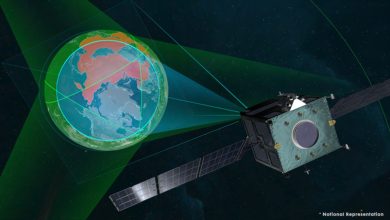
NGI is designed from the outset to operate within a networked sensor architecture, drawing data from space-based infrared sensors, upgraded radars, and future tracking satellites.
This integration allows NGI to engage threats earlier, track them more precisely, and reduce the number of interceptors required per target.
Limitations of the Next-Generation Interceptor
While the NGI promises a major upgrade to missile defense, several challenges and limitations remain:
- Limited numbers: Only a small fleet of NGIs will be deployed initially, restricting the system’s ability to counter multiple simultaneous missile threats.
- Midcourse-only engagement: NGI can intercept missiles only during the midcourse phase, leaving gaps against short-range, terminal, or maneuverable threats.
- Vulnerability to countermeasures: Advanced decoys, penetration aids, or hypersonic glide vehicles could reduce the interceptor’s effectiveness despite improved discrimination technology.
Program Structure and Development
In 2021, the MDA awarded two competing development contracts for NGI — one to Lockheed Martin and one to Northrop Grumman — to reduce risk and encourage innovation.
Each team is developing a complete interceptor design, including booster, kill vehicle, and supporting systems.
The US plans to down-select to a single NGI design later in the decade, with initial fielding targeted for the early 2030s.
Once operational, NGI interceptors will replace existing GBIs on a one-for-one basis, with the option to expand the fleet as threats evolve.

How NGI Fits Into Future Missile Defense
NGI is not a standalone solution. It is part of a broader shift toward layered and integrated missile defense, working alongside:
- Upgraded ground-based radars: To provide early detection and precise tracking of incoming missiles.
- Space-based missile tracking systems: To monitor missile launches globally, improving situational awareness and targeting.
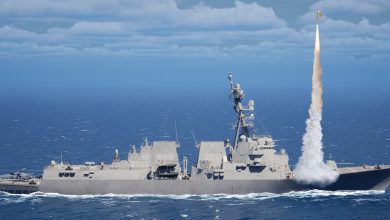
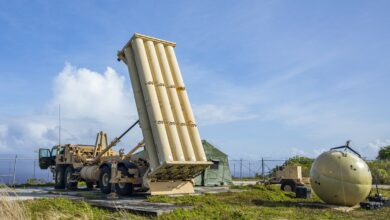
- Regional missile defense assets like Aegis and THAAD: NGI engages threats that penetrate other layers, creating a more robust, layered defense.
Together, these systems aim to create a more resilient and adaptable defense architecture capable of responding to multiple threat vectors.
If successful, NGI will not only replace an aging interceptor fleet but also redefine how the US defends against the most severe missile threats of the 21st century.