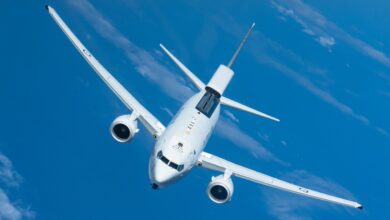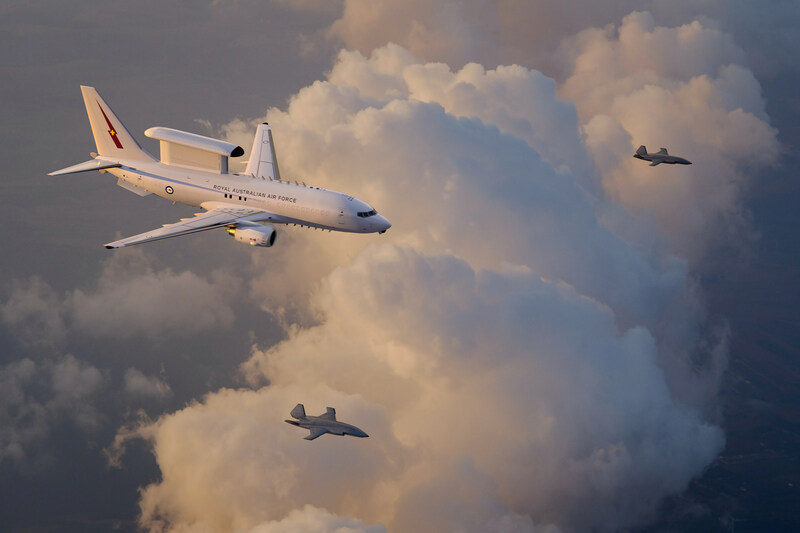
Boeing and the Royal Australian Air Force (RAAF) have tested two MQ-28 Ghost Bat drones and a digital aircraft controlled by an airborne E-7A Wedgetail to engage an aerial target, marking the first demonstration of its kind.
During the mission, a single operator aboard the E-7A aircraft controlled the uncrewed MQ-28 drones, which simulated flying ahead to protect crewed aircraft.
The trial tested the integration of multiple systems using open architecture, marking an initial step toward fully incorporating partner software and communication systems into the E-7A platform.
The software used in the trial was developed collaboratively by Boeing Defence Australia, the Defence Science and Technology Group, and the US Air Force Research Laboratory.
This mission was part of Capability Demonstration 2025 (CD25), a series of exercises with RAAF assets planned for this year.
CD25 aims to assess the MQ-28’s operational capabilities and its integration with crewed RAAF aircraft.
Upcoming exercises will include coordination with additional platforms such as the F/A-18F and F-35.
“The Ghost Bat has the potential to turn a single fighter jet into a fighting team, with advanced sensors that are like hundreds of eyes in the sky,” Australian Minister for Defence Industry Pat Conroy stated.
MQ-28 Ghost Bat
The MQ-28 Ghost Bat is an uncrewed Collaborative Combat Aircraft developed by Boeing Australia in partnership with the RAAF.
It is designed to operate alongside crewed aircraft, extending their capabilities in coordinated operations.
The platform measures 38 feet (11.7 meters) in length and has a flight range exceeding 2,000 nautical miles (2,300 miles/3,700 kilometers).
The system integrates sensor and payload data from multiple platforms to enhance intelligence, surveillance, reconnaissance, and early warning functions.
Its design is based on an open architecture, enabling rapid updates and reconfiguration of onboard systems, allowing quicker adaptation to new technologies and evolving operational requirements.
In March, the MQ-28 prototype had completed over 100 flight tests, following its first flight in February 2021. It was supported by more than 20,000 hours of digital simulation and testing.