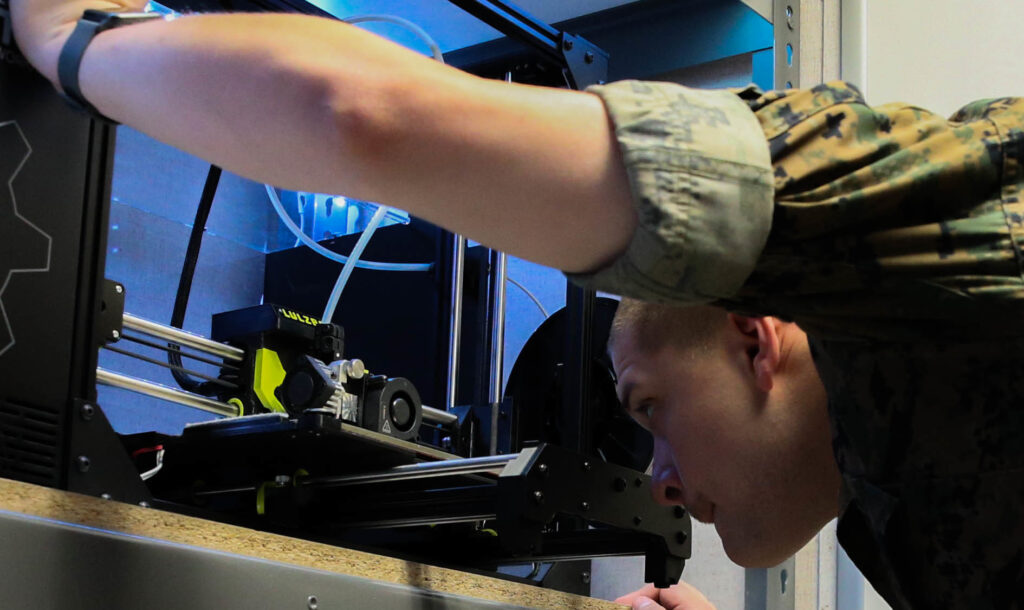
A high-ranking US Army officer has proposed equipping units with 3D printers alongside weapons to enable critical battlefield repairs when immediate support is not available.
Speaking during a recent congressional hearing, Gen. Dan Caine, Chairman of the Joint Chiefs of Staff, emphasized the need to ensure that key parts are accessible on future battlefields to “sustain our force out there at the edge.”
In a potential conflict, he said, troops are unlikely to have quick access to logistics hubs with full maintenance capabilities and will need to rely on what is available in the field.
US forces heavily depended on such hubs during the wars in Iraq and Afghanistan, but that dynamic could shift if Washington faces a more formidable adversary like China or Russia.
“I’m really encouraged by the innovation that’s happening to look at things like additive manufacturing, where we get a hold of the specs … and can just 3D-print right on the spot,” Caine said.
Tackling ‘Cannibalization’
Caine’s comments came in response to a lawmaker’s question about the military practice of “cannibalization,” in which parts are stripped from one system to repair another instead of waiting for new components.
The Government Accountability Office has warned that such practices contribute to long-standing maintenance issues for critical defense systems.
To reduce reliance on cannibalization, Caine stressed the importance of “having the parts right there” at the frontlines.
He also said troops would need training and support from manufacturers to ensure that 3D-printed parts meet required standards, and that stockpiling commonly printed components should be part of the planning.
3D Printing’s Growing Role in Defense
The US military has been expanding its use of additive manufacturing to give warfighters a tactical edge.
Earlier this month, the army announced a project with researchers in Hawaii to explore how 3D-printed skin could help treat chemical, biological, and burn-related injuries.
The service has also begun testing advanced 3D printing processes to quickly restore battle-worn vehicles without sending them to distant maintenance facilities.
Beyond repairs, the technology is also being applied to military construction, with components produced layer by layer from digital designs, enabling faster production at reduced cost.