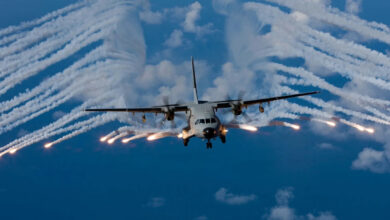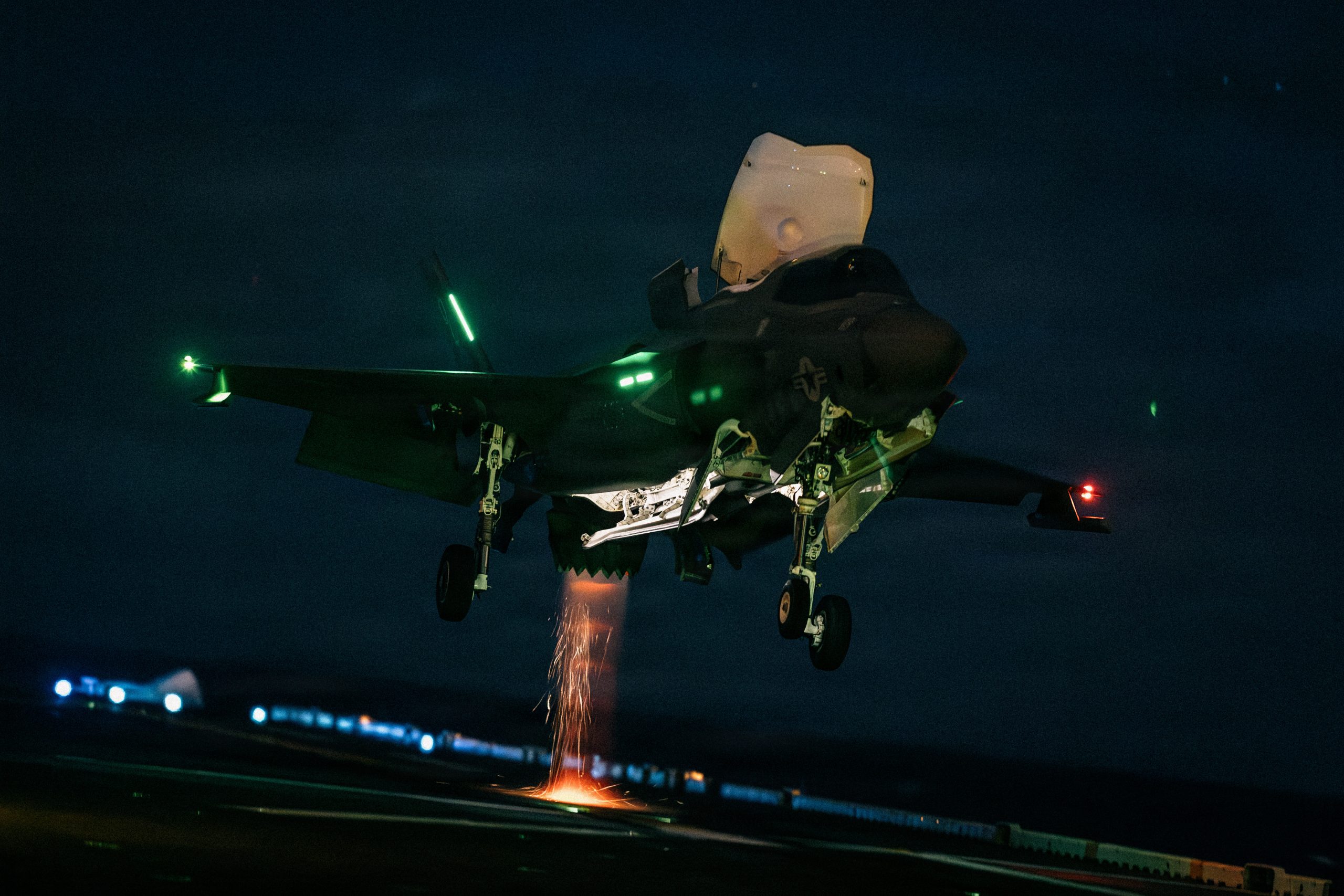
Engineers in Florida have developed a model to explain and reduce the extreme noise produced by military jets during takeoff and landing, a long-standing risk to aircraft and ground crews.
The team from the FAMU-FSU College of Engineering and the Florida Center for Advanced Aero-Propulsion published the findings in the Journal of Fluid Mechanics, which centered on short takeoff and vertical landing aircraft, such as the F-35B Lightning II fifth-generation fighter jet.
These jets can produce noise above 140 decibels when their exhaust hits the ground, creating a repeating “echo loop” where sound waves bounce back toward the aircraft, amplifying the noise.
The effect can damage aircraft parts and infrastructure and potentially cause permanent hearing loss or even internal injury to personnel.
“Only a tiny fraction of the jet’s energy is transformed into sound, but this small fraction has a major impact,” said Professor Farrukh Alvi, a co-author of the study.
“The intense noise produced by jet engines can cause structural damage to the aircraft and damage the hearing of personnel on the ground.”
Focus on Acoustic Standing Waves
Under key evaluations of the research, experts tested a jet traveling at Mach 1.5, adjusting engine pressure and clearance from the ground to simulate landing conditions.
They also utilized high-speed cameras and sensitive microphones to see airflow patterns and track sound waves in real time.
The study concluded that the pitch comes mainly from acoustic standing waves, or trapped sound waves, between the jet and the ground rather than airflow disturbances only, as previously thought.
It also determined that slower-moving air disturbances tend to grow larger, making the noise louder.
“That was surprising,” said lead author Myungjun Song. “We found that these acoustic standing waves are much more important in determining the pitch, while the size and speed of the disturbances decide the level or ‘loudness’ of the noise produced.”