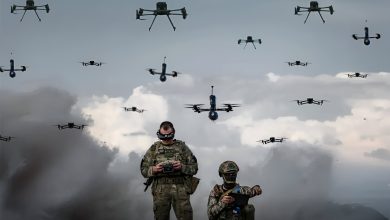
British startup Tiberius Aerospace is moving to connect combat-tested Ukrainian defense technologies with UK industrial capacity through its GRAIL platform, an AI-driven system that links operational requirements with suppliers.
GRAIL acts as a coordination layer, allowing governments, prime contractors, and smaller firms to align demand, production, and iteration in shorter cycles based on real-world feedback.
Through the platform, technologies validated in Ukraine can be transferred to UK industry, creating a direct pathway from frontline adaptation to scaled production.
The system is also listed on Tradewinds, a US Department of Defense-backed initiative that accelerates procurement through data and analytics.
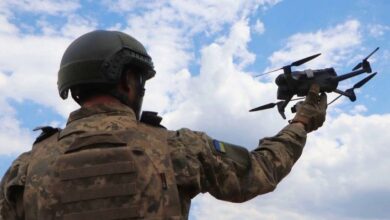
“Ukraine has shown us that modern warfare evolves in real time. Systems are adapted in weeks, not years, and effectiveness is proven under fire, not in theory,” said Andy Baynes, Tiberius CEO.
“On the ground, I saw engineers developing and deploying updates to weapon systems in days to counter rapidly shifting threats. If you’re not able to iterate at that speed, you’re not just slow, you’re obsolete.”
Battlefield Data for Industrial Output
Ukraine already operates a platform designed to link battlefield requirements with industry through the Brave1 initiative.
The system connects military units, startups, investors, and regulators to support faster development and deployment of defense technologies.
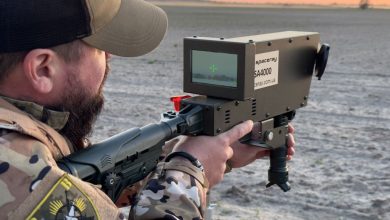
Brave1 also facilitates in-field testing through its “Test in Ukraine” program, allowing companies to evaluate systems under operational conditions, either directly on the front line or through trials conducted by Ukrainian units, providing structured feedback and performance data.
Building on these mechanisms, Kyiv is extending its defense industry model beyond national borders.
In February, Volodymyr Zelensky said Ukraine plans to establish up to 10 weapons export hubs across Europe, with a focus on Baltic and Northern countries.
The hubs are intended to manage the export of surplus equipment and support production partnerships abroad, with the resulting revenues reinvested in critical military capabilities.