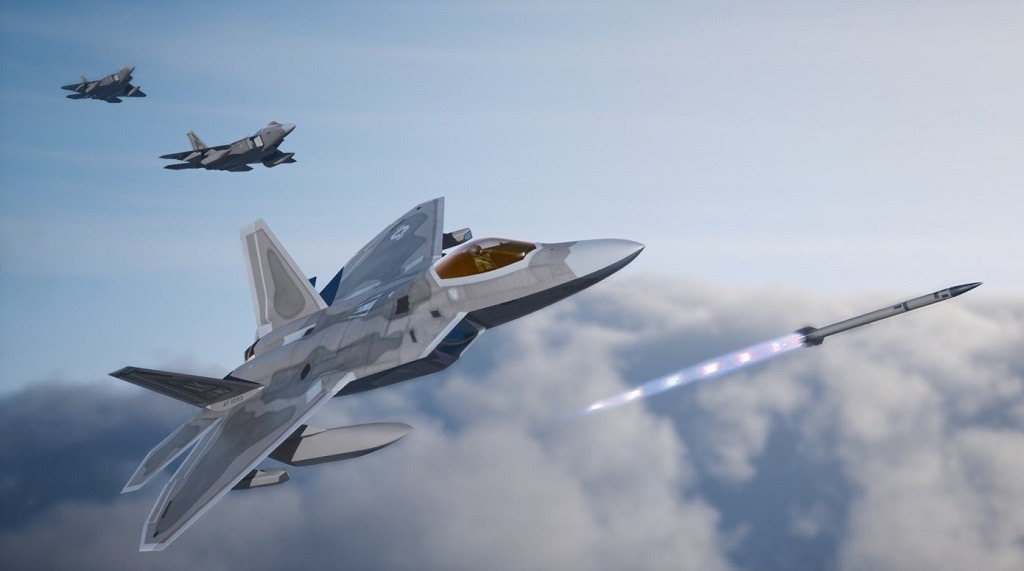
Modern air combat demands weapons that outrange, outmaneuver, and outlast any adversary.
The AIM-260 Joint Advanced Tactical Missile (JATM) is the US Air Force and Navy’s answer, extending the reach of fighter aircraft to neutralize threats before they appear on radar.
Engineered for long-range interception and next-generation threat engagement, AIM-260 sets a new standard in air-to-air capability.
This guide unpacks its development, operational role, and its place within the evolving landscape of aerial warfare.
A Closer Look at JATM
The AIM-260 JATM is the US’ next-generation beyond-visual-range air-to-air missile, developed by Lockheed Martin to ensure continued air superiority against rapidly advancing peer threats.
Designed to replace or complement the AIM-120 AMRAAM, the AIM-260 reflects a broader shift in US air combat strategy — one focused on longer ranges, survivability in contested environments, and dominance against near-peer adversaries equipped with advanced aircraft and electronic warfare systems.
Design Philosophy and Capabilities
While many technical details of the AIM-260 remain classified, its design priorities are clear.
The missile is intended to provide significantly greater range than the AIM-120D, enabling US fighters to engage adversaries earlier and from safer distances.
This is especially critical in contested environments where aircraft must operate under the threat of advanced surface-to-air missiles, electronic attack, and counter-air patrols.
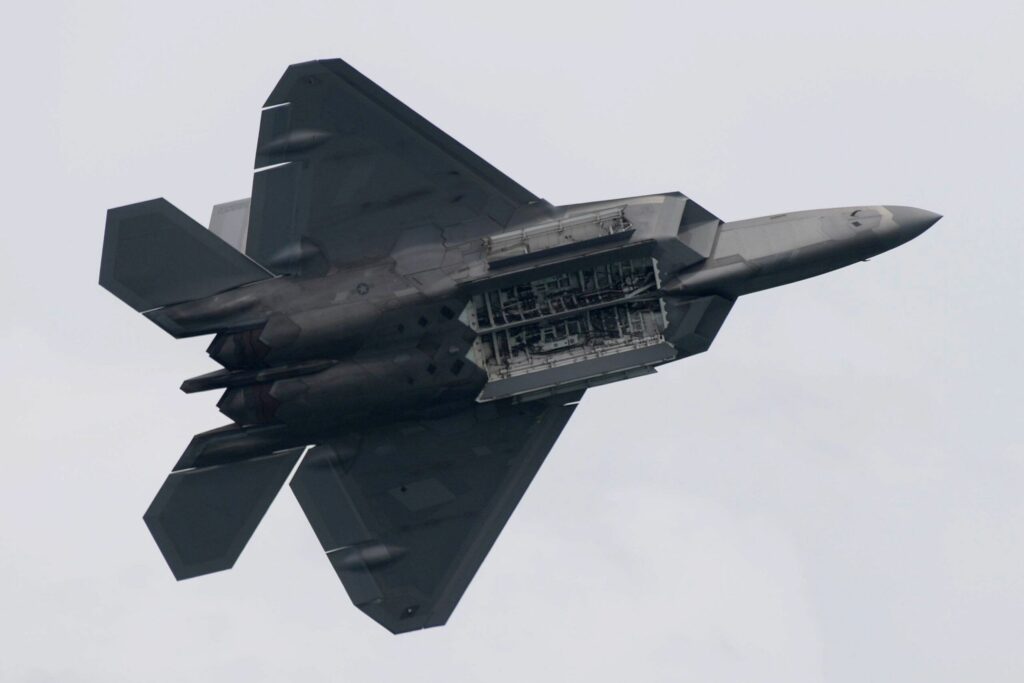
Unlike larger foreign missiles, the AIM-260 is designed to fit within existing internal weapon bays, particularly on stealth platforms such as the F-22 Raptor and F-35 Lightning II.
This ensures that stealth aircraft can retain their low-observable profiles while carrying next-generation weapons.
The missile is expected to feature:
- An advanced seeker capable of operating in heavy electronic warfare environments
- A two-way datalink to allow mid-course updates from the launching aircraft or off-board sensors
- Improved resistance to jamming and countermeasures
- A propulsion system optimized for long-range, high-energy engagements
Rather than focusing solely on raw speed, the AIM-260 emphasizes engagement flexibility, guidance resilience, and integration with networked sensors.
Platform Integration
The AIM-260 is compatible with the US Air Force and US Navy, with the air force being the leading service, and the F-22 Raptor expected to be the first operational platform.
The missile is also planned for integration with the F-35 and, potentially, with future platforms under the Next Generation Air Dominance program.
Importantly, the AIM-260 is not expected to fully replace the AIM-120 overnight. Instead, it will likely operate alongside AMRAAM, with the AIM-260 reserved for high-end threats and contested theaters, while the AIM-120 continues to serve in broader roles.
Why AIM-260 Was Needed
For decades, the AIM-120 AMRAAM has been the backbone of US and allied air-to-air combat. However, emerging threats — particularly long-range air-to-air missiles fielded by China and Russia — have narrowed the advantage in beyond-visual-range combat.
China’s PL-15, in particular, introduced a combination of extended range, advanced guidance, and datalink capability that challenged assumptions about standoff engagement distances.
In response, the US Air Force initiated the JATM program to restore and exceed its air-to-air edge.
The result is the AIM-260: a missile optimized for greater reach, faster engagement timelines, and improved survivability in high-end combat.
Operational Impact
In modern air combat, the side that detects, tracks, and engages first often wins. The AIM-260 is designed to push that engagement boundary outward, forcing adversaries to operate defensively before they can bring their own weapons to bear.
This extended reach also supports concepts of distributed operations and sensor-shooter separation, where targeting data can be passed from one platform to another.
An aircraft may not need to see a target directly to engage it; another sensor can provide the cue, and the AIM-260 delivers the strike.
Against peer adversaries, this capability complicates mission planning, enhances survivability for US forces, and reinforces air dominance across vast operational areas such as the Indo-Pacific.
Secrecy and Development Status
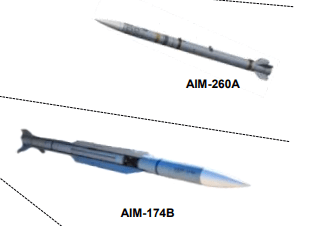
The AIM-260 program has been deliberately kept low-profile. Unlike earlier missile programs, there have been few to no public test videos or detailed performance disclosures. The US Navy, however, released a rendering of the JATM in a portfolio overview last February 2025.
This secrecy reflects a recognition that information dominance matters, and revealing too much about capabilities can reduce their deterrent value.
The missile is expected to enter service in the mid-to-late 2020s, aligning with broader modernization efforts across the US air combat enterprise.
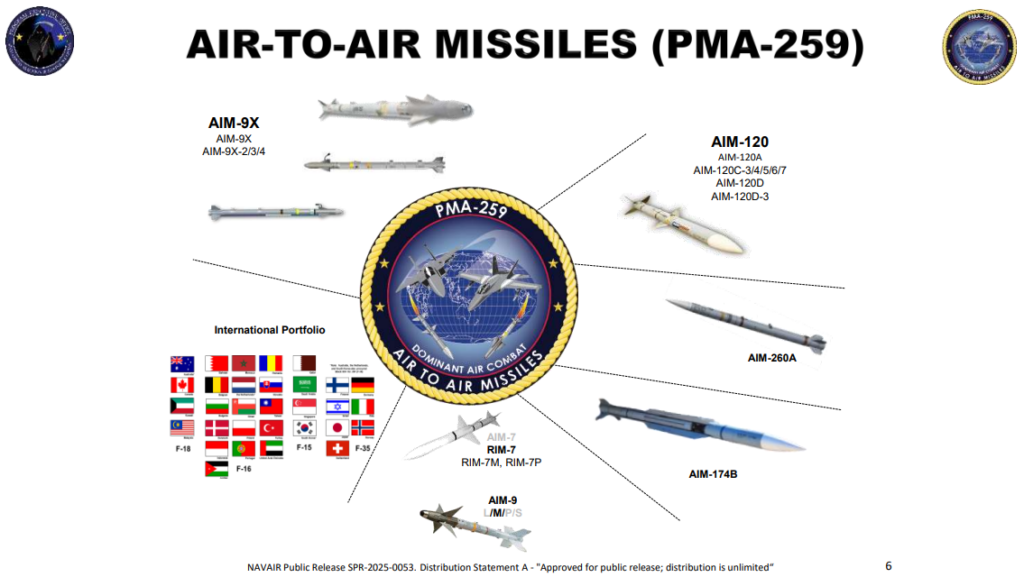
By extending engagement ranges, improving survivability against electronic attack, and integrating seamlessly with stealth aircraft and networked sensors, the AIM-260 helps ensure that US and allied forces retain air superiority against the most capable adversaries.
In an era where the margin for error in air combat is shrinking, the AIM-260 is designed to restore distance, dominance, and decisive advantage in the skies.