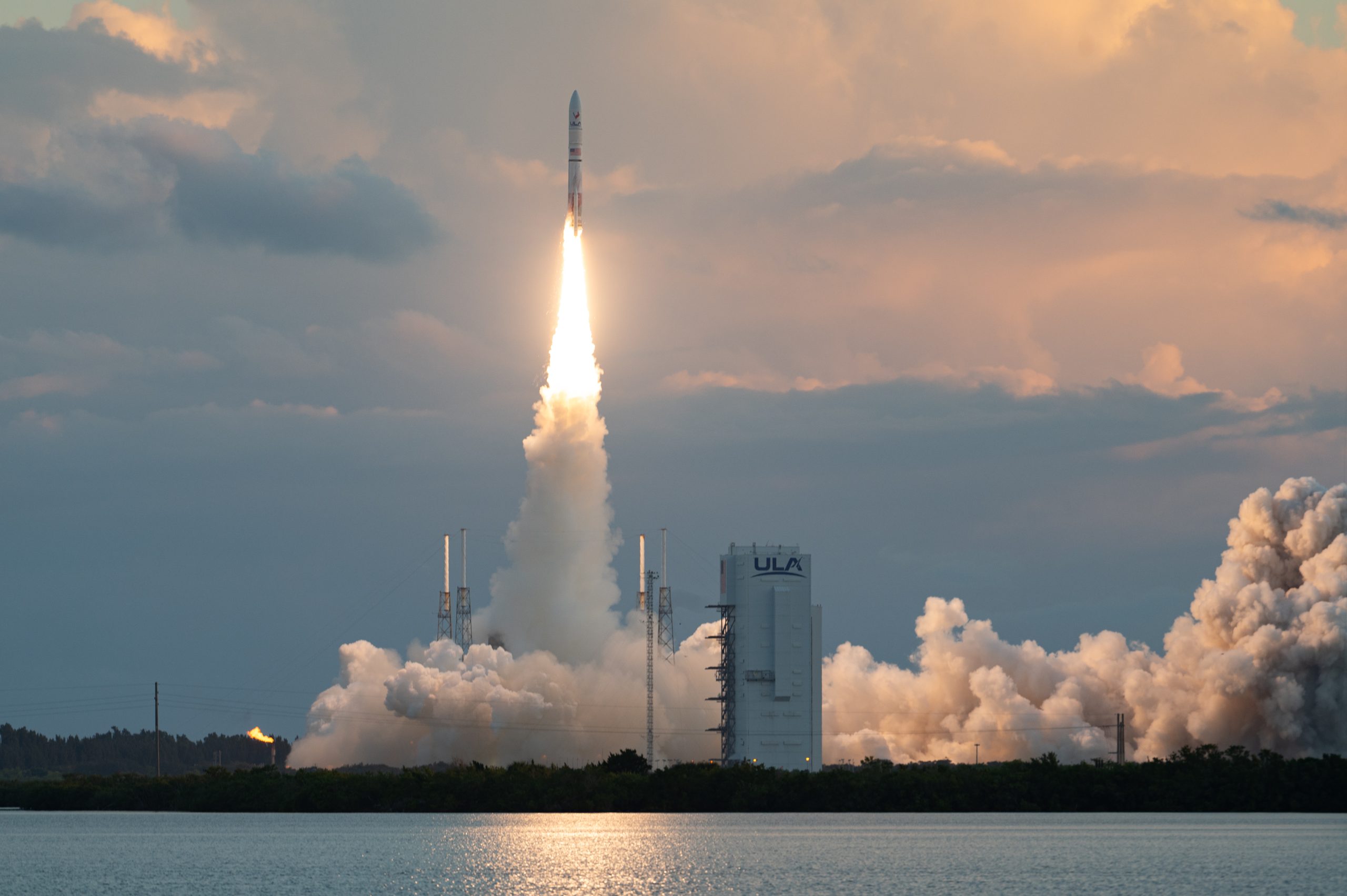
The US Space Force (USSF) has suspended National Security Space Launch missions on United Launch Alliance’s (ULA) Vulcan heavy-lift launch vehicle after a solid rocket booster anomaly in mid-February.
A key initiative to place satellites in orbit, the National Security Space Launch supports US military missions and other American intelligence agencies.
The effort’s rocket, Vulcan, is a successor of ULA’s Atlas V and Delta IV systems. ULA is one of two companies certified to deliver military payloads to space, alongside Elon Musk’s SpaceX.
The Incident
The issue on February’s launch occurred shortly after liftoff on the USSF-87 mission, which carried two Geosynchronous Space Situational Awareness Program satellites and a maneuverable prototype spacecraft for the space force’s Mission Delta 9 orbital warfare unit.
Although Vulcan delivered its payloads to orbit, officials observed abnormal behavior in one of the rocket’s solid rocket motors, according to Bloomberg.
It marked the second booster-related anomaly in Vulcan’s four flights, following a similar issue during an October 2024 certification launch.
“Until the anomaly is resolved, the US Space Force will not launch national security space missions aboard the Vulcan launch vehicle,” said Col. Eric Zarybnisky, acting portfolio acquisition executive for space access at USSF.
He noted that the investigation is in its early stages and could take months.
Impact and Solutions
The pause could affect several upcoming missions, including the final GPS III satellite scheduled for launch this spring.
Zarybnisky said the USSF is gathering options to maintain access to space but has not yet reassigned the mission.
Meanwhile, ULA, a joint venture between Boeing and Lockheed Martin, said it is now working with supplier Northrop Grumman to review data, inspect hardware, and implement “corrective action” before the next flight.