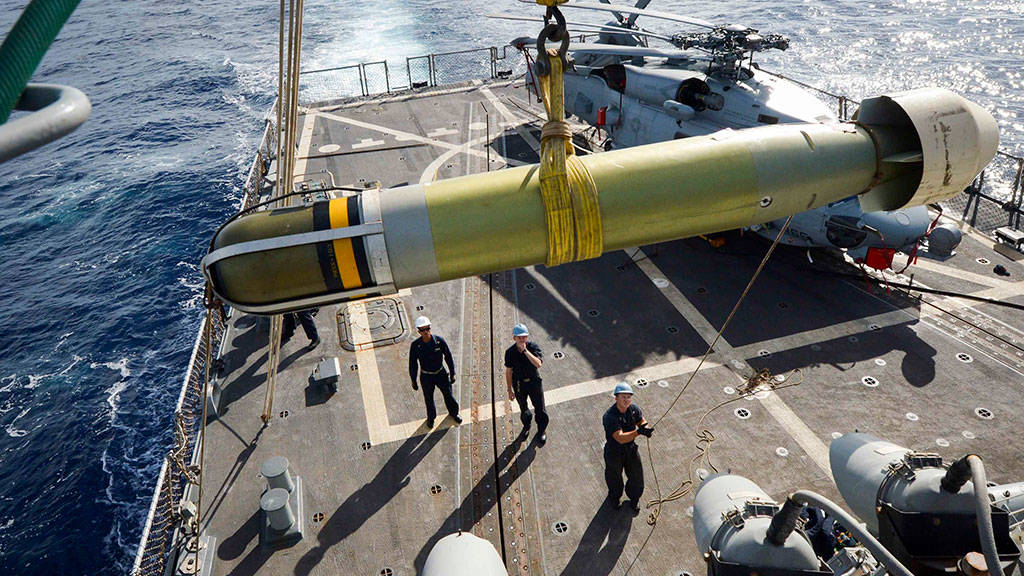
The Royal Canadian Navy has tested the US-built MK 54 lightweight torpedo, validating its performance as the latest addition to the frigate fleet’s anti-submarine warfare arsenal.
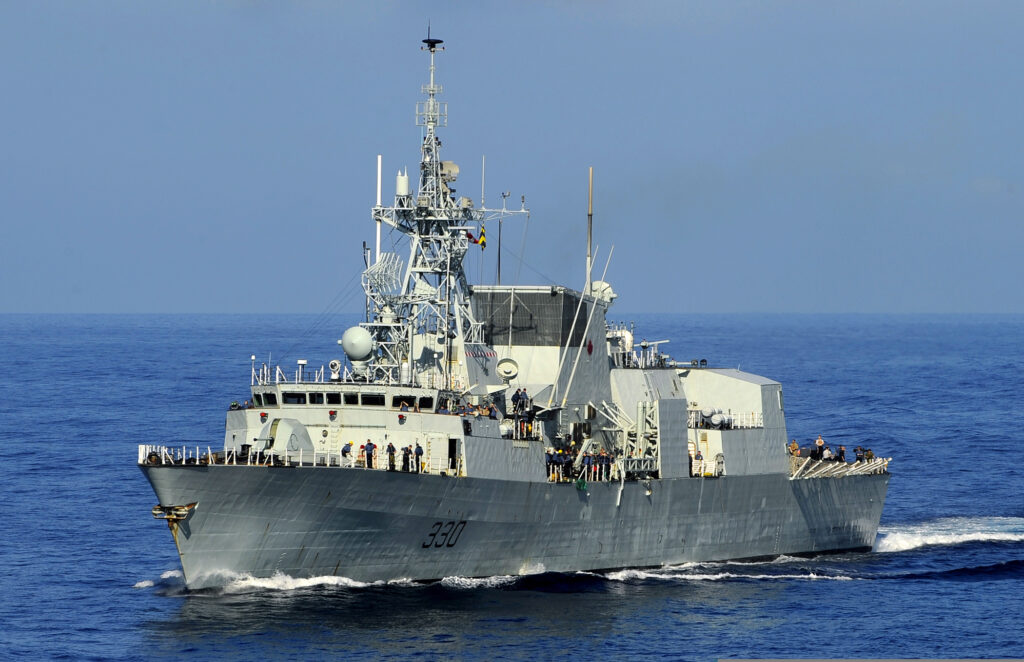
The weapon was launched from the Halifax-class vessel HMCS Regina (FFH 334) at the Canadian Forces experimental range near Nanoose Bay, British Columbia, according to CTV News.
During the event, sailors fired the torpedo against a stationary underwater target while collecting performance data to support future utility and upgrades.
Canada’s Department of National Defence said the evaluation aimed “to ensure the weapon can be safely and effectively used from Canadian warships” as the navy modernizes combat systems across its Halifax-class fleet.
First User
Alongside the MK 54’s maiden live fire, the test made the HMCS Regina the lead Canadian frigate to deploy the capability.
Cmdr. Darren Sleen, commanding officer of HMCS Regina, said the crew was “proud to be the first ship” in the service to fire the weapon.
“These trials not only showcase the professionalism of our sailors, but also directly contribute to our warfighting credibility and support our relentless pursuit of personnel generation,” CTV News quoted him as saying.
The MK 54 System
American defense contractor Raytheon introduced the MK 54 in the early 2000s to enhance the US Navy’s sub-surface firepower, fusing the acoustic homing solution of its predecessor MK 50 as well as the propulsion and warhead sections of the MK 46.
The MK 54 weighs 608 pounds (276 kilograms), measures 8 feet (2 meters) long, and has a diameter of 13 inches (33 centimeters).
It uses a polymer-bonded explosive as an underwater munition and is powered by a reciprocating external combustion engine.
The torpedo has a range of 30,000 feet (9,144 meters), a speed of over 40 knots (46 miles/74 kilometers per hour), and an operational depth of more than 450 meters (1,476 feet).
Ottawa moved in 2019 to acquire 425 MK 54 conversion kits from the US in a deal valued at about $514 million.
Each kit, worth approximately $1.2 million, replaces the Royal Canadian Navy’s older MK 46.