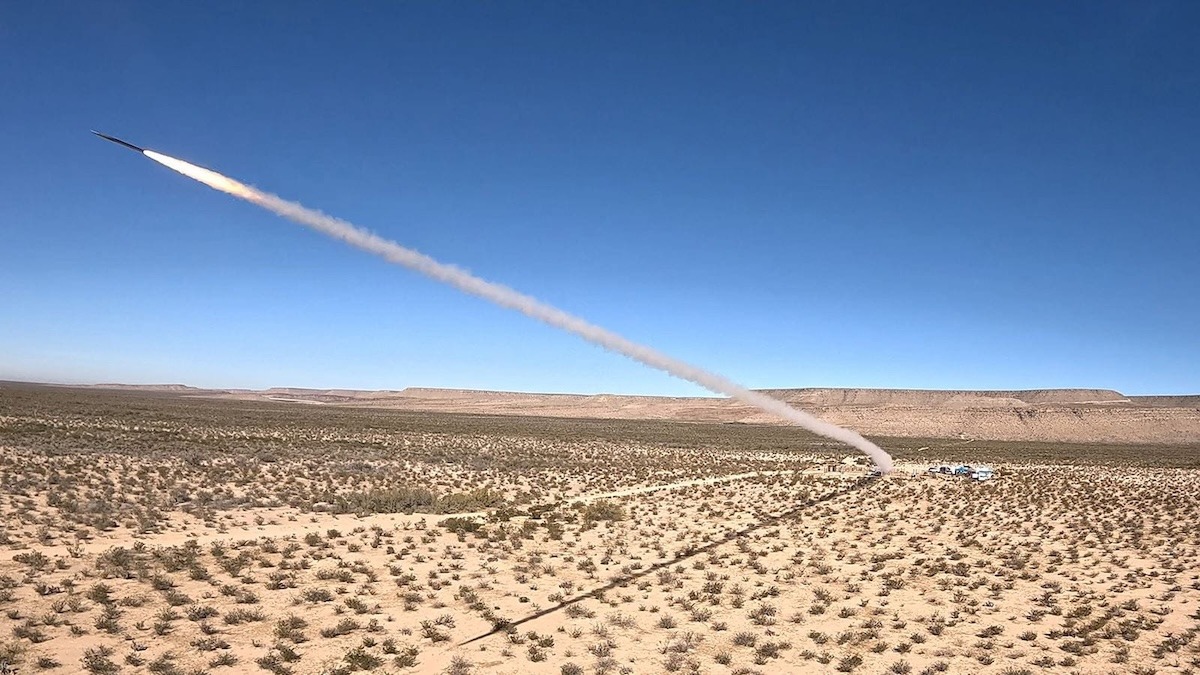
Raytheon’s proposed replacement for the US Army’s Stinger surface-to-air missile, the Next Generation Short Range Interceptor (NGSRI), has completed a ballistic test.
The company-funded test validated the NGSRI’s ability to be fired from a man-portable launcher and to track drone targets, moving it one step closer to a flight-test demonstration.
Its pitched interceptor features Northrop Grumman’s highly loaded grain solid rocket motors for extended range and speed, and a new seeker that enables identification and engagement at longer distances, day or night.
The NGSRI is also reportedly backward-compatible with existing launchers.
“Raytheon’s investment in NGSRI demonstrates the company’s strong partnership with the US Army and our commitment to equipping service members with this advanced capability,” said Tom Laliberty, president of Land and Air Defense Systems at Raytheon.
According to Raytheon, it uses modular system design and automated manufacturing to enable faster development and production.
NGSRI Progress
The US Army launched a request for information in 2022, seeking a potential replacement for the aging Stinger missile, designed to defeat unmanned aerial systems, rotary-wing, and fixed-wing threats.
Raytheon and Lockheed Martin were contracted in September 2023 to develop competing interceptors with enhanced speed and lethality, with the selected system from the winning manufacturer anticipated to enter low-rate production by 2028.
In 2024 and 2025, both competitors completed a series of demonstrations in preparation for a flight test of their proposed systems.
In January 2026, Lockheed conducted the first flight test of its proposed NGSRI, advancing the missile from concept to first flight in just 26 months, leveraging advanced technologies such as artificial intelligence and machine learning.