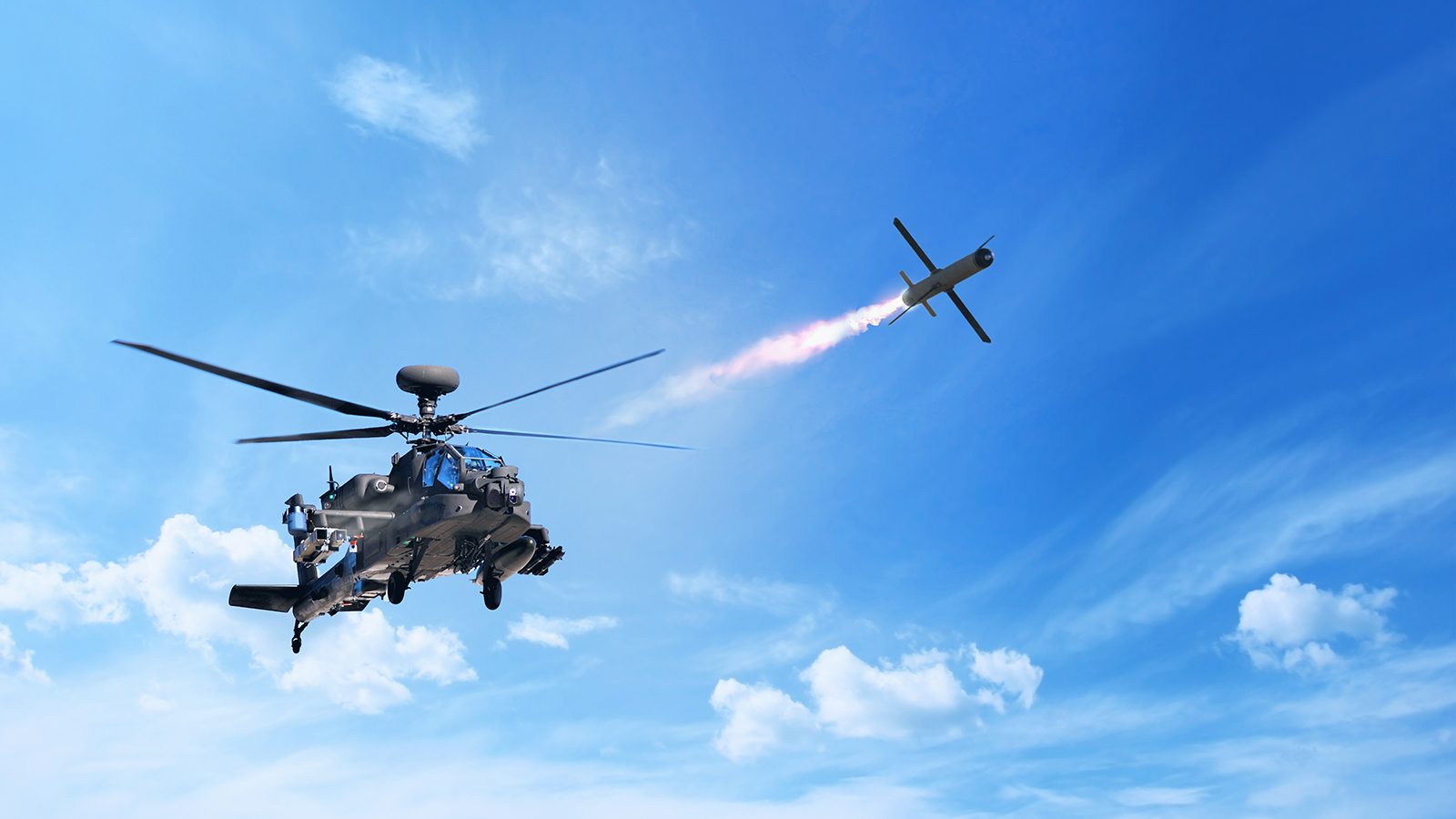
The UK Ministry of Defence (MoD) has invited seven domestic firms to present autonomous drone concepts designed to operate alongside the British Army’s Apache AH-64E attack helicopters.
Under Project NYX, the initiative aims to enhance the lethality and survivability of crewed platforms by teaming them with uncrewed systems capable of providing additional sensing, targeting, and strike capabilities.
Operating on a “command rather than control” concept, the Autonomous Collaborative Platform (ACP) will employ AI-driven autonomy to adapt independently to fast-changing battlefield conditions while operating within clearly defined mission boundaries.
The platform is expected to undertake a broad range of missions, including intelligence, surveillance, and reconnaissance, target acquisition, precision strike, countermeasure defeat, and integration with launched effects in contested airspace.
According to the MoD, the capabilities delivered by the ACP will be achieved at a fraction of the cost, logistical footprint, and maintenance burden associated with crewed aircraft.
The companies selected to participate in Project NYX are Anduril UK, BAE Systems, Leonardo, Lockheed Martin UK, Syos, Tekever, and Thales.
Project NYX Timeline
Under the program’s phased approach, the seven participating companies will be pruned to four by March for initial development and research activities, with one or more winners expected to be selected in the third quarter of fiscal year 2026.
Capability demonstrations are scheduled to begin in the second quarter of 2027, with final demonstrations planned for the first quarter of 2028.
Initial operational capability is expected around 2030.
“These drones of the future will make the British Army more effective and lethal by enhancing our ability to strike, survive and win on the battlefield,” UK Minister for Defence Readiness and Industry, Luke Pollard, said.
“Project NYX represents the cutting edge of the Defence Industrial Strategy, working with leading British industry partners to ensure the UK remains at the forefront of autonomous military technology.”