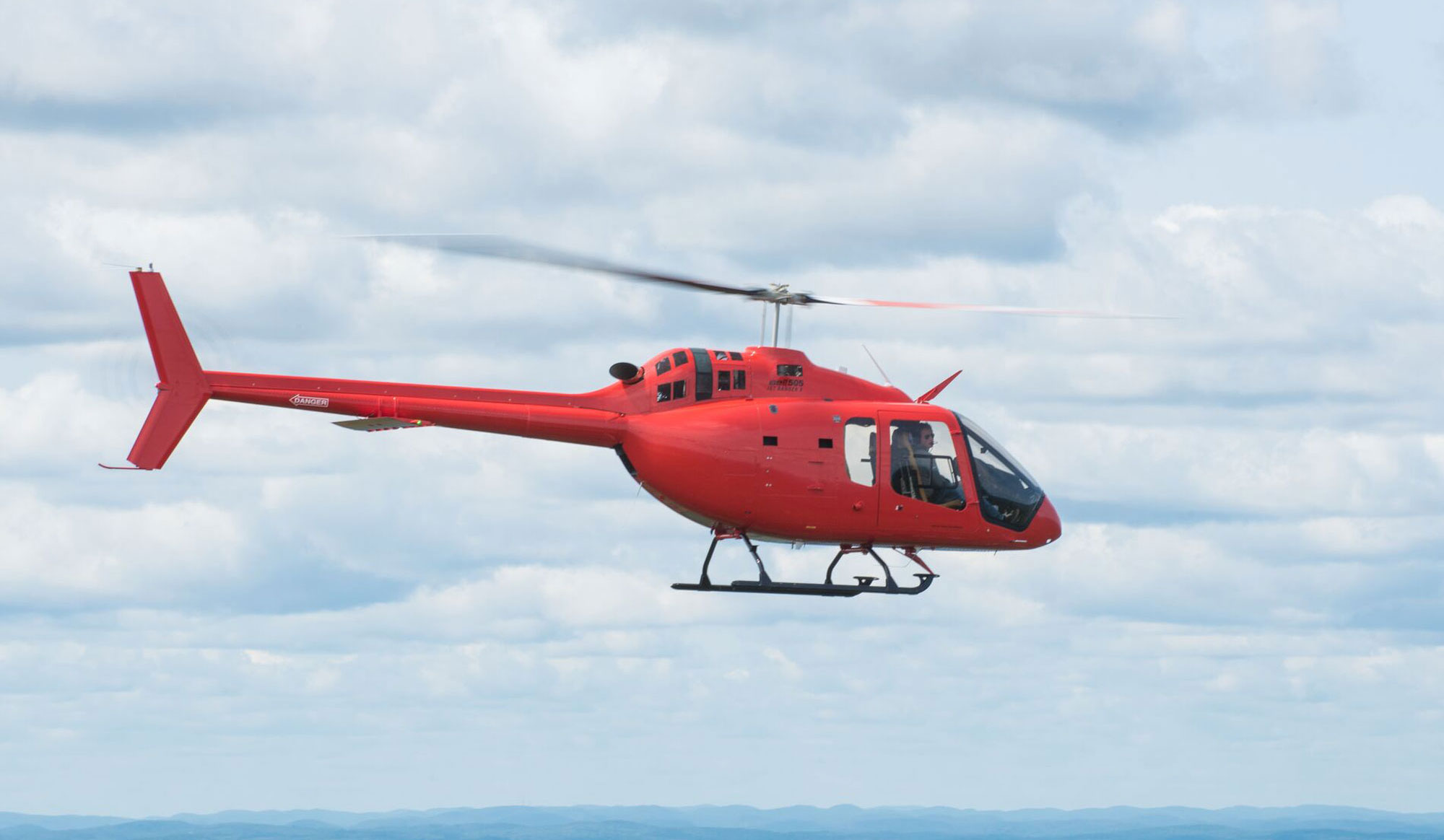
Bell Textron has advanced to the next round of the US Army’s Flight School Next competition, keeping the company in contention to shape how future army aviators are trained.
The firm is competing alongside industry peers, pitching a turnkey training solution for the Bell 505 helicopter, integrated training services, and digital learning tools.
Bell aircraft have been used in army flight schools for decades, starting with the H-13 Sioux and later the UH-1H and TH-67, aircraft that formed the backbone of entry-level rotary-wing instruction for generations of pilots.
This time, Bell is offering the five-seat Bell 505, a light single-engine helicopter already in service with multiple military and civilian operators. The company is pairing the aircraft with its Bell Training Academy, which provides flight instruction, simulators, and academic coursework designed to shorten training timelines and standardize outcomes.
Redesigning How the Army Trains Aviators
Flight School Next is the army’s flagship effort to rethink initial entry rotary-wing training, replacing a decades-old model built around legacy aircraft and fixed training pipelines.
The program seeks to improve efficiency, reduce training bottlenecks, and better prepare students for advanced aircraft like the UH-60 Black Hawk and AH-64 Apache.
Launched as a competitive industry program, Flight School Next asks companies to deliver an end-to-end training ecosystem — aircraft, simulators, maintenance, instructors, and digital tools — rather than just an airframe.
The army has emphasized outcomes-based training, focusing on accelerating student progression without sacrificing proficiency or safety.