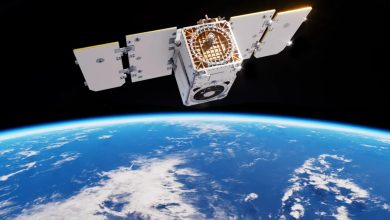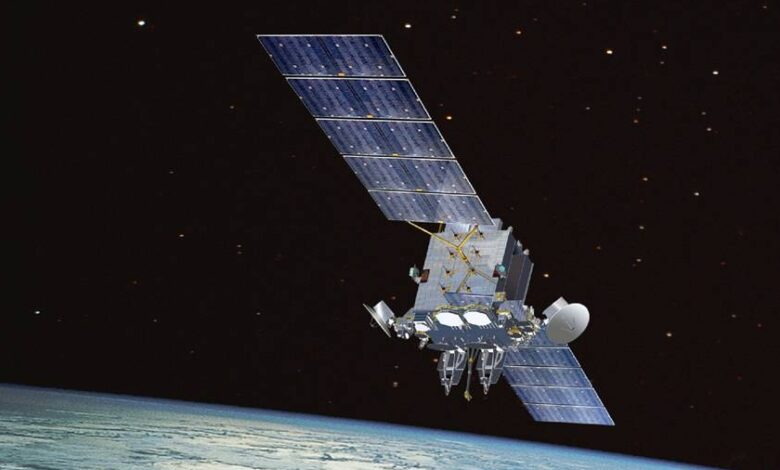
Researchers in Europe recently revealed they had intercepted live satellite communications. How? Using off‑the‑shelf equipment worth just $800. If readers were astonished, they shouldn’t have been.
Among those working in and around the space sector, it has long been understood that much of our satellite infrastructure rests on a dangerous illusion: that what is up there in orbit is untouchable.
As these researchers demonstrated, it isn’t.
It’s worth dwelling on what those “live satellite communications” were.
By eavesdropping on unencrypted signals from orbiting satellites, the researchers captured thousands of private phone calls and text messages sent by T‑Mobile users, along with fragments of unprotected US military communications.
No privileged access or insider knowledge was required. They simply pointed an antenna at the sky. The obvious question follows: if this can be done for a few hundred dollars, what could a nation‑state achieve with billions at its disposal?
The Problem Isn’t Just Encryption
Addressing this security problem starts with understanding its roots. Radio frequency communication, still the backbone of most satellite systems, works by broadcasting waves across wide areas. Anyone in the right place, with the right receiver, can capture them.
Encryption is meant to render intercepted data useless, but what was considered state‑of‑the‑art when satellites were launched in the early 2000s is no longer sufficient today.
That should surprise no one. Technology advances rapidly, while satellites are expected to operate for decades.
But satellite encryption has a second issue: key management. Updating keys in orbit is difficult and often infrequent. Once a satellite is launched, it cannot be physically accessed, and the regular key rotation common in terrestrial systems is rarely possible.
In many cases, the same keys remain in use for years. A determined adversary, intercepting large volumes of traffic over time, can begin to detect patterns and eventually get their hands on sensitive data.
The result is an uncomfortable reality. Much of the world’s satellite fleet was designed for a different technological and geopolitical era, one in which interception was costly and largely limited to major intelligence agencies.
That barrier has collapsed.
Cheap digital receivers, open-source radios, and advanced decryption tools have put what was once the preserve of the world’s top intelligence agencies into the hands of anyone with curiosity and patience.
Changing the Interception Equation
Optical communication offers a way forward. Satellites using laser communication share some of the same encryption challenges as radio‑based systems, but they fundamentally change the interception problem.
Laser communication transmits data via a narrow, focused beam of light between a satellite and a ground station. Intercepting that signal would require placing equipment directly in the path of the beam, with near‑perfect alignment.
Practically, the likelihood of someone managing to do this is vanishingly small. Physics, not just maths, protects the signal.
Laser communication also brings other advantages. Data rates are dramatically higher than those achievable with radio frequency (RF), and optical links operate outside the crowded radio spectrum.
RF congestion is rapidly nearing a point where are so many signals crowd the same frequencies that interference, slower speeds, less bandwidth, connectivity problems, degraded signal range, increased power consumption, and reliability issues for critical emergency services are inevitable.
Historically, the Achilles’ heel of laser communication was atmospheric turbulence, which degraded signals. A second issue was the commercial viability, which worked in the lab but had yet to be proven in a real-world setting. Both challenges have been overcome.
At just the time when we need a more secure alternative to conventional satellite communication, and at just the time when we need to lessen the strain on RF, one has emerged — and it’s ready to use.
The $800 Warning
The lesson of the $800 satellite hack is not that we should panic, but that we should abandon outdated assumptions.
Space is a contested domain, and an environment where private actors, start-ups, and states compete. That’s why the old way of thinking – “it’s secure because it’s remote” – has collapsed.
No communication system is perfect, and radio will remain a vital, reliable workhorse for many applications.
But when security truly matters, there is a profound difference between a technology that can be compromised by a small group with modest means, and one that would require the physical interception of a laser beam from orbit.
It is time for light to share the burden of radio.

Jean-Francois Morizur is CEO and founder of Cailabs.
The views and opinions expressed here are those of the author and do not necessarily reflect the editorial position of The Defense Post.
The Defense Post aims to publish a wide range of high-quality opinion and analysis from a diverse array of people – do you want to send us yours? Click here to submit an op-ed.