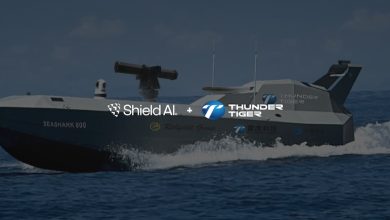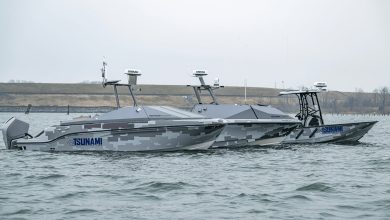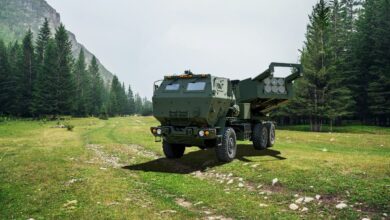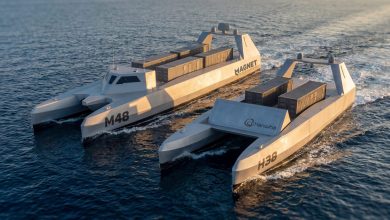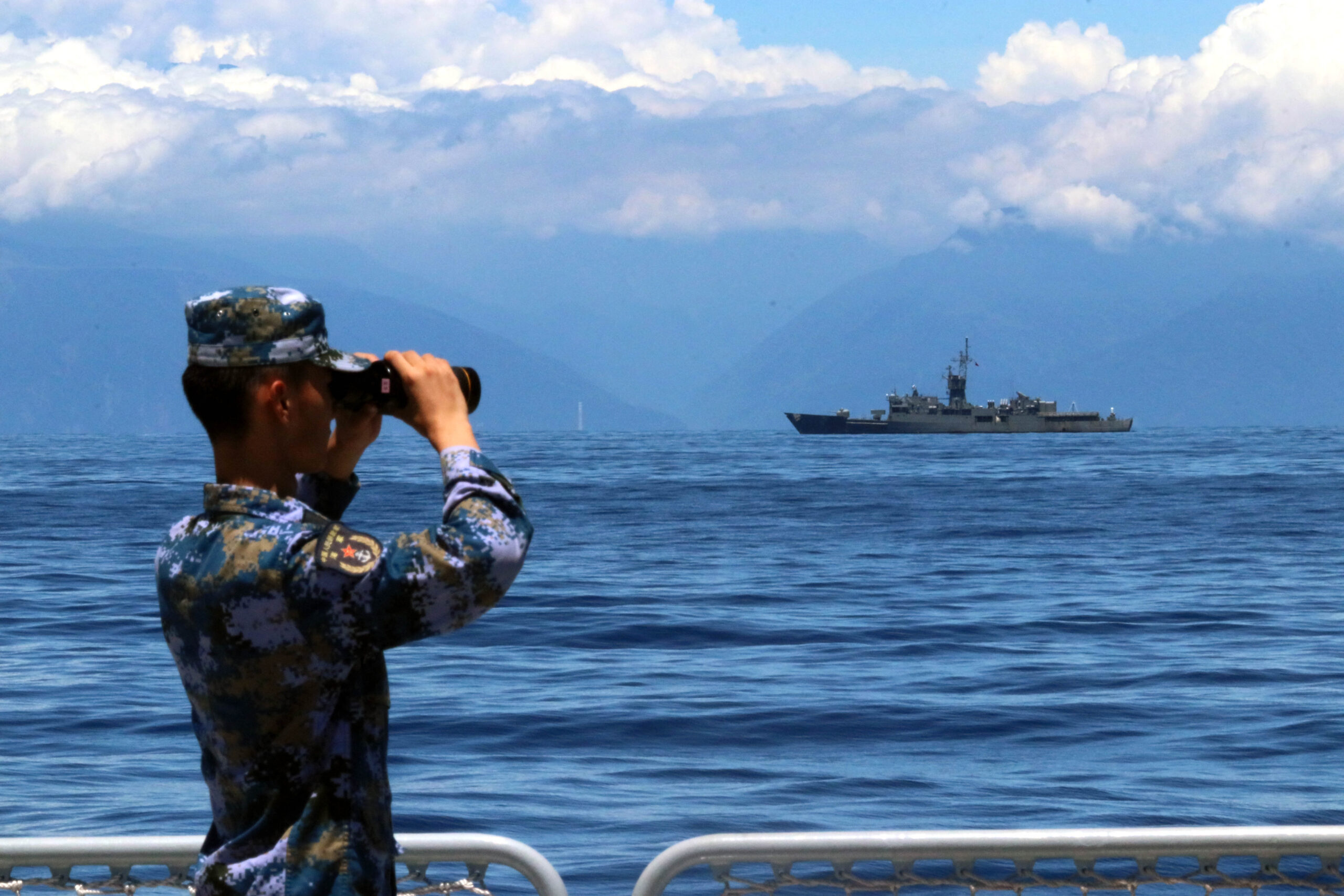
Taiwan’s military has announced plans to produce up to 1,600 unmanned attack surface vessels under a proposed special defense budget of 1.25 trillion New Taiwan dollars ($39.8 billions), aimed at strengthening deterrence, Taiwan News reported.
Officials said hull construction is relatively straightforward, while the main technical challenge lies in equipping the platforms with weapon systems.
This requires integrating high-explosive payloads with guidance, sensors, and command-and-control systems.
To accelerate production, Taipei’s Navy Command is expected to designate the National Chung-Shan Institute of Science and Technology (NCSIST) as prime contractor.
NCSIST has prior experience through its Kuai Chi unmanned surface vessel program and has signed a cooperation agreement with US-based USV manufacturer MARTAC.
Under the project, NCSIST will deliver a fully integrated weapons system rather than a standalone vessel.
The approach would combine command-and-control architecture, sensors, guidance modules, and explosives into a single integrated system, with partial deployment possible as early as 2027.
Operational Requirements
Under the initiative, both the navy and the army have submitted technical requirements for the attack USVs to meet operational needs.
The baseline attack USV is required to achieve a maximum speed of at least 64 kilometers (40 miles) per hour and a minimum operational range of 460 kilometers (286 miles).
The vessels must support autonomous navigation and target identification, incorporate collision-avoidance systems, and operate in sea state level 4 on the Beaufort scale, corresponding to moderate seas with wave heights up to 2.5 meters (8 feet).
Moreover, the systems are expected to operate effectively in coordinated swarm missions.
The vessels must also be equipped with electro-optical and infrared sensor modules capable of transmitting imagery up to 44 kilometers (27 miles), while remaining resilient against interference with global navigation satellite systems and radio communications.