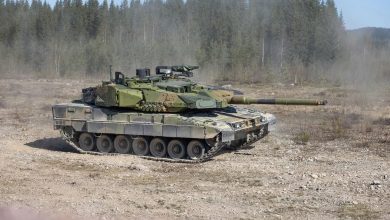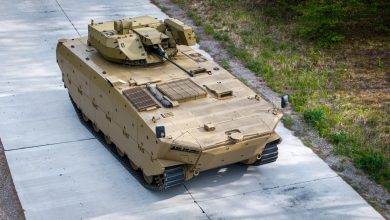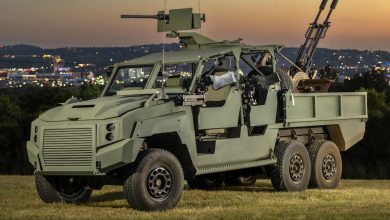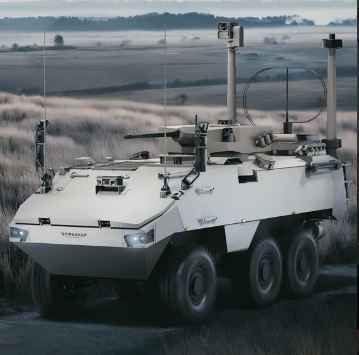
Munich-based sensor company Hensoldt has received a high three-digit-million euro contract from General Dynamics European Land Systems (GDELS) to equip the German Armed Forces’ new Luchs 2 reconnaissance vehicles.
Running through 2032, the deal encompasses early development units and two production batches, including 274 vehicles in the first batch with options for additional platforms.
It also includes spare parts, documentation, associated training, and long-term support services.
GDELS received the main contract last October to supply Luchs 2 systems to Berlin under a 3-billion-euro ($3.4-billion) program, with deliveries planned between 2029 and 2032.
“For the LUCHS 2, we are combining our core optronic and sensor capabilities into a powerful overall system,” said Christina Canitz, optronics division head at Hensoldt.
“It is crucial that the crew can see, recognise and make safe decisions under all conditions. With this range of capabilities, we are creating clear operational added value for the Bundeswehr’s reconnaissance forces.”
CERETRON: The Mission System at the Core
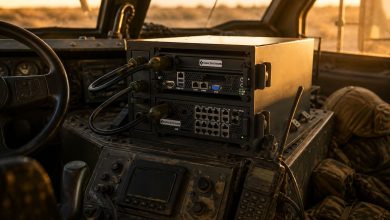
Central to the agreement is Hensoldt’s Ceretron mission system, which fuses data from multiple sensors, including optical, thermal, and optional short-wave infrared cameras, into a single tactical picture.
The system uses AI-assisted image processing to automatically detect, identify, and track people and objects, providing real-time information to the crew and higher command.
Ceretron integrates with the company’s BAA IV long-range observation system for various weather conditions and the SETAS “see-through armor” suite, which provides 360-degree day-and-night visibility from inside the protected cabin and can be linked with additional radio, laser, and acoustic sensors to enhance threat detection and tracking.
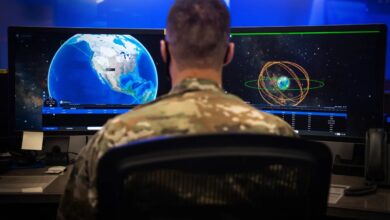
Ceretron can also connect to Hensoldt’s MDOcore software suite, enabling data sharing across land, air, sea, cyber, and space assets for coordinated operations.
‘Data is the New Ammunition’
Oliver Dörre, CEO of Hensoldt, said that Germany’s order reinforces the company’s position as a driver of next-generation defense technology while supporting the modernization of the NATO country’s warfighters.
“In the age of networked operations, data is the new ammunition,” he said, noting that the deal marks a “paradigm shift” toward systems to evolve via software updates throughout their service life.
“In this way, we are creating genuine information superiority, increasing the Bundeswehr’s capacity to act and, at the same time, securing Europe’s technological sovereignty,” he added.