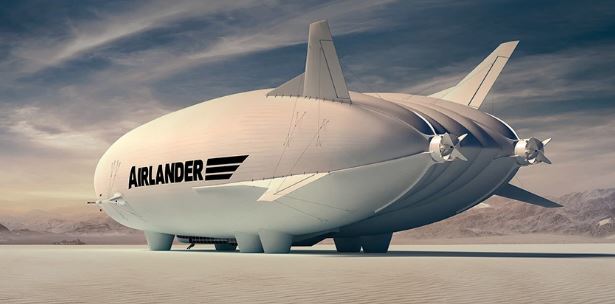
The UK’s Hybrid Air Vehicles (HAV) has received reservations for three Airlander 10 hybrid airships, marking the first time the aircraft will be adapted for defense use.
The order comes from an undisclosed defense contractor seeking to exploit Airlander’s long-endurance surveillance and transport capabilities for military operations.
The company said the Airlander 10’s hybrid design allows it to stay airborne for up to five days without refueling and operate from virtually any flat terrain, including unpaved fields and water.
Though originally designed for civilian certification, the aircraft’s modular structure allows rapid reconfiguration for roles such as intelligence, surveillance, and reconnaissance (ISR), troop or cargo transport, and even hosting or deploying drone swarms.
Each airship features a payload capacity of over three tonnes (6,613 pounds), which is enough to carry powerful radar and sensor systems for persistent monitoring in contested environments.
Its low acoustic and thermal signature also makes it harder to detect than traditional aircraft, while its reduced fuel burn could cut operational costs and extend endurance in remote theaters.
HAV said it expects additional military reservations to follow as armed forces seek low-cost, long-duration airborne platforms to augment satellites and crewed aircraft.
The Role of Long-Endurance Platforms in Missile and Air Defense
Airlander’s adoption highlights a growing focus on long-endurance aerial platforms within modern missile defense networks.
These systems can serve as high-altitude sensor nodes as they continuously relay radar and communications data to missile batteries and command centers.
Similar capabilities are being developed in the US through programs such as the army’s High-Altitude Platform Station initiative and the space force’s Tactically Responsive Launch efforts, both aimed at providing persistent sensing for missile warning and tracking.
Additionally, Lockheed Martin and Northrop Grumman have advanced airship and high-altitude ISR prototypes under DARPA contracts to support integrated air and missile defense missions.