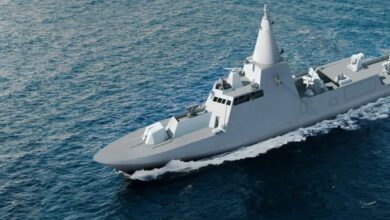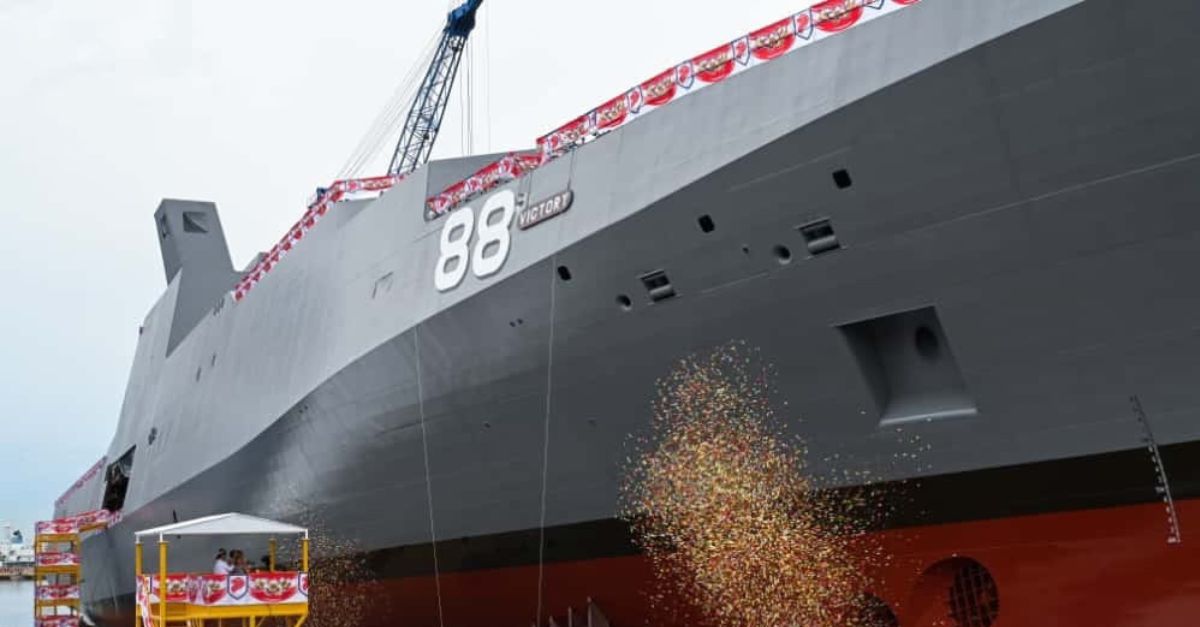
The Republic of Singapore Navy has marked the launch of its first Victory-class Multi-Role Combat Vessel (MRCV) at ST Engineering’s Benoi Shipyard.
Bearing the name of its class, the future RSS Victory (88) is the first of six vessels. It will now undergo outfitting, platform and combat systems integration, and acceptance trials, while its future crew begins operational training.
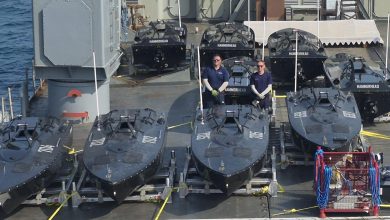
Featuring frigate-like combat capabilities and able to function as a mothership for uncrewed aerial, surface, and underwater systems, the MRCV will replace the existing Victory-class missile corvettes but retain their names and pennant numbers to honor their legacy.
ST Engineering was awarded a contract to build the six MRCVs in March 2023, comprising the lead ship Victory, followed by Valour (89), Vigilance (90), Valiant (91), Vigour (92), and Vengeance (93).
Deliveries are scheduled from 2028 onwards.
“Today, our strategic lines of communications extend much further. That is why we need new capabilities, working together as an integrated SAF, to defend and secure our sea lines of communications, and to make sure that no one with ill intent can disrupt our day-to-day,” Defense Minister Chan Chun Sing commented at the launching ceremony.
‘Largest, Most Complex Warship’
Developed through collaboration among the Defence Technology Community — including DSTA, DSO, ST Engineering, and other industry partners — the MRCV is described as Singapore’s “largest and most complex warship” to date.
It measures 150 meters (492 feet) in length, has a 21-meter (69 feet) beam, and displaces 8,000 tonnes (about 17.6 million pounds).
The ship can operate continuously for over 21 days, reach speeds exceeding 22 knots (40 kilometers/25 miles per hour), and has an operational range of more than 7,000 nautical miles (13,000 kilometers/8,050 miles).
Design and Equipment
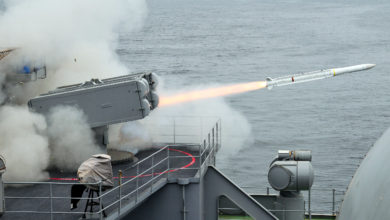
Each ship features a DSTA-developed combat management system, advanced sensors such as Thales radars and Safran electro-optical systems, and an array of weapons including the STRALES 76mm guided gun, MK30-C 30mm remote weapon stations, and Aster and Mica VL surface-to-air missiles.
With a crew of fewer than 100, the vessel leverages advanced automation to operate safely and efficiently with reduced manpower.
Its modular design supports up to eight containerized mission modules for rapid reconfiguration, including humanitarian and disaster relief roles, and can accommodate standard shipping containers for easy loading and unloading.
The MRCV’s future-ready design includes a high-voltage electrical distribution system for power-intensive technologies and a lightweight composite superstructure for improved efficiency.