Germany has selected Raytheon’s SPY-6(V)1 radar for its eight upcoming F127-class air defense frigates.
The foreign military sales request includes support and services to integrate and adapt the radar to the frigate’s design.
If approved, the deal will make Germany the first non-US customer for the SPY-6 system.
“Germany’s selection of SPY-6 reaffirms the global confidence in the radar’s advanced capabilities and its critical role in enhancing naval defense,” president of Naval Power at Raytheon Barbara Borgonovi said.
“Integrating the radar on F127 frigates will provide the German Navy with a multi-mission solution that enables faster and more informed decision-making at sea.”
SPY-6(V)1 Radar
The SPY-6(V)1 features four arrays, each equipped with 37 radar modular assemblies (RMAs), providing continuous 360-degree situational awareness.
Built with scalable Gallium Nitride-based transmit/receive modules, the system offers simultaneous air and ballistic missile defense, surface target tracking, and resilience against electronic warfare.
Part of the US Navy’s SPY-6 family, the radar provides air and missile defense across seven classes of ships and represents a significant leap in fleet capability.
Germany reportedly chose the SPY-6 over Lockheed Martin’s SPY-7 radar. Lockheed Martin will still supply the Aegis command and weapon control system for the F127 ships.
F127 Program
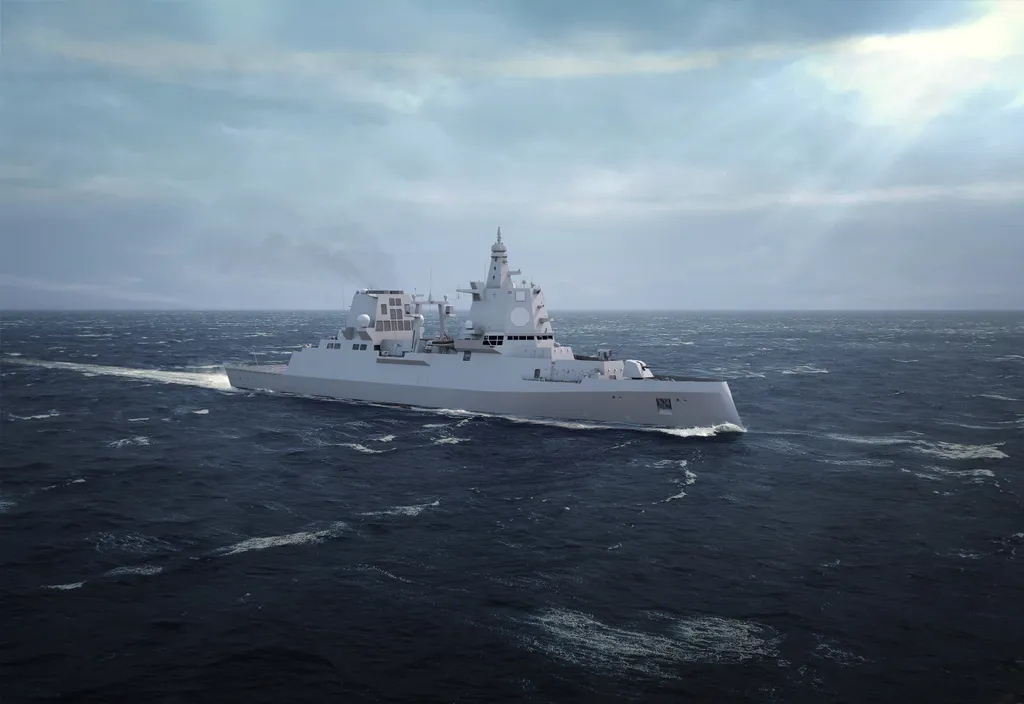
German shipbuilders NVL Group and thyssenkrupp Marine Systems will jointly build the F127-class frigates to replace the three F124 Sachsen-class vessels that entered service in 2003.
The new class will be based on thyssenkrupp’s MEKO A-400 Air & Missile Defense concept and equipped with the Aegis combat management system.
Germany plans to procure five ships, with an option for a sixth, and could later reportedly expand the fleet to eight vessels.
The F127 frigate will have a displacement of 10,000 tons and carry Standard-series air defense missiles, Naval Strike Missiles, and 3SM Tyrfing anti-ship missiles, and potentially Tomahawk Block V land-attack cruise missiles.
Induction is expected in the mid-2030s.