Energy technology company Solus Power has secured a UK defense contract to develop its dual-use battery system, “Kratos,” aimed at improving operational self-sufficiency for deployed forces.
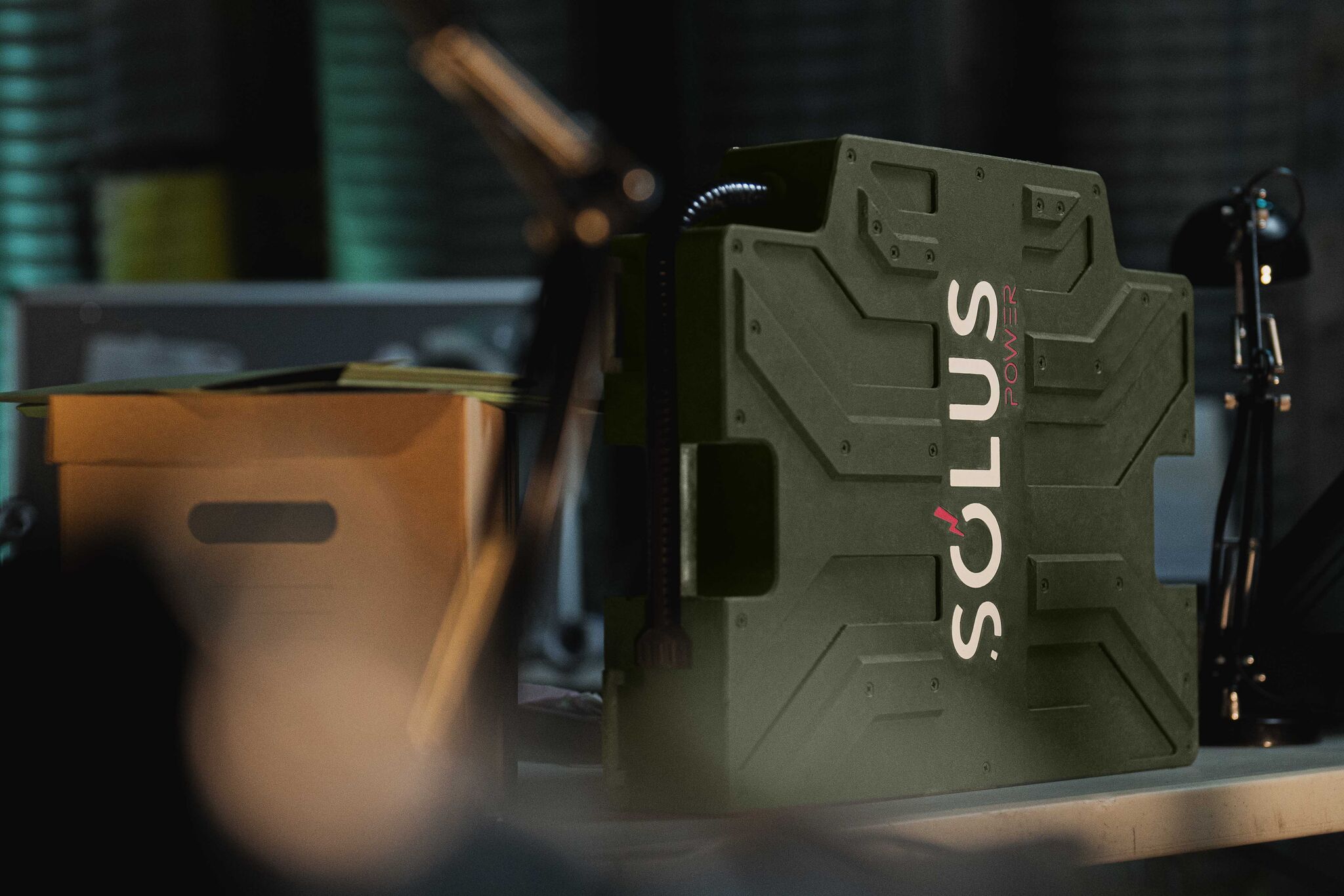
Kratos is a rugged, portable lithium-ion battery pack described as a “Jerry can of electricity.” It can deliver rapid DC-to-DC charging, allowing one battery or DC source to charge another.
Its scalable design enables multiple units to be linked to meet higher energy demands for field command centers, medical teams, and disaster response operations.
The technology is tactically versatile, suitable for hand-carry, vehicle mounting, or drone deployment, with low noise and heat signatures that support stealth operations.
Under the contract, Solus Power will refine the system and conduct field testing. The Defence Science and Technology Laboratory, serving as technical partner, will ensure Kratos meets the operational requirements of the Royal Navy’s Future Commando Force, which is funding the initiative.
Solus Power founder and CEO Stas Leonidou said the system offers reliable, portable, off-grid power for modern military operations.
“Our mission is to revolutionize energy access across defense, ensuring reliable and sustainable power in diverse and challenging environments,” he said.
Energy Resilience Push
The project is funded through the Defence and Security Accelerator (DASA), which supports innovations that improve the UK military’s energy resilience and operational advantage.
The Ministry of Defence has made energy resilience a priority as modern operations increasingly rely on electronics, sensors, and electric mobility. Kratos is designed to reduce logistical burdens while supporting soldier-level technology, base infrastructure, and rapid deployments.
A project manager at DASA emphasized the program’s aim to deliver operational advantage through improved self-sufficiency and energy innovation.
The UK government has taken several steps to bolster the armed forces’ energy resilience. In 2024, the Ministry of Defence revised its “Climate Change and Sustainability Strategic Framework,” which mandates adopting low-carbon technologies across military operations. This includes the adoption of renewable energy sources, energy-efficient infrastructure, and sustainable logistics practices.
The broader push was reinforced in 2025 when the government unveiled a 725-billion-pound ($971 billion) 10-year infrastructure strategy, which includes major investments in clean energy and energy security.