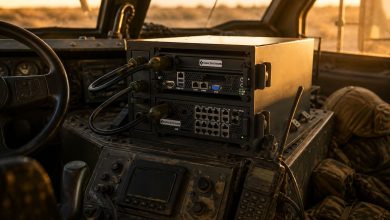
The US Army has begun installing BAE Systems’ AN/ARC-231A Multi-mode Aviation Radio Set (MARS) on select rotary-wing aircraft, marking the first step in a broader rollout of the new communications system.
The AN/ARC-231A replaces the long-fielded ARC-231 radios used across US and allied forces.
Unlike its predecessor, the new system is software-defined, allowing upgrades and new capabilities to be delivered through software rather than hardware changes.
The system includes the RT-1987 radio unit, amplifiers, and mounting bases, which are designed as drop-in replacements for the older models.
The radios provide multi-band, secure voice and data communications, and comply with US, NATO, and international air traffic control requirements.
“The fielding … marks a significant milestone to equip warfighters with advanced communications capabilities and an increase in mission readiness to respond more effectively to emerging threats,” said Brian Shadiack, director of Adaptive Communications and Sensing at BAE Systems.
“This next-generation, software-defined radio has undergone rigorous testing to ensure it meets the highest standards of performance. Its design reflects a deep understanding of warfighters’ evolving needs in a rapidly changing operational environment.”
Aligns With Future Vertical Lift Modernization
The move aligns with the Army’s Future Vertical Lift (FVL) program, a long-term effort to modernize its aviation fleet with next-generation aircraft, sensors, and digital communications.
A key element of FVL is ensuring that legacy helicopters — such as the UH-60 Black Hawk, CH-47 Chinook, and AH-64 Apache — can operate seamlessly with future platforms and networked battle systems.
The deployment of software-defined radios is seen as a critical step in building this integrated communications environment.
Recent BAE Comms Contracts
BAE Systems has previously produced more than 100,000 radios for US and allied militaries, making airborne communications one of its established defense product lines.
In January of this year, the US Navy awarded BAE Systems an $85-million contract to produce and deliver additional Network Tactical Common Data Link (NTCDL) systems, which provide secure, real-time exchange of voice, data, imagery, and full-motion video across multiple platforms and military sources.
In July 2024, the company received $111 million in contracts to supply NATO-standard tactical radios for South Korea’s fixed- and rotary-wing aircraft.
In March last year, the firm was also awarded an $86-million follow-on contract by the US Navy to continue support for its Mobile Deployable Command, Control, Communications, Computers, Combat Systems, Intelligence, Surveillance, and Reconnaissance (MDC5ISR) programs.
Under the five-year agreement, the company will provide engineering and technical services for both legacy and new MDC5ISR capabilities.