US-based company Velo3D is participating in a US Army program to develop faster and more cost-effective additive manufacturing methods for defense applications.
The program is run by the Combat Capabilities Development Command Aviation & Missile Center and Manufacturing & Sustainment.
Under the initiative, Velo3D is working with RTX and the Raytheon Technologies Research Center to develop an optimized laser powder bed fusion process for Aluminum CP1, a high-performance aluminum alloy for 3D printing.
Using its large-format additive manufacturing technology, Velo3D aims to develop a reliable and scalable process that can be applied across various US Army programs and facilities.
The platform integrates software and hardware, combining factory tool matching, real-time monitoring, standardized process parameters, and centralized data systems.
These elements help maintain consistent quality and support repeatable production across different machines and sites.
“Additive manufacturing is pivotal to building a resilient and agile defense supply chain,” said Raytheon Additive Manufacturing Materials Lead Lee Barber.
The collaboration “brings together government and industry to establish a scalable and repeatable process for Aluminum CP1 production. It enables rapid response and quality assurance for our military forces,” added Barber.
Additionally, the initiative aims to set up procedures to verify that machines are installed correctly and operate reliably, helping ensure consistent production across the US Department of Defense and its suppliers.
Advancing Technologies
The project aligns with Washington’s focus on advancing 3D printing and other additive technologies to support warfighter needs.
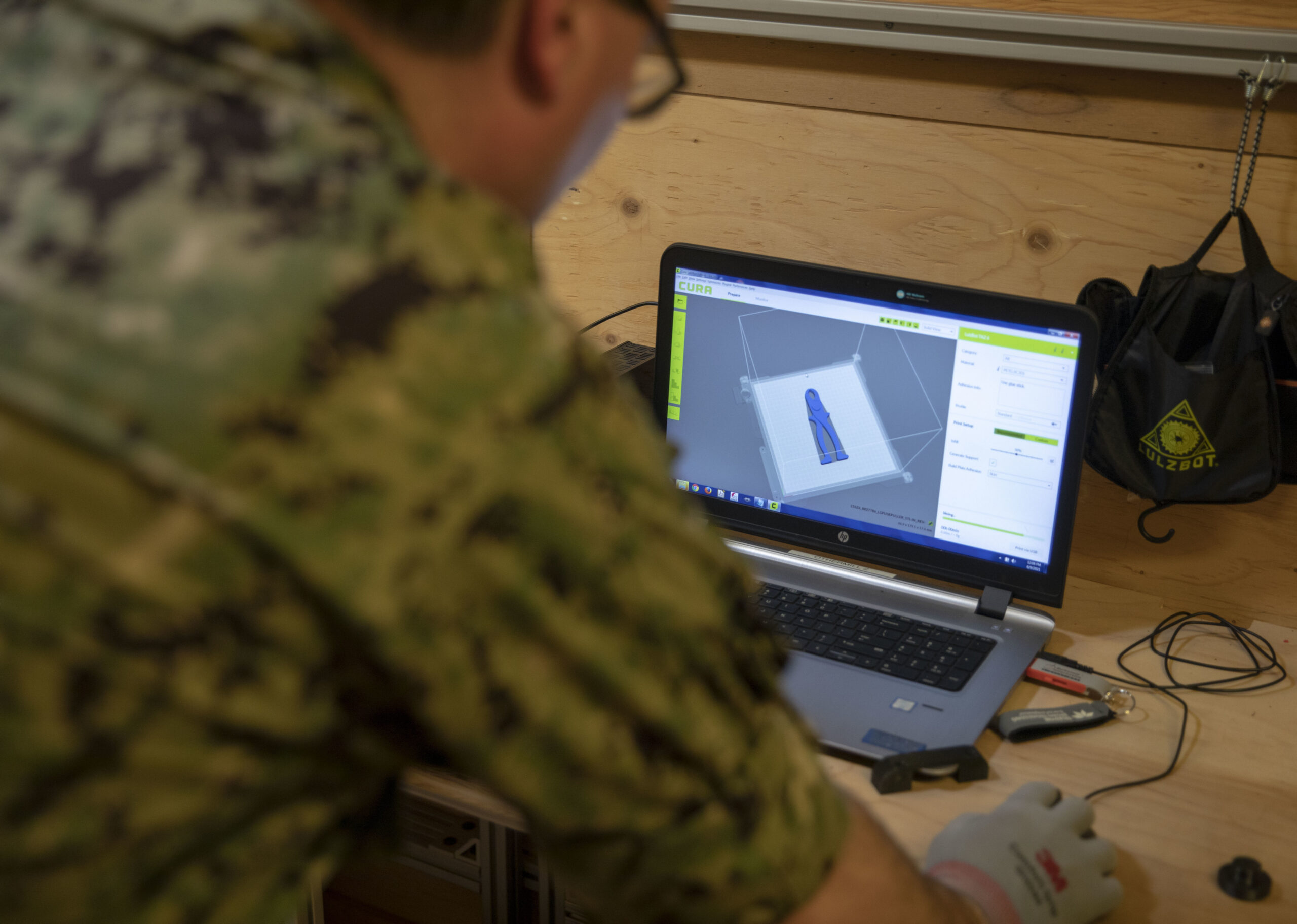
Earlier this month, the US Navy demonstrated 3D printing capabilities that could speed up battlefield logistics by producing critical parts on-site or in remote locations.
In June, Washington-based New Frontier Aerospace completed tests of its 3D-printed Mjölnir rocket engine to support future hypersonic defense programs.