Washington Startup Validates 3D-Printed Rocket Engine for Hypersonic Defense Applications

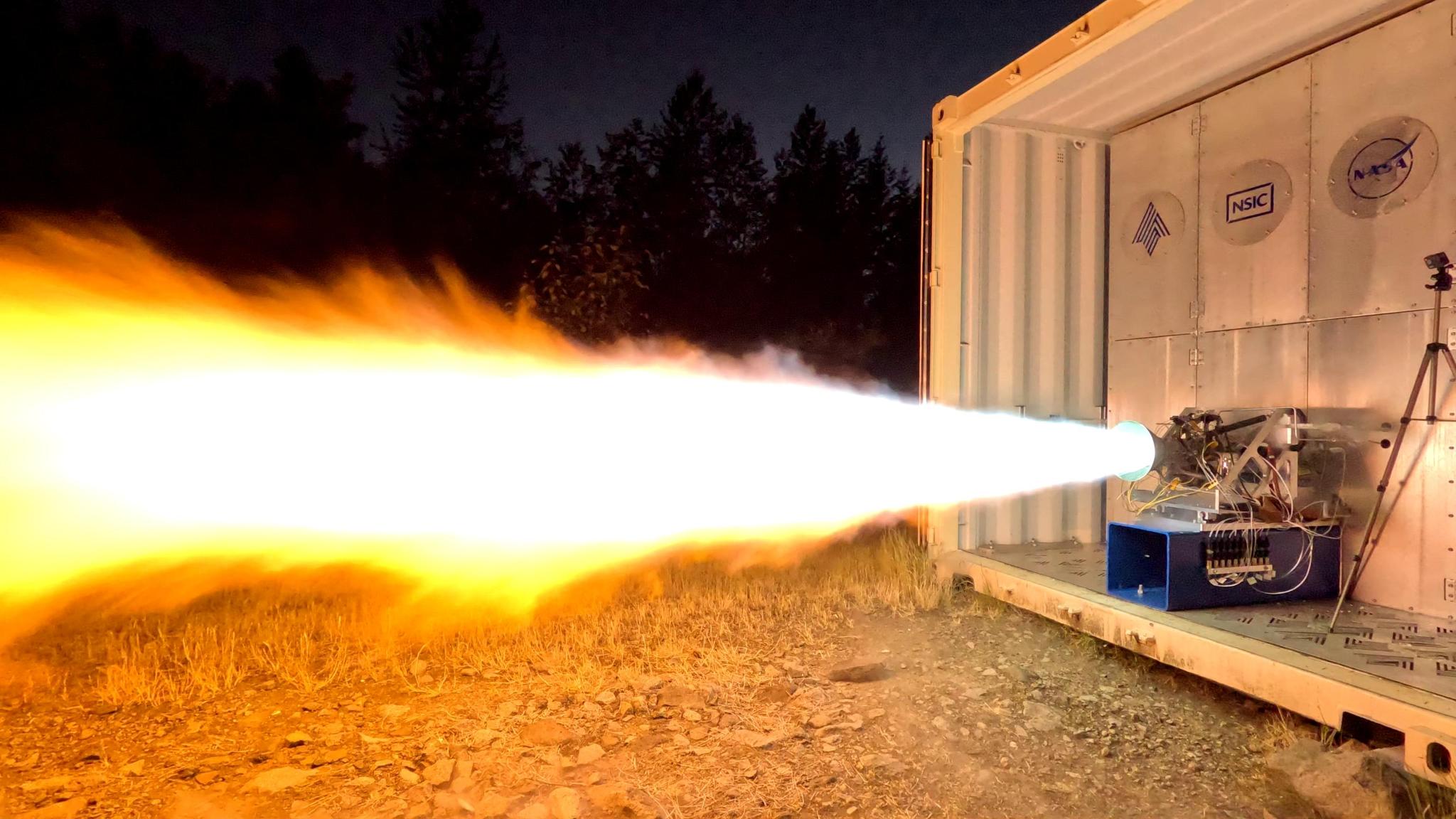
Washington-based New Frontier Aerospace (NFA) has completed tests of its 3D-printed Mjölnir rocket engine in support of future defense hypersonic programs.
The project is part of the Defense Innovation Unit’s National Security Innovation Capital (NSIC) initiative, leveraging partnerships with seed-stage firms to accelerate next-generation innovations for defense.
NFA’s Mjölnir propulsion uses pumps to inject liquid propellants from the tanks into the combustion chamber, where they are mixed and ignited to provide thrust for the vehicle.
The engine’s full-flow combustion cycle design promotes optimized and efficient performance by integrating propellants such as fuels and oxidizers in a compact, highly pressurized space.
Mjölnir utilizes clean liquid natural gas, which supports low emissions, making it a suitable option for carbon-negative operations of hypersonic vehicles, rockets, orbital transfer spacecraft, and other reusable platforms.
Powering VTOL Transport Aircraft, Orbital Spacecraft
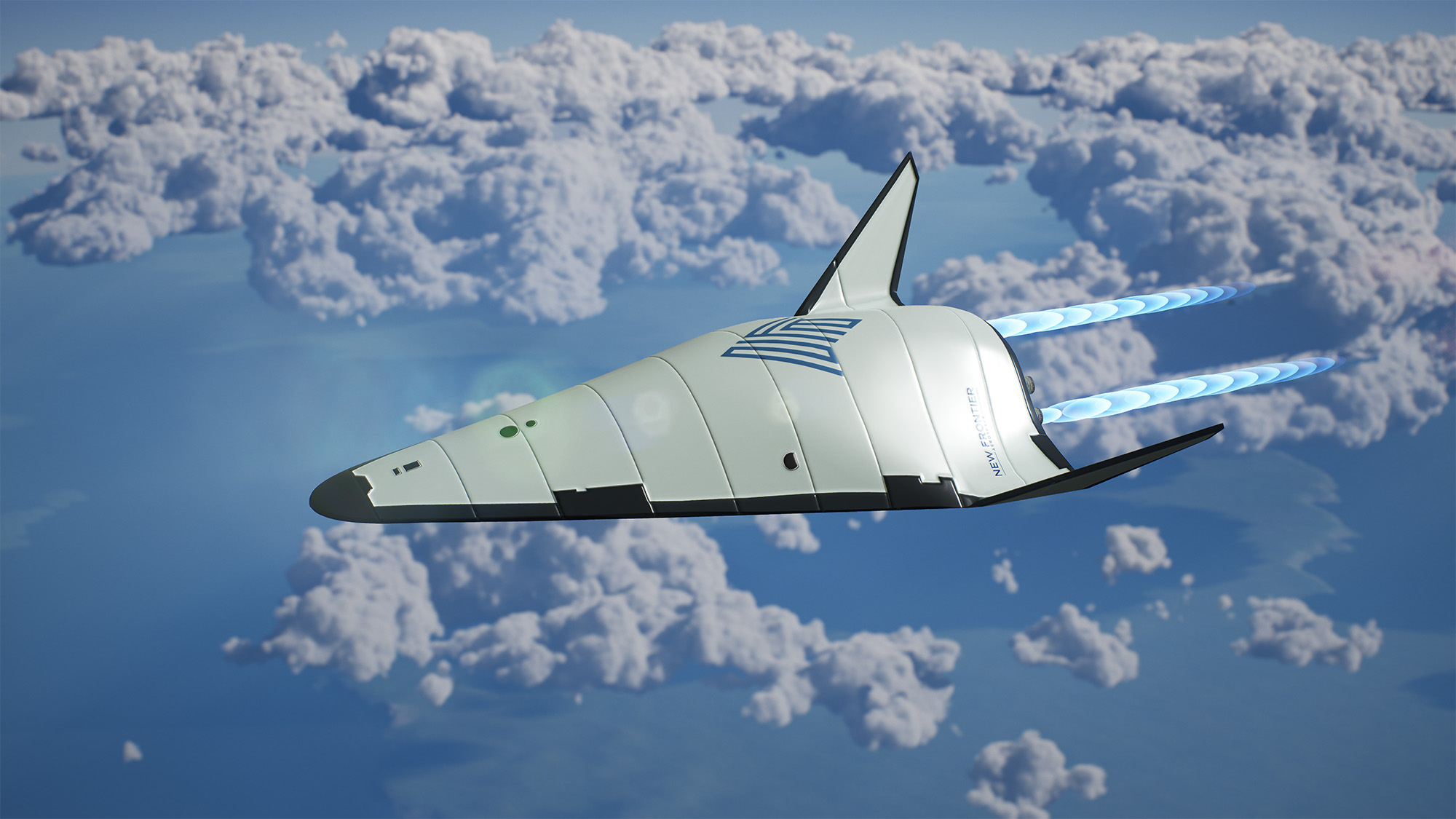
In 2026, Mjölnir will power the first hovering flight of the NFA’s “Pathfinder” vertical takeoff and landing drone aircraft being developed under NSIC for high-speed transport of personnel and equipment between any vertiport locations in two hours or less.
The vehicle will be based on the company’s proprietary “Intercontinental” civilian rocketliner, which measures 135 feet (41 meters) long, has a 100-passenger capacity, and a top speed of Mach 8 (6,138 miles/9,878 kilometers per hour).
Additionally, the engine will power NFA’s “Bifröst” orbital spacecraft in 2027, a 3D-printed refuelable and reusable platform that can be configured between a transfer stage and a lunar lander.
It has 3,000 pounds (1,361 kilograms) of gross weight and could deliver equipment and small equipment through geostationary orbit, cislunar space, and to Venus or Mars.
‘Game-Changer’
NFA noted that the Mjölnir engine’s successful trials were made possible through funding awarded by NASA, which will also use the technology to power its future small and cost-effective Venture-class launch vehicles.
“We are proud of the amazing team that built this program and thrilled with the engine’s performance during this series of hot fire tests,” NFA CEO Bill Bruner stated.
“Mjölnir’s compact design, unmatched efficiency, and clean fuel make it a game-changer for hypersonic flight and space propulsion. It is poised to power our ambitious roadmap and open new possibilities for our customers.”