Lithuania has announced plans to open the “Vytis” Defense and Security Innovation Center in Kaunas, central Lithuania, to develop, test, and certify military technologies.
The hub will serve as a shared space for businesses, researchers, and state institutions to collaborate on advancing defense and security projects.
The site will host laboratories, workshops, and testing grounds across air, sea, and land domains.
Its focus areas include drones, autonomous threat detection, reconnaissance satellites, military communications, and mobile energy storage.
Vytis’ consortium brings together Kaunas Science and Technology Park, the Innovation Agency, and Vytautas Magnus University.
It also involves the Inland Waterways Directorate, the Lithuanian Riflemen’s Union, and the Lithuanian Energy Institute.
The group will work in partnership with the Lithuanian Ministry of Economy and Innovation, and priority areas will be coordinated with the Ministry of National Defense and the armed forces.
The Vytis facility, expected to open in 2028, will receive up to 20 million euros ($23 million) in initial investment.
From 2026, new measures will provide an additional 34 million euros ($39 million) to strengthen company capabilities and 6 million euros ($7 million) to support innovation partnerships.
Boosting Defense
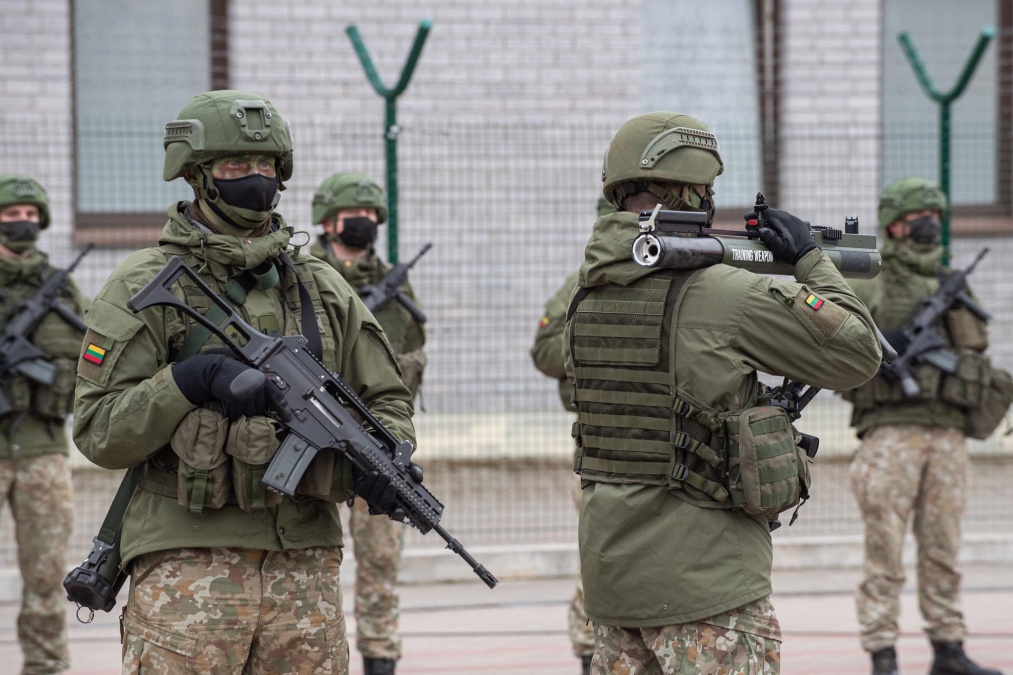
The initiative aligns with Vilnius’ efforts to strengthen defense amid regional security concerns.
“Russia’s aggression against Ukraine has clearly shown that the national defense industry must be ready to respond quickly to complex situations,” stated Lithuanian Minister of Economy and Innovation Lukas Savickas.
The hub “will provide our companies and scientists with the necessary modern infrastructure, which will allow not only to develop and test innovations, but also to quickly implement them in practice,” added Savickas.
Vytis forms part of a 300-million-euro ($350 million) program of subsidies, loans, and equity to boost Lithuania’s defense innovation, as the country plans to spend up to 6 percent of its GDP annually on defense from next year to 2030, exceeding NATO’s newly set 5 percent goal.