US Army Testing AR Goggles, Anti-Drone Guns on Mexico Border

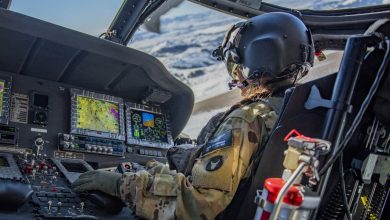
The US Army is using its mission with Customs and Border Protection along the US-Mexico border to test the military’s augmented reality and counter-unmanned aerial system (C-UAS) technologies under real-world conditions.
The project is part of broader efforts launched under the Trump administration to improve the monitoring and reporting of illegal immigrants, enabling soldiers to provide real-time intelligence to border authorities while evaluating tactical solutions in areas that training space cannot replicate.
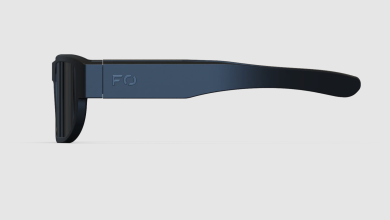
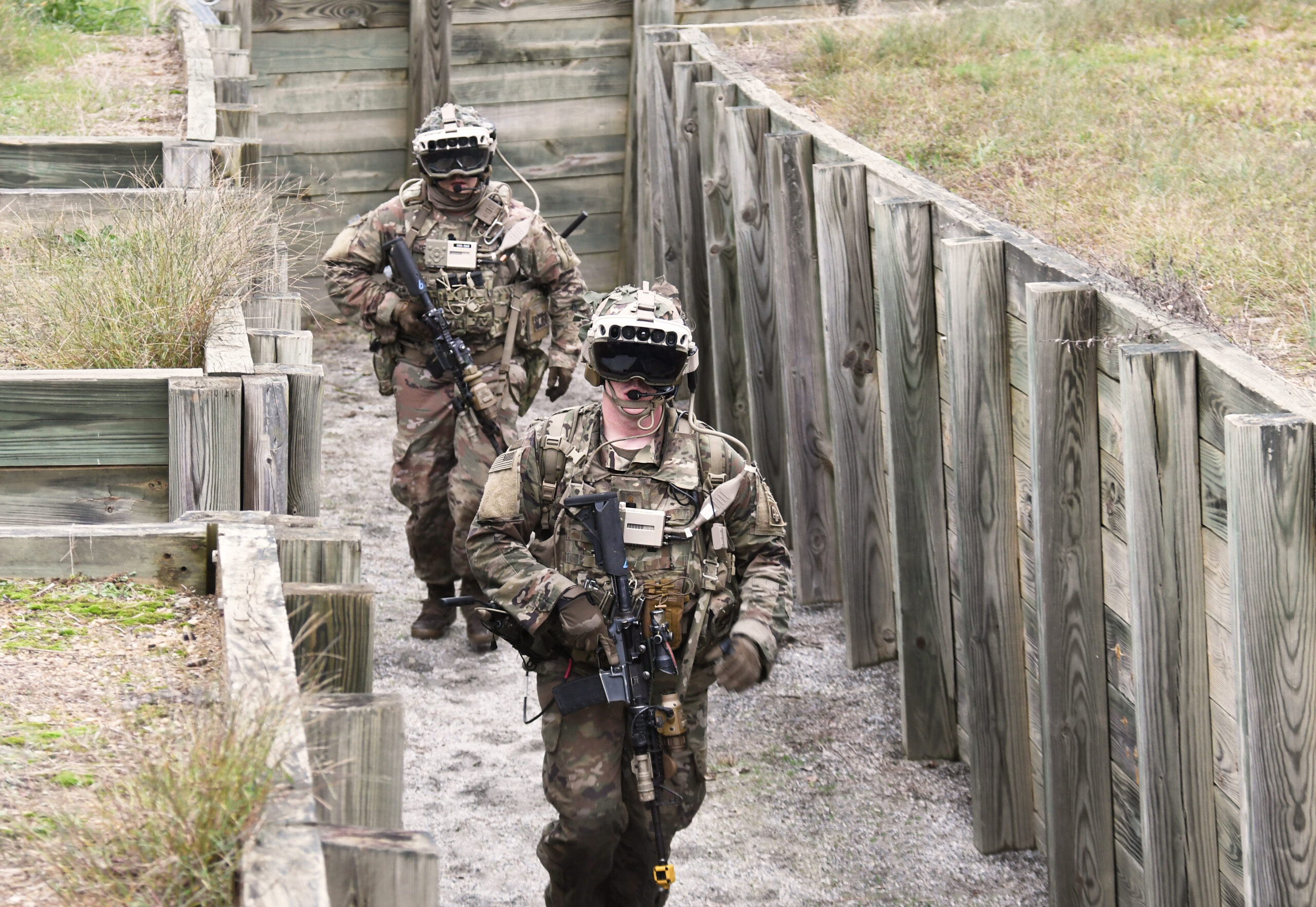
Capabilities included in the US-Mexico border testing are the latest Integrated Visual Augmentation System (IVAS) 1.2 goggles, as well as the DZYNE Dronebusters — rifle-like weapons that detect and jam hostile UAS, Task and Purpose reported.
Based on Microsoft’s HoloLens, IVAS combines augmented reality, thermal and low-light imaging, and navigation tools to share real-time updates with each other and border patrol agents, supporting all-day patrols and night surveillance.
The headgear’s 1.2 model, developed in partnership with Anduril and Facebook’s parent company Meta, has improved weight distribution and user controls, a significant upgrade from earlier versions that drew criticism for causing headaches, nausea, and reduced performance.
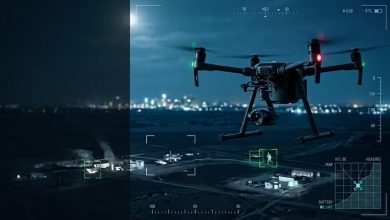
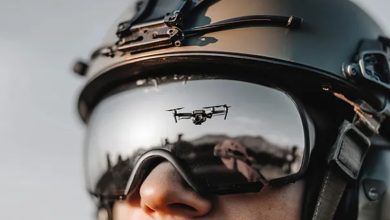
Meanwhile, the DZYNE Dronebuster is a compact, handheld C-UAS device that redirects drones up to 2 kilometers (1.2 miles) away.
Weighing under 3 kilograms (6.6 pounds) and measuring 56 centimeters (22 inches) long, it operates without external power and features integrated radio detection to identify drone communications.
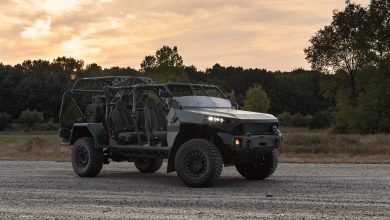
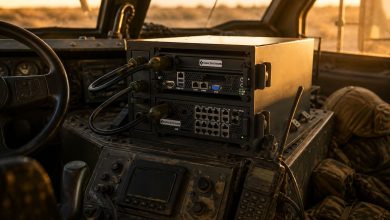
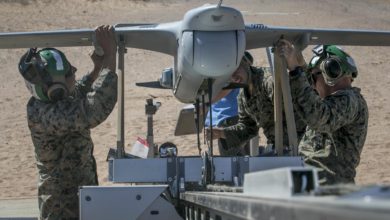
In addition, soldiers are equipped with tactical microdrones such as Anduril’s Black Hornet 4 for surveillance and Palantir’s Tactical Intelligence Targeting Access Node, a vehicle-mounted deep-sensing system that scans radio frequencies for nearby UAS threats.
They also use updated Common Remotely Operated Weapon Stations, and beyond line-of-sight radios that allow them to alert border patrol within a minute of spotting potential migrant targets.
No Deportation, Experiments Only
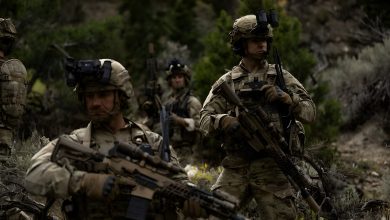
Col. Hugh Jones, commander of the Fort Carson-based 2nd Stryker Brigade Combat Team, leads one of the first units deployed for the testing project on the Mexico border.
He said his soldiers are responsible for monitoring more than 1,000 miles (1,609 kilometers) of the border, with about one soldier for every half mile (805 meters) who can operate across desert, mountain, and swamp areas inaccessible to vehicles.
Despite their presence along the border, the US Army stressed that troops “will not conduct or be involved in interdiction or deportation operations.”
Maj. Geoffrey Carmichael, a spokesperson for the Joint Task Force – Southern Border, said soldiers at the border “not only help preserve the integrity of the United States southern border, but also create a laboratory of experimentation.”