US Coast Guard Completes V-BAT Drone Test Ahead of Fleetwide Rollout

The US Coast Guard has completed operational testing of the V-BAT unmanned aerial system (UAS), paving the way for its future deployment aboard the service’s cutter fleet.
The demonstration, led by the force’s Research and Development Center, confirmed that the vertical takeoff and landing (VTOL) system meets required benchmarks with no critical issues.
Investment in the drone and corresponding full lifecycle support was awarded to California-based autonomous developer Shield AI in July 2024.
The decision to adopt it was driven by its compact design, as it is suitable for smaller flight decks and potentially additional cutter configurations, according to the coast guard.
Once in the field, the drone will conduct continuous airborne surveillance and reconnaissance (ISR) missions.
“The operational test event utilized the cutters in a fully mission-capable state to support flight operations during the underway period,” the service said.
“The comprehensive evaluation verified the system’s ability to meet identified key performance parameters and assessed operational effectiveness in helping the national security cutter complete its missions during routine operations.”
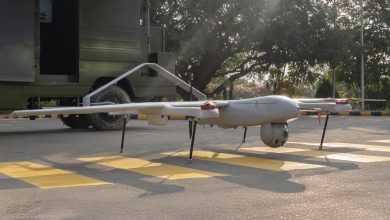
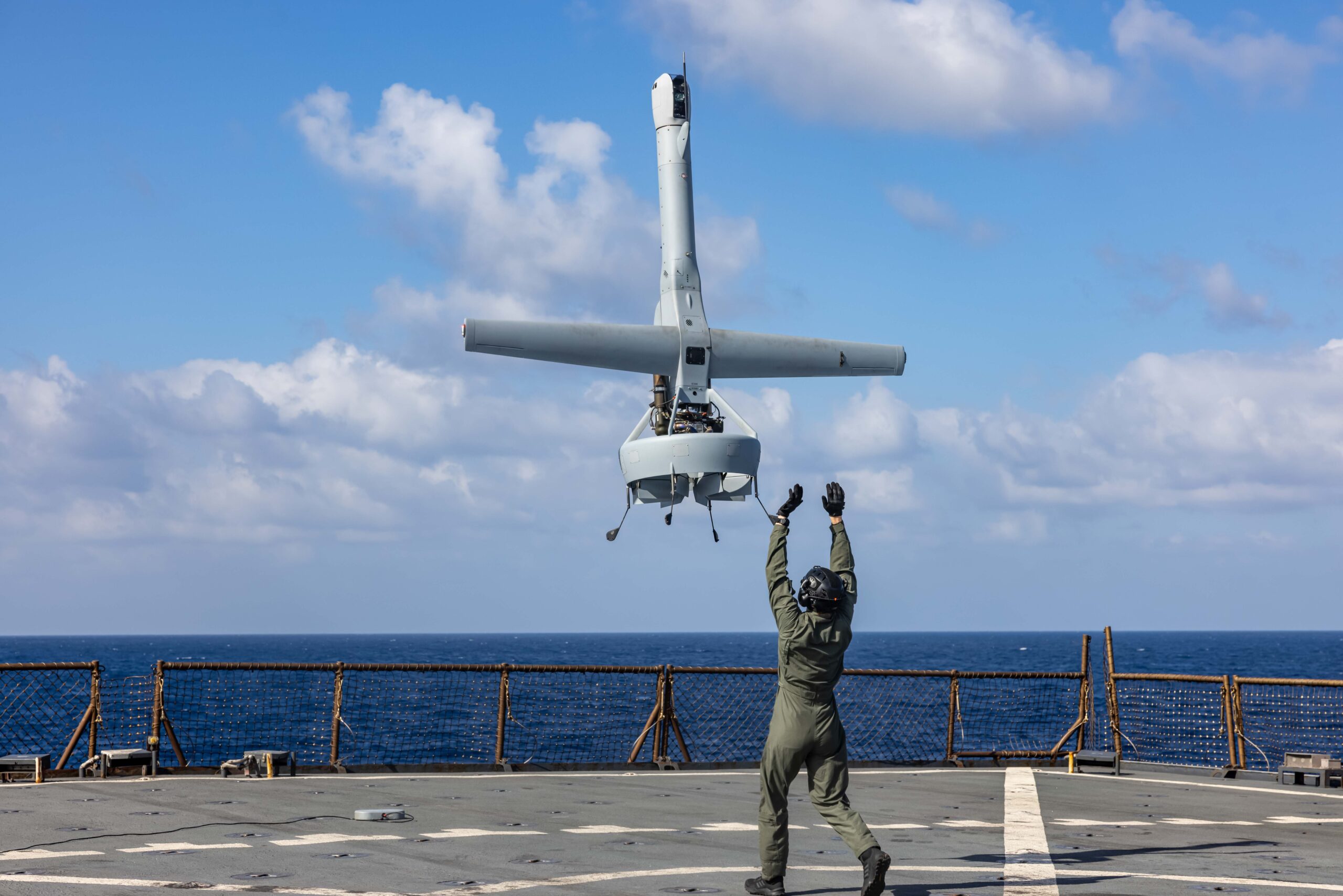
Shield AI’s V-BAT
The V-BAT is built for missions ranging from threat detection and border security to anti-drug operations and forward base defense.
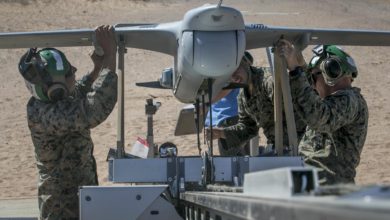
It supports rapid launch and can be prepared in under 20 minutes by just two operators. Users can transport the platform by pickup truck or a UH-60 Black Hawk helicopter.
The system runs on Shield AI’s Hivemind software, which enables autonomous flight in GPS or communications-denied environments. Hivemind currently supports control of up to four V-BATs, with ongoing development aimed at expanding its autonomous swarm capabilities.
V-BAT measures 9 feet (3 meters) and has a similar wingspan. It weighs 125 pounds (57 kilograms) and can carry up to 25 pounds (11 kilograms) of payload.
The drone runs on a two-cylinder 24-horsepower engine for a top speed of 56 miles (90 kilometers) per hour and altitude up to 20,000 feet (6,096 meters).