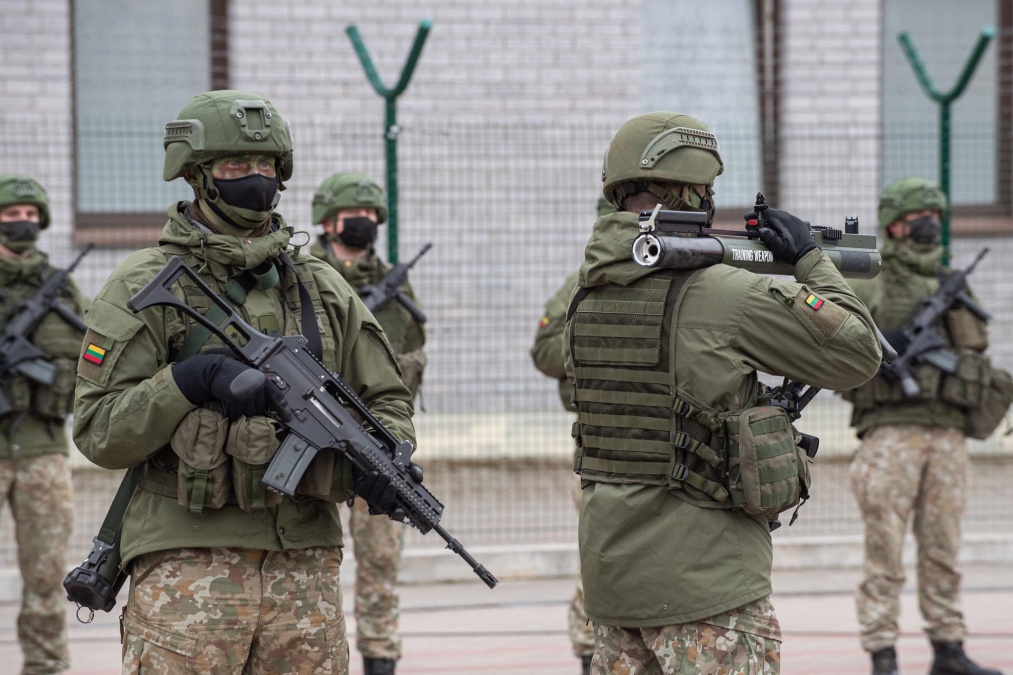
Lithuania is sounding the alarm over its youth becoming increasingly unfit for military service, potentially affecting the overall defense readiness of the NATO member bordering Belarus and Russia’s Kaliningrad exclave.
In 2024, around 40 percent of male conscripts (with an average age of 21 to 22 years old) were deemed unfit to serve due to health issues. Meanwhile, among those considered fit, only 19 percent passed the initial fitness test.
Lithuanian Army Sports Club Head Col. Arturas Jasinskas described the situation as “‘poor’ in red with an exclamation mark.” In his recent battalion visit, he noted that only five percent achieved the passing score in the first fitness test.
When Lithuanian news outlet LRT asked whether the test was adequate, Jasinskas answered: “For starters, yes … For a young person just entering the military, the current exercises are more than sufficient to assess physical condition.”
Fitness Test
Conscription begins with an initial fitness test with a minimum passing score of 60 percent, which varies per age and sex.
However, both are required to accomplish around 52 sit-ups within two minutes.
Male conscripts aged 21 to 22 must achieve around 41 push-ups and run for 3 kilometers (1.86 miles) within 15 minutes and 30 seconds.
Meanwhile, females must complete around 18 push-ups and run the same distance within 18 minutes and 30 seconds.
Potential Causes
Jasinskas pinned the causes on school lessons, parental attitudes, and the “democratic physical education system, where if a student says they can’t do something, they’re simply exempted. Naturally, parents and teachers don’t want to push the child too hard.”
In addition, he observed that physically fit and athletic young people “are often granted deferments and aren’t being called up.”
Probable Solutions
While the Lithuanian Armed Forces employ structured routines, nutrition, consistent physical training, and specialized programs that help improve conscripts’ fitness levels, Jasinskas suggested that fitness must begin in schools.
The Education Ministry claimed that while physical activity programs are promoted and funded by the government, physical fitness is society’s responsibility as a whole.
“Also important in this process are the contributions of parents, families, and communities, as well as attitudes toward physical activity. Equally crucial are opportunities to be physically active in one’s living environment — both the availability of activities and the ability to access sports infrastructure,” the ministry said.
Finland, also neighboring Russia, kicked off a two-year program to improve conscript fitness in March.