Pentagon Seeks Unmanned Escort Platform for Commercial Ships

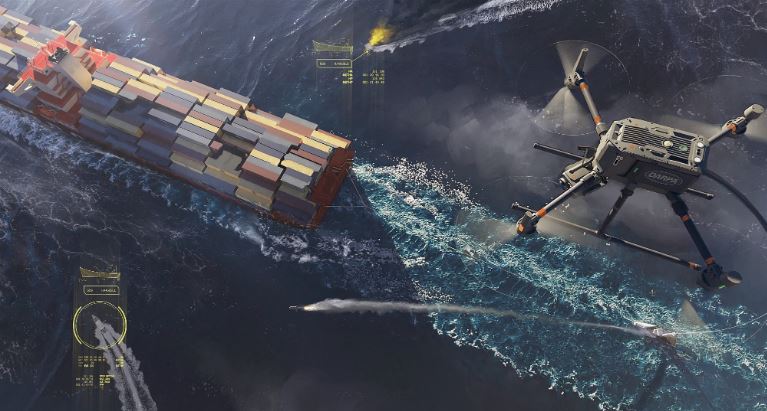
The US military seeks semi-autonomous escort solutions to protect unarmed commercial vessels from asymmetric threats, primarily from uncrewed surface vessels.
Through the Pulling Guard program, the Pentagon is looking to substitute for more costly and sparsely-available escort options such as guided missile destroyers and carrier strike groups.
This will involve autonomous systems remotely supervised by humans through a secure connection.
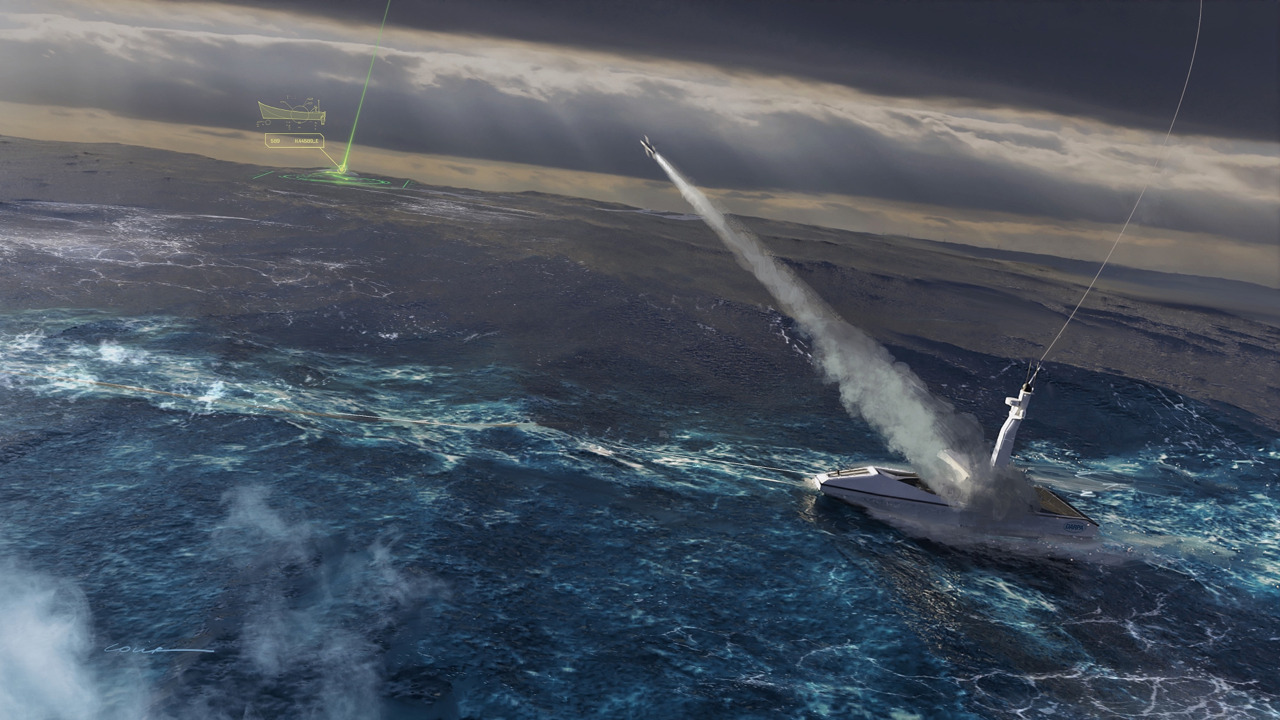
The program’s intended marine platform will feature sensors and effectors and have a modular design to incorporate future software and hardware upgrades.
“The focus of the Pulling Guard program is the integration and marinization of existing sensors and effectors on a vehicle with an emphasis on modularity in both software and hardware,” the Defense Advanced Research Projects Agency (DARPA) explained.
“The program focus on modularity is based on the desire for an ongoing, rapid development cycle that evolves as new threats emerge and expands the total addressable market with tailored variants that address the statutory or regulatory compliance items necessary for export variants.”
Maritime Vulnerability
Maritime shipping accounts for an estimated 80 percent of the volume and 70 percent of the value of international trade.
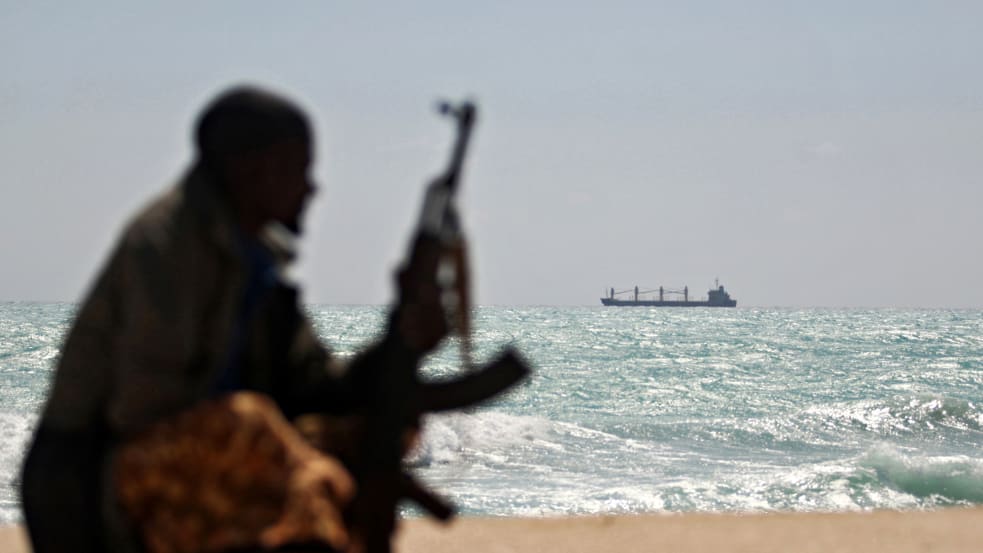
Commercial vessels transiting between ports often go through choke points (narrow passages), which makes them vulnerable to attack by pirates and non-state actors in peacetime and hostile nation-states during armed conflict.
Moreover, repurposed commercial technology, such as command and control, autonomy, and remote sensing, has lowered the threshold for asymmetric threats.
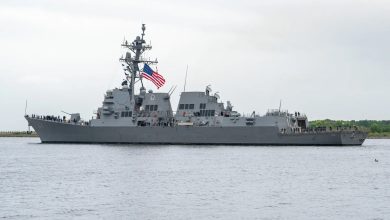
The US Navy has historically deployed high-end platforms such as a guided missile destroyer or a carrier strike group to secure shipping lanes or maritime chokepoints.
However, expanding threat profiles and a growing mission portfolio may not allow the approach to remain viable.
Additionally, growing commercial shipping traffic makes deploying combat escorts or long-range defense systems unviable and cost-prohibitive.
Phased Program
The initial development phase of the two-phase Pulling Guard program will span 18 months.
It focuses on platform and sensor development by multiple performers.
The endeavor may require “cross-performer engagement on the development and agreement on interfaces (physical and digital) and an iterative design cycle approach to mature systems from concept to delivery,” a DARPA solicitation notice wrote.
Meanwhile, the second phase will stretch 21 months and focuses on integration, manufacturing, and commercial transition.
Program Goals
The program intends to provide a cost-effective escort solution for commercial vessels compared to large combat escorts.
It will be commercially owned and provided under contract in a “protection as a service” model.
The services will be provided in partnership with the US military (initially the US Navy) for any protected vessel, including deploying military remote operators for engagement authority, supervision, and decision-making.
There will be no requirement for permanent modification on the protected ship, and the capability will be easily detachable.
The ship’s master will be in the decision-making loop, with the Pulling Guard retaining command and control capability on the protected vessel.