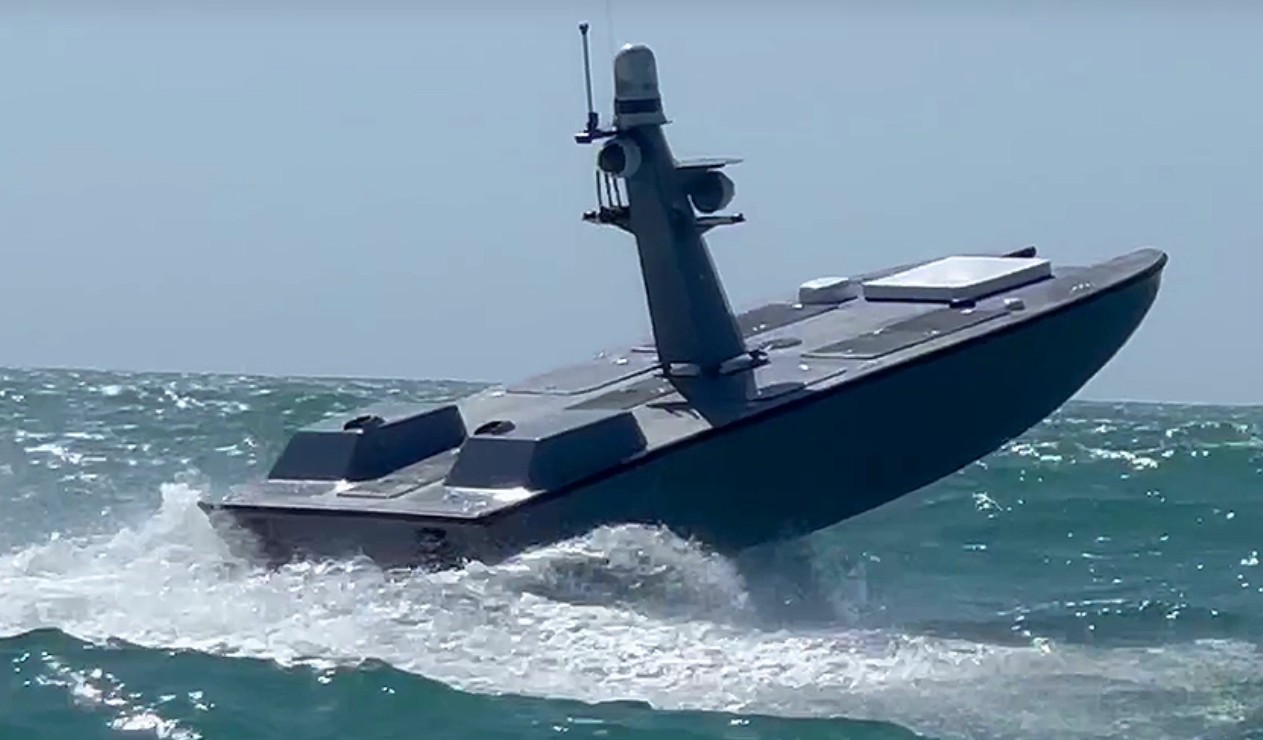
MARTAC has announced that its T38 Devil Ray unmanned surface vessel completed an eight-day autonomous mission off the coast of California, operating without onboard crew or escort vessels.
During the demonstration, the T38 was operated by the Naval Air Warfare Center Weapons Division’s Point Mugu Sea Range under the US Navy.
The exercise was intended to test how the vessel could perform long-duration autonomous missions in open-ocean environments, including areas without fixed maritime monitoring infrastructure.
According to the company, the vessel operated continuously for 192 hours while autonomously navigating around stationary and moving vessels in compliance with International Regulations for Preventing Collisions at Sea.
Unlike some controlled demonstrations, the mission did not involve chase boats or support escorts.
During the deployment, the vessel also carried out a planned two-day single-engine operating phase 400 nautical miles (740 kilometers/459 miles) offshore.
The maneuver was intended to assess endurance and fuel-efficiency profiles.
MARTAC stated that the platform maintained station, continued collecting data, and completed mission objectives during the reduced-power phase.
Moreover, operators evaluated the vessel’s hull stability, propulsion performance, and autonomous navigation systems in demanding maritime environments, with wave heights reaching 10 feet (3 meters).
T38 Devil Ray
The T38 Devil Ray is a 38-foot (11.6-meter) platform built with a carbon-fiber catamaran hull and twin-engine configuration capable of exceeding speeds of 50 knots (92 kilometers/57 miles per hour).
Its twin-hull design is intended to improve stability and reduce roll in higher sea states, particularly during missions involving sensor operations, station-keeping, or targeting support.
The vessel is designed for intelligence, surveillance, and reconnaissance missions, as well as maritime domain awareness operations.
It can also support logistics activities and distributed fleet operations.
It uses an open-architecture autonomy framework that allows the integration of different payloads and communication systems depending on operational requirements.