Biosphere has received a US Army contract worth up to $9 million to develop a portable biomanufacturing system capable of producing protein-based food rations for troops using air, water, and electrical energy as primary inputs.
The agreement was awarded through the US Army Combat Capabilities Development Command (DEVCOM) Soldier Center under the Manufacturing Science and Technology Program.
Efforts under the project aim to reduce dependence on conventional supply chains and resupply operations in environments where logistics access may be limited or disrupted.
Over the 42-month program, Biosphere will carry out development activities at its facilities in California before delivering food samples to the US Army’s Combat Feeding Division for evaluation.
Work will progress through several phases, beginning with system design and laboratory validation, followed by pilot demonstrations and the development of a full-scale prototype intended for continuous use in field conditions.
More broadly, the effort reflects growing US military investment in biomanufacturing and contested logistics technologies, supported by planned federal spending of more than $300 million on bioindustrial manufacturing initiatives this year.
On-Demand Nutrition
Initially, the system is expected to produce around 2,800 calories per day for up to 18 troops, with later versions planned to support up to 250 personnel.
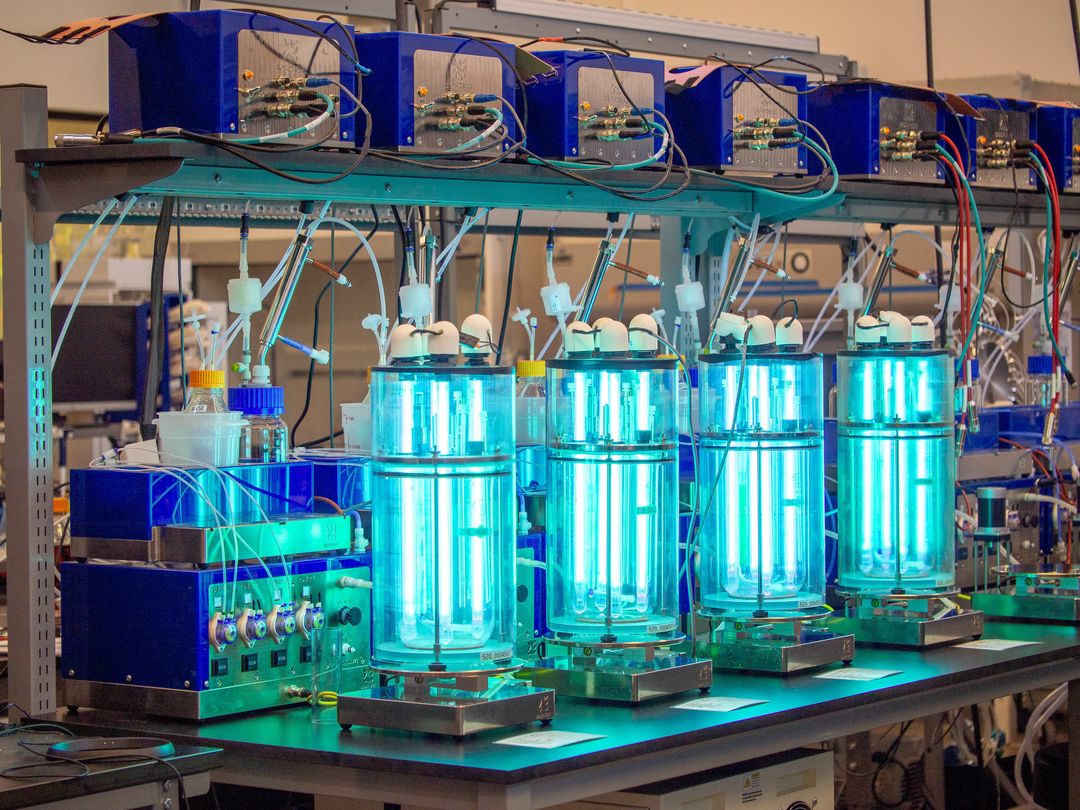
To achieve this, the platform uses a portable bioreactor architecture equipped with ultraviolet sterilization technology intended to enable contamination-controlled food production in operational settings.
The system will also incorporate water and media recycling capabilities, along with processing equipment designed to convert the produced biomass into shelf-stable, ready-to-eat food products.
Beyond its nutrition applications, the company stated that the underlying biomanufacturing platform could be adapted for the localized production of fuels, chemicals, or other materials in resource-constrained conditions.
“Technologies that enable on-site production of critical resources, beginning with nutrition, represent an important step toward more adaptive and distributed sustainment in future operating environments,” said Nicole Favreau Farhadi, Technical Lead, US Army DEVCOM Soldier Center.