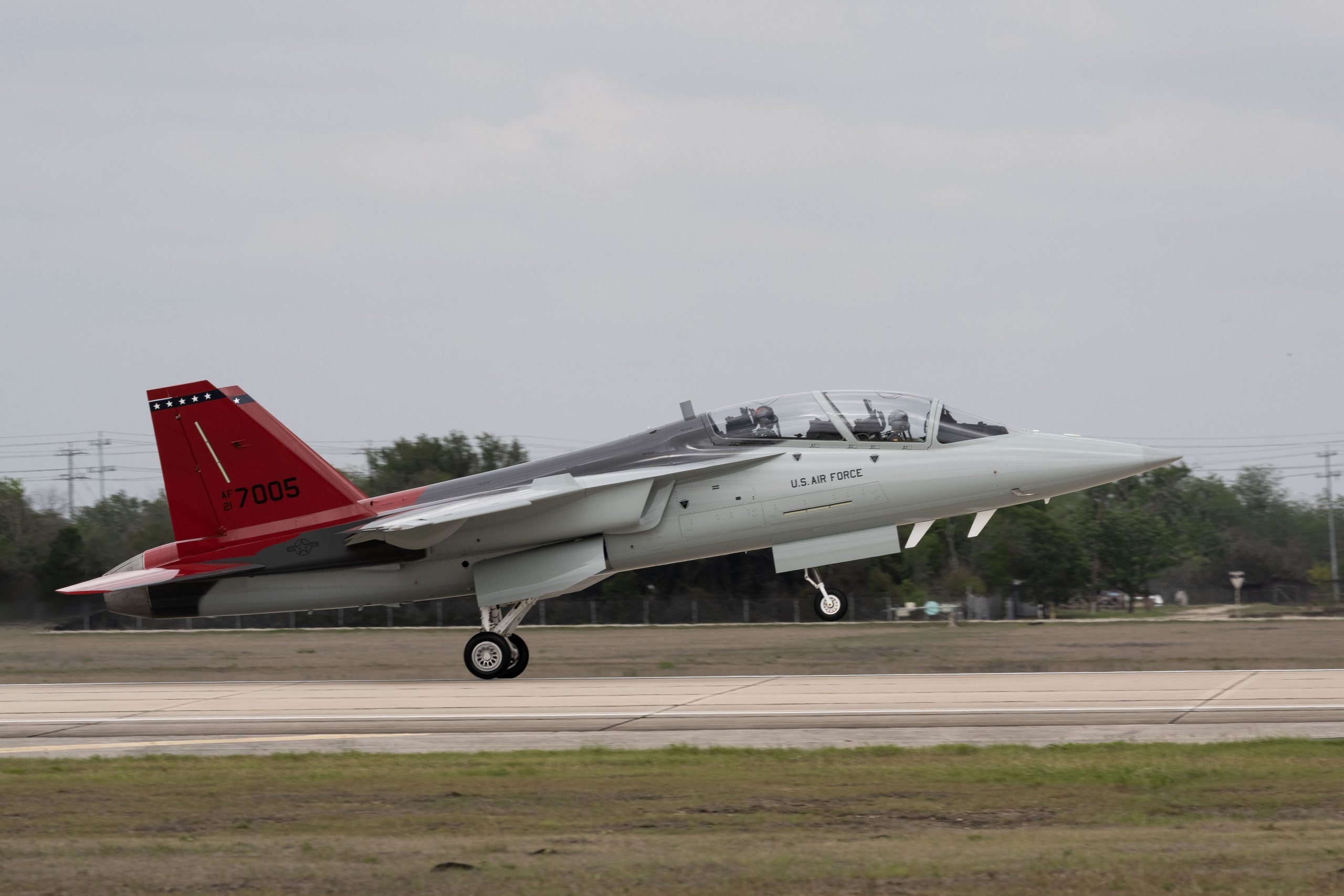
The US Air Force has moved the T-7A Red Hawk program into low-rate initial production, awarding a $219-million contract to Boeing for an initial batch of 14 advanced trainer aircraft, along with spare parts, support equipment, and training systems.
Following approval granted in April after developmental testing and evaluation, the move marks a significant step in the air force’s effort to replace the aging T-38 Talon trainer fleet, which has remained in service for more than 60 years.
The broader acquisition plan includes 351 T-7A aircraft and 46 ground-based simulators scheduled for delivery across five Air Education and Training Command bases over the coming decade.
Designed to prepare pilots for transition to fourth-, fifth-, and future sixth-generation fighter and bomber platforms, the aircraft incorporates advanced onboard technologies and modern simulation architecture.
Digital Development, Phased Production
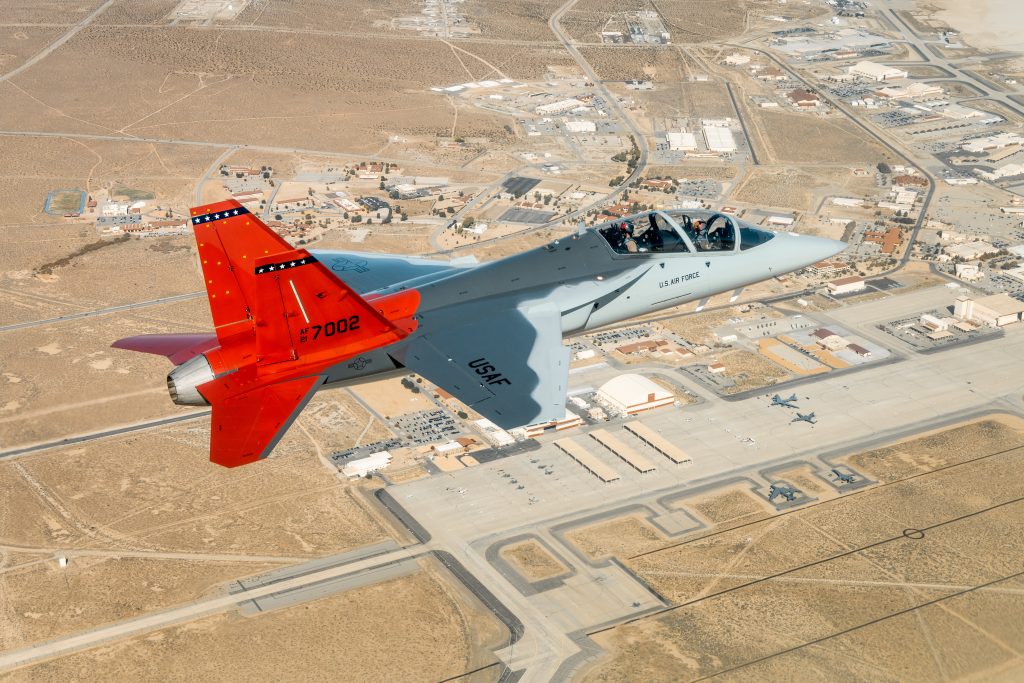
The T-7A is the first US Air Force aircraft developed entirely through digital design and engineering methods, an approach intended to reduce development timelines while simplifying production and sustainment.
To manage production and testing risks during the early stages of the program, the air force said the T-7A will proceed through a phased low-rate production strategy rather than approving multiple production batches simultaneously.
Under this approach, each of the first three planned production lots will require separate authorization, allowing officials to incorporate findings from ongoing testing and evaluation before expanding procurement.
This comes as earlier flight tests revealed issues, including problems with the emergency escape system, which delayed deliveries.
As the program moves toward initial operational capability, targeted for 2027, engineering, manufacturing, instructor training, maintainer preparation, and developmental testing continue, including evaluations conducted at Edwards Air Force Base.