In today’s battlespace, knowing what’s happening is just as important as what you can strike.
Commanders rely on a real-time view of the skies, seas, and ground to make split-second decisions, and that’s where the E-7 Wedgetail comes in.
In this guide, we break down the Wedgetail’s story, unveiling how this aircraft combines long-range radar, advanced communications, and control systems to become a powerhouse platform.
What Is the E-7 Wedgetail?
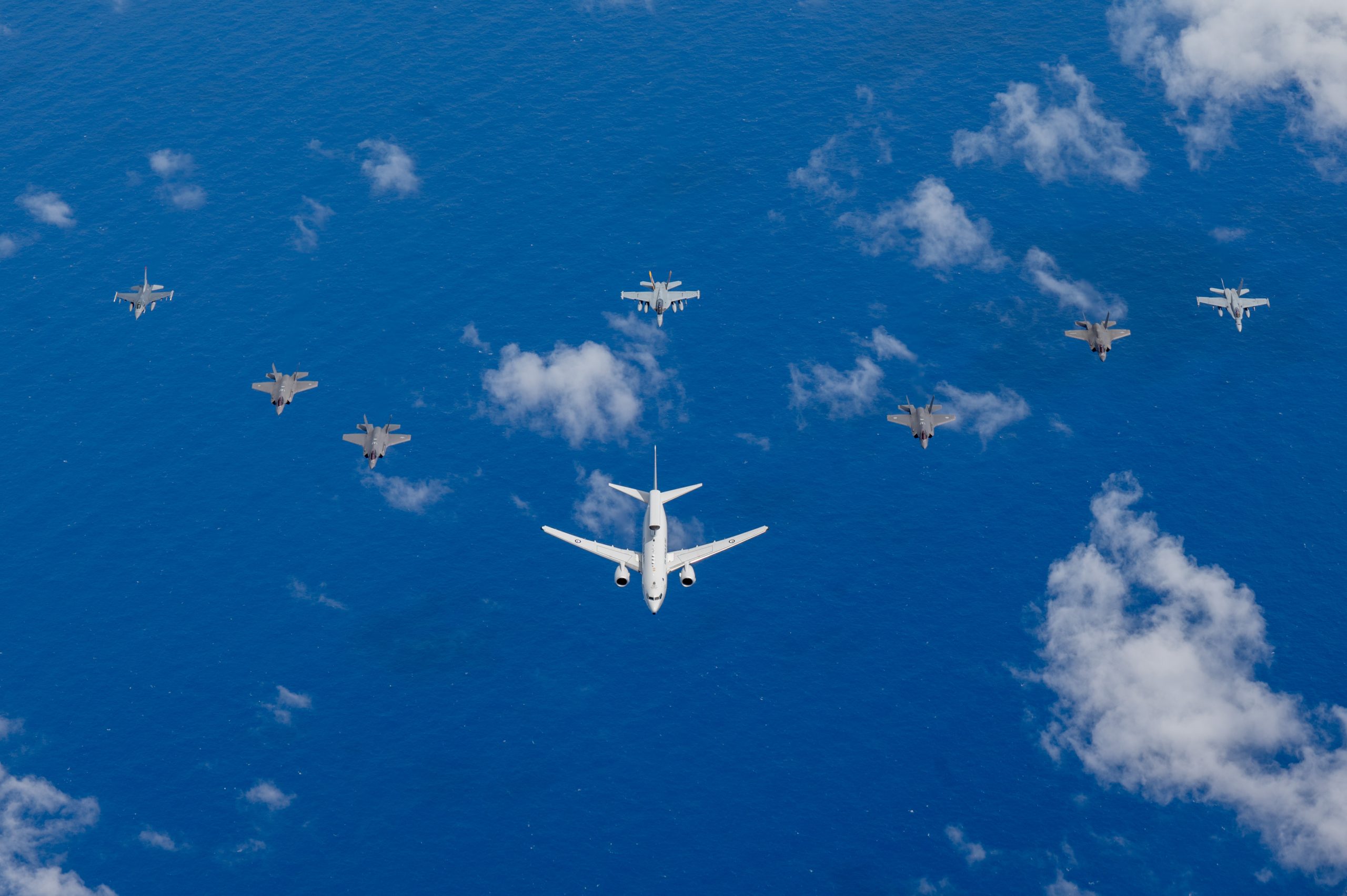
The E-7 Wedgetail is an airborne early warning and control (AEW&C) aircraft developed by Boeing.
Its primary role is to provide 360-degree surveillance, threat detection, and command and control for friendly forces.
Unlike traditional radar systems, the Wedgetail uses an advanced Multi-role Electronically Scanned Array (MESA) radar, which can simultaneously detect airborne, maritime, and ground targets over hundreds of kilometers.
The aircraft also coordinates communications among multiple units, effectively serving as a flying command post.
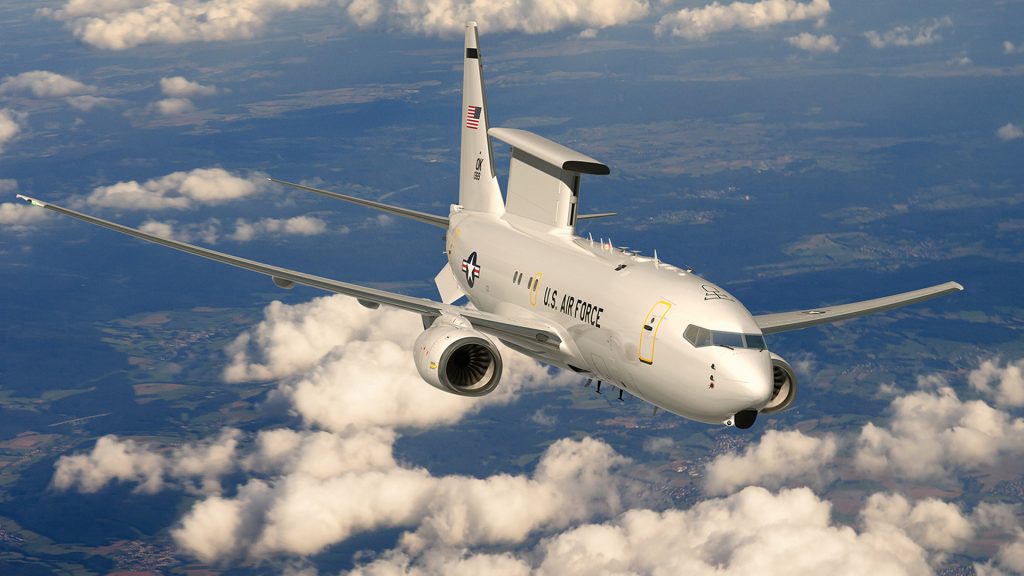
Development and Background
The E-7 is based on the Boeing 737-700 commercial airliner, modified to carry a large MESA radar dome above the fuselage. This design allows for:
- High reliability and proven airframe performance
- Extended mission endurance
- Reduced operating costs compared with custom-built military aircraft
Development began in the late 1990s under a collaboration between Boeing and the Royal Australian Air Force to replace older AEW&C aircraft.
The first Wedgetail entered service in the mid-2000s, and the aircraft has since been exported to Turkey, South Korea, and the UK.
| Category: | Details: |
| Type | Airborne early warning and control |
| Developer | Boeing |
| Role | Surveillance, command and control, airspace management |
| Base Aircraft | Boeing 737-700 |
| Radar | Multi-role Electronically Scanned Array (MESA) |
| Range | 4,000+ kilometers (2,486+ miles) |
| Endurance | 8-9 hours typical mission |
| Crew | 5-6 mission crew, 2 flight crew |
| Operators | Australia, Turkey, South Korea, and the UK |
How the E-7 Wedgetail Works
Specific Capabilities and Features
At the heart of the E-7 Wedgetail is an advanced Northrop Grumman MESA radar. Mounted in a fixed dorsal fin, it provides 360-degree coverage and can simultaneously track airborne and maritime targets over vast distances.
With integrated communications and 10 mission consoles, the Wedgetail’s command and control suite fuses radar data into a cohesive picture and directs friendly aircraft and assets in real time, acting as a flying command center.
The Wedgetail is also equipped with an extended surveillance range, covering millions of square kilometers in a single mission, and mid‑air refueling, enabling the aircraft to remain on station for extended operations without frequent landings.
E-7’s Strengths and Limitations
Strengths
- Situational awareness: Provides unmatched coverage of air and maritime domains.
- Network integration: Works seamlessly with joint forces and data networks.
- Endurance: Can remain airborne for long missions thanks to air-to-air refueling.
- Multi-target tracking: Monitors multiple threats simultaneously over vast areas.
Limitations
- Non-combatant role: Does not carry onboard weapons.
- EW vulnerability: Radar performance can be affected in contested electronic warfare environments.
- Support requirements: Needs substantial ground infrastructure and logistical support.
- Physical constraints: Sensor range and resolution are limited by altitude and physics.
Operational Use
The Wedgetail is used by several air forces around the world:
- Royal Australian Air Force: Core AEW&C platform for air defense and coalition operations.
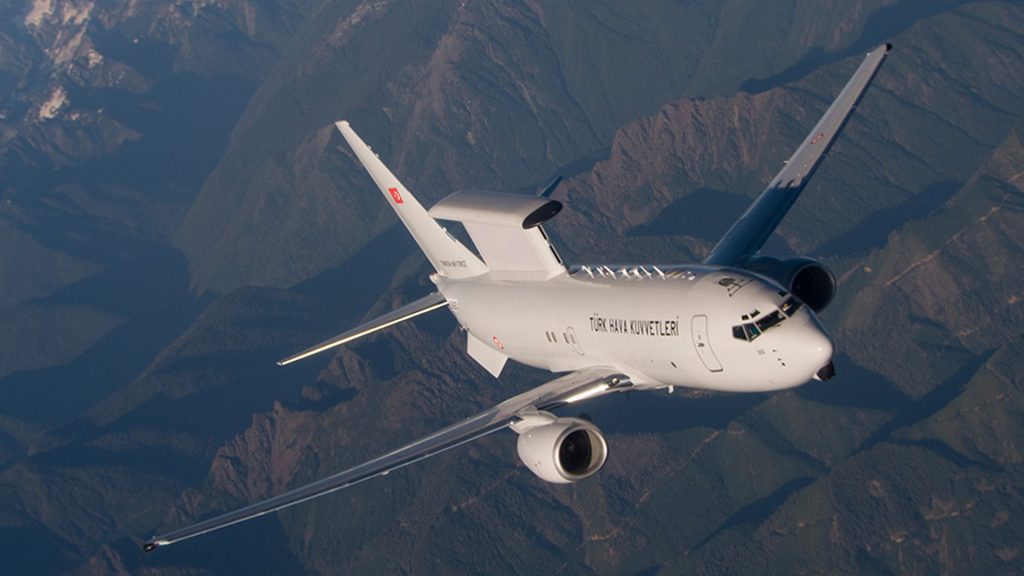
- Turkish Air Force: Provides regional surveillance and supports NATO missions.
- Republic of Korea Air Force: Enhances airspace management and regional missile defense.
- Royal Air Force (UK): Integrated into coalition operations and exercises.
The aircraft has been deployed in real-world operations, exercises, and joint multinational campaigns, demonstrating its ability to track hundreds of targets simultaneously and coordinate fighter and naval assets effectively.
Future Outlook
Upgrades are planned to improve:
- Radar performance and electronic warfare resistance
- Integration with future unmanned aerial systems
- Extended networked operations for multinational task forces
As modern conflicts demand real-time intelligence and coordinated responses, the E-7 Wedgetail is likely to remain a cornerstone of airborne command, control, and surveillance for decades to come.