Kratos Tests J85-Powered Firejet Drone for US Army

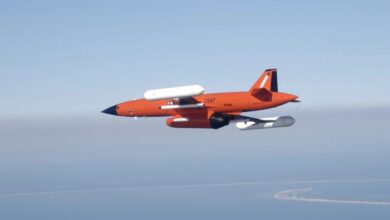
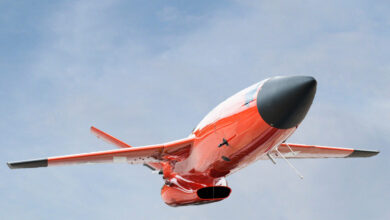
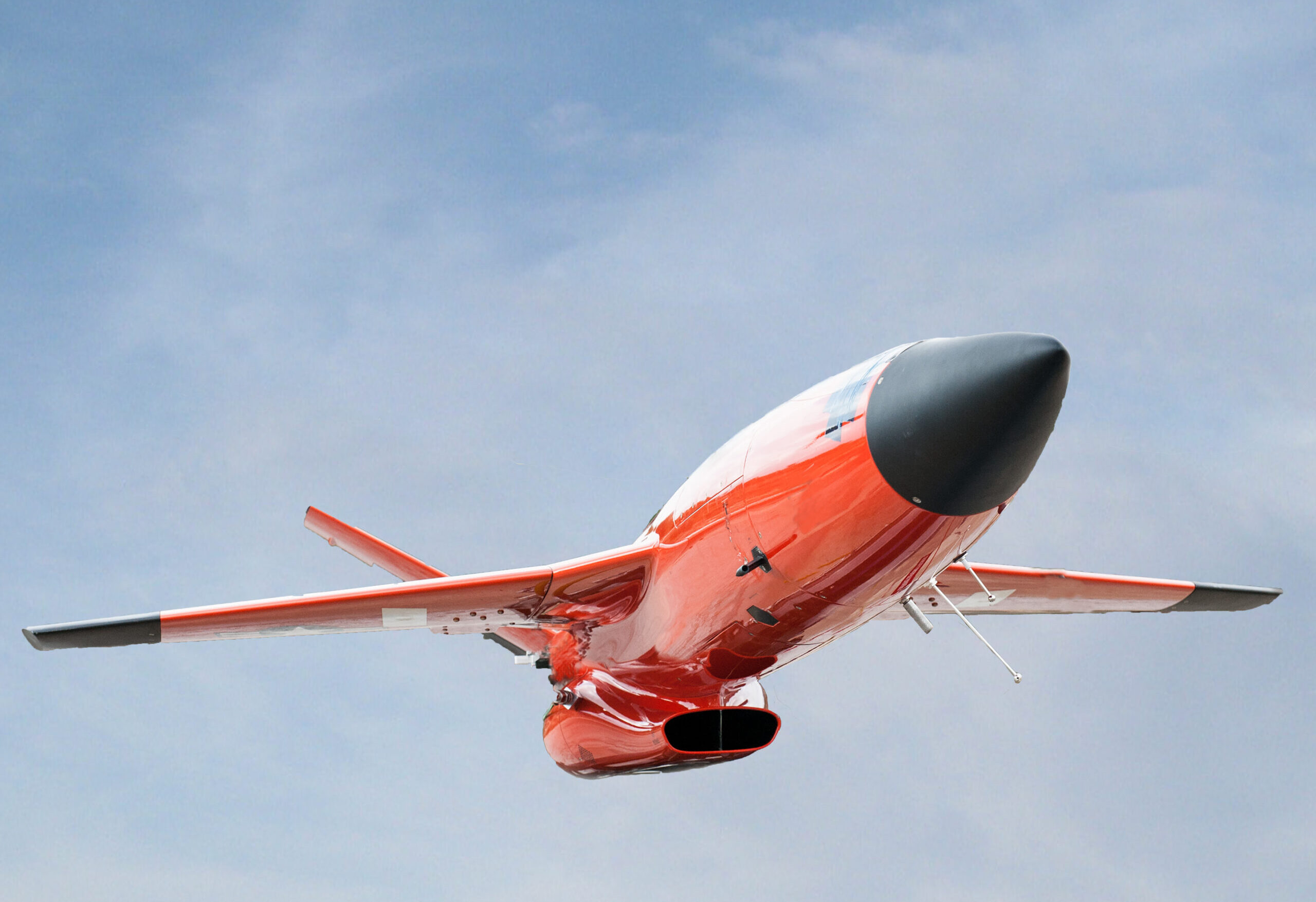
Kratos has completed an initial flight test series of a new Firejet unmanned aerial system variant equipped with a J85 turbojet, as part of ongoing work with the US Army to expand the platform’s performance envelope.
The upgraded configuration, known as the Mk1 Firejet, introduces a second propulsion option alongside the baseline model, which has been in service since the early 2010s using JetCat engines.
The Firejet family is a high-performance target drone fielded by the US Army and allied operators to simulate advanced aerial threats in weapons testing.
The systems replicate the speed, maneuverability, and signatures of adversary aircraft or missiles, supporting both surface-to-air and air-to-air training scenarios.
New Engine, Broader Push
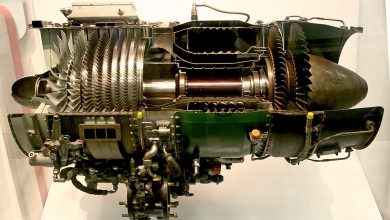
The Mk1 integrates the J85, a legacy military turbojet, adapted by Kratos for unmanned use.
The effort is tied to the company’s broader push to develop in-house propulsion under its Spartan engine production initiative, launched in late 2025.
Kratos expects to scale engine production in the coming years, citing rising demand for training systems and the need to replenish military inventories.
According to Kratos Unmanned Systems President Steve Fendley, the new configuration is intended to boost range, endurance, and climb rate without compromising survivability.
“Importantly, we also reduce supply chain risk by using an American-made Kratos engine with engine components sourced in the US,” he added.
The platform supports modular payloads, including radar augmentation, infrared signature systems, and tow targets, enabling it to replicate a wide range of threat profiles.
From Target Drone to Tactical Platform
Beyond its role as a target drone, Kratos is positioning the Firejet for potential operational use. A Tactical Firejet variant has been developed to support missions beyond training, reflecting a broader shift toward adapting target drones into low-cost combat systems.
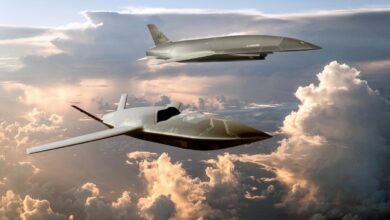
CEO Eric DeMarco said the J85-powered version could align with emerging Collaborative Combat Aircraft concepts, particularly in lower-cost segments.
“With our rapid advancement and in production, military-grade jet engines, Kratos is making internal investments to answer the Department of War’s call to industry to deliver affordable, high performance, military capability today,” DeMarco said.
The move reflects a broader push by militaries to field lower-cost, scalable unmanned systems for both training and operational roles, particularly as air defense environments grow more complex.